
What Are the Benefits of Rosehip Tea
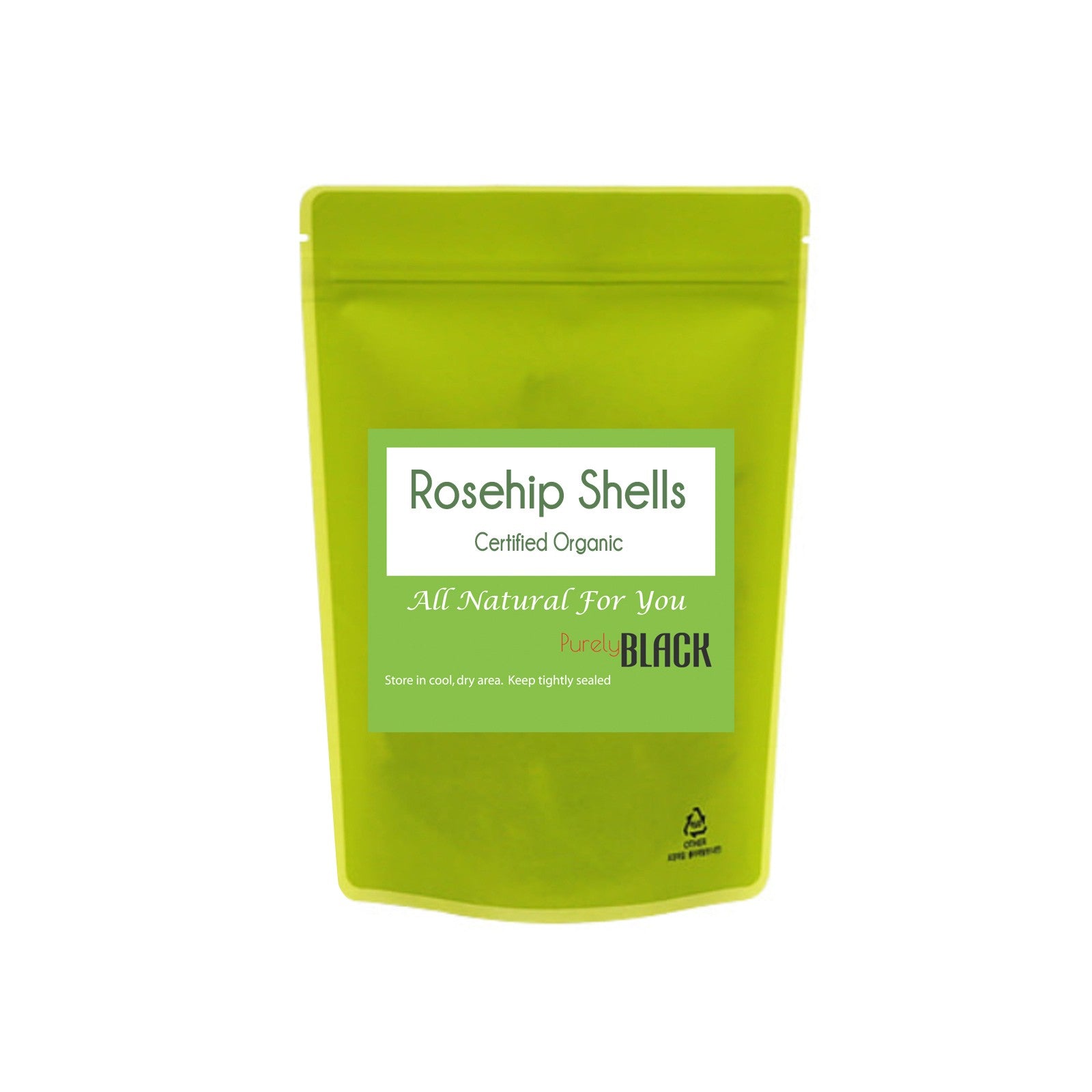
Rosehip tea, also known as rosehip fruit tea, is a tart, naturally caffeine-free herbal infusion made from the dried outer shells of rose hips, the round fruit left behind after a rose flower blooms and fades. purelyBlack's rosehip shells are 100% pure, with nothing added or removed. 
What are rosehip shells good for?
Rosehip shells are the dried, hollowed-out outer casing of the rose hip fruit, with the seeds and fine internal hairs removed or strained out before use. The fruit itself appears in autumn and winter, once the rose flower has bloomed and faded, leaving behind a small, round, typically orange-red fruit. Once dried and processed, the tough outer shell is what's most commonly used for tea, since it holds the bulk of the fruit's flavour, colour, and vitamin C content.
Rosehip has a long traditional history of use across European and Scandinavian herbal practice, where dried rose hips were historically processed into syrups, jams, and infusions, particularly valued during winter months when fresh vitamin C sources from other fruits were scarce. This traditional winter association is part of why rosehip tea has remained a popular cold-weather infusion in many European herbal traditions, often reached for as the seasons turn. It's most commonly steeped as a tea, valued for its naturally high vitamin C content and its tart, floral flavour, often compared to green apples or hibiscus.
What are the benefits of rosehip tea?
Rosehip tea's traditional reputation centres on a few key areas:
- Vitamin C content: rose hips are naturally one of the richest plant sources of vitamin C, which is part of why rosehip tea has such a long traditional association with immune wellness, particularly during colder months
- Antioxidants: rosehip is naturally rich in polyphenols and other antioxidant compounds, traditionally valued as part of a general wellness routine
- Naturally caffeine-free: unlike black or green tea, rosehip tea contains no caffeine, making it suitable as an any-time-of-day infusion, including in the evening
- Joint comfort: rosehip has some traditional and emerging research association with joint comfort, often referenced alongside other anti-inflammatory botanicals, though this remains an area of ongoing interest rather than settled fact
As with all traditional herbal uses, these associations are drawn from generations of use within European herbal tradition, supplemented by more recent interest in rosehip's naturally high vitamin C and antioxidant content, rather than being a guaranteed effect for every individual.
Can you drink rosehip tea every day?
For most healthy adults, rosehip tea fits comfortably within a daily routine, and being naturally caffeine-free, it can be enjoyed at any time of day, including in the evening without affecting sleep. As with any herbal tea consumed regularly, those who are pregnant, nursing, taking prescription medication, or managing an underlying medical condition should consult a healthcare practitioner before incorporating it into a daily routine.
Who should not drink rosehip tea?
Rosehip tea is generally well tolerated, though a few groups should take extra care. Those with a history of kidney stones should be mindful of rosehip's natural vitamin C content, since very high vitamin C intake has a traditional association with oxalate formation in some individuals. Anyone taking blood-thinning medication should also consult a healthcare practitioner first, given some traditional associations between high-dose vitamin C and blood clotting processes. As always, those who are pregnant or nursing should seek professional guidance before regular use.
What does rosehip tea taste like?
Rosehip tea has a distinctive tart, fruity character, often described as sitting somewhere between a green apple and a light berry, with a subtly floral undertone carried over from the rose flower itself. It's naturally less sweet than many fruit teas and carries a noticeable tang, similar in some ways to hibiscus, which is part of why the two are so often blended together. The colour is typically a warm reddish-orange to deep amber, depending on steeping time and concentration, and the aroma is gentle and fruity rather than sharp or astringent.
Hot brew vs cold brew rosehip tea
| Method | How it's done |
|---|---|
| Hot brew (most common) | Steep 1-2 teaspoons in 250ml just-boiled water for 10-15 minutes, then strain |
| Cold brew | Combine 1-2 tablespoons of shells with 500ml cold water, refrigerate for 6-8 hours or overnight, then strain |
Cold brewing produces a gentler, less tart infusion and is a popular warm-weather alternative, particularly suited to being served over ice. Hot brewing extracts the fruit's compounds more thoroughly and produces a stronger, more concentrated flavour, making it the more traditional and commonly used method.
How do you make rosehip tea?
The most traditional and effective method is steeping dried rosehip shells directly in just-boiled water, allowing enough time for the tough outer shell to properly release its flavour and colour.
- Measure precisely. Use 1 to 2 teaspoons of dried rosehip shells per cup (250ml).
- Boil fresh water. Bring water to a full rolling boil, then pour directly over the rosehip shells.
- Steep covered. Cover and steep for 10 to 15 minutes. Rosehip shells are tougher than leafy herbs and benefit from this longer steeping time to fully release their colour, tartness, and vitamin C content.
- Strain thoroughly. Strain well through a fine mesh strainer to remove any fine internal hairs that may remain on the shells, as these can be irritating if consumed in quantity.
- Sweeten if desired. Rosehip tea has a naturally tart flavour; a touch of honey can help balance this if preferred.
For a stronger, more concentrated brew, the steeping time can be extended to 15 to 20 minutes, or the shells can be gently simmered for 5 minutes before steeping, though straightforward steeping is the more common and convenient method for everyday use.
What's actually in rosehip shells?
| Constituent | What it contributes |
|---|---|
| Vitamin C | Present in exceptionally high concentration, central to rosehip's traditional reputation |
| Polyphenols | Naturally occurring antioxidant compounds within the fruit |
| Carotenoids | Naturally occurring pigments contributing to the fruit's characteristic reddish-orange colour |
| Pectin | A naturally occurring fibre, historically part of why rose hips were traditionally used in jams and syrups |
What pairs well with rosehip tea?
- Hibiscus Tea is a classic, widely loved pairing, combining rosehip's tartness with hibiscus's floral, cranberry-like character for a vibrant red infusion. For a full guide to this pairing, read our dedicated post on Rosehip and Hibiscus Tea: Benefits & How to Make.
- Star Anise adds warmth and depth, particularly nice in a cooler-weather rosehip infusion.
Sourcing it properly
purelyBlack's organic rosehip tea is made from 100% pure dried rosehip shells — no fillers, no added flavouring, just the fruit as nature intended. Looking for a hibiscus pairing? Read our guide on Rosehip and Hibiscus Tea: Benefits & How to Make.
About the Author: Researched & Written by H.R. Kim
Founder at purelyBlack — an Australian-owned botanical perfumery and essential oil supplier based in Sydney. Blending a deep knowledge of molecular ingredient chemistry with holistic aromatherapy, H.R. specialises in creating harmonious, safe, and effective botanical blends for natural home fragrance, cosmetic balancing, and daily wellness.
Disclaimer: The information provided in this masterclass is for educational and informational purposes only and does not constitute medical advice. purelyBlack's botanical products are not intended to diagnose, treat, cure, or prevent any disease. Always consult with a qualified healthcare practitioner before incorporating new botanical powders, teas, or roots into your daily routine, especially if you are pregnant, nursing, taking prescription medications, or have an underlying medical condition.
