Skip to product information
1 of 1

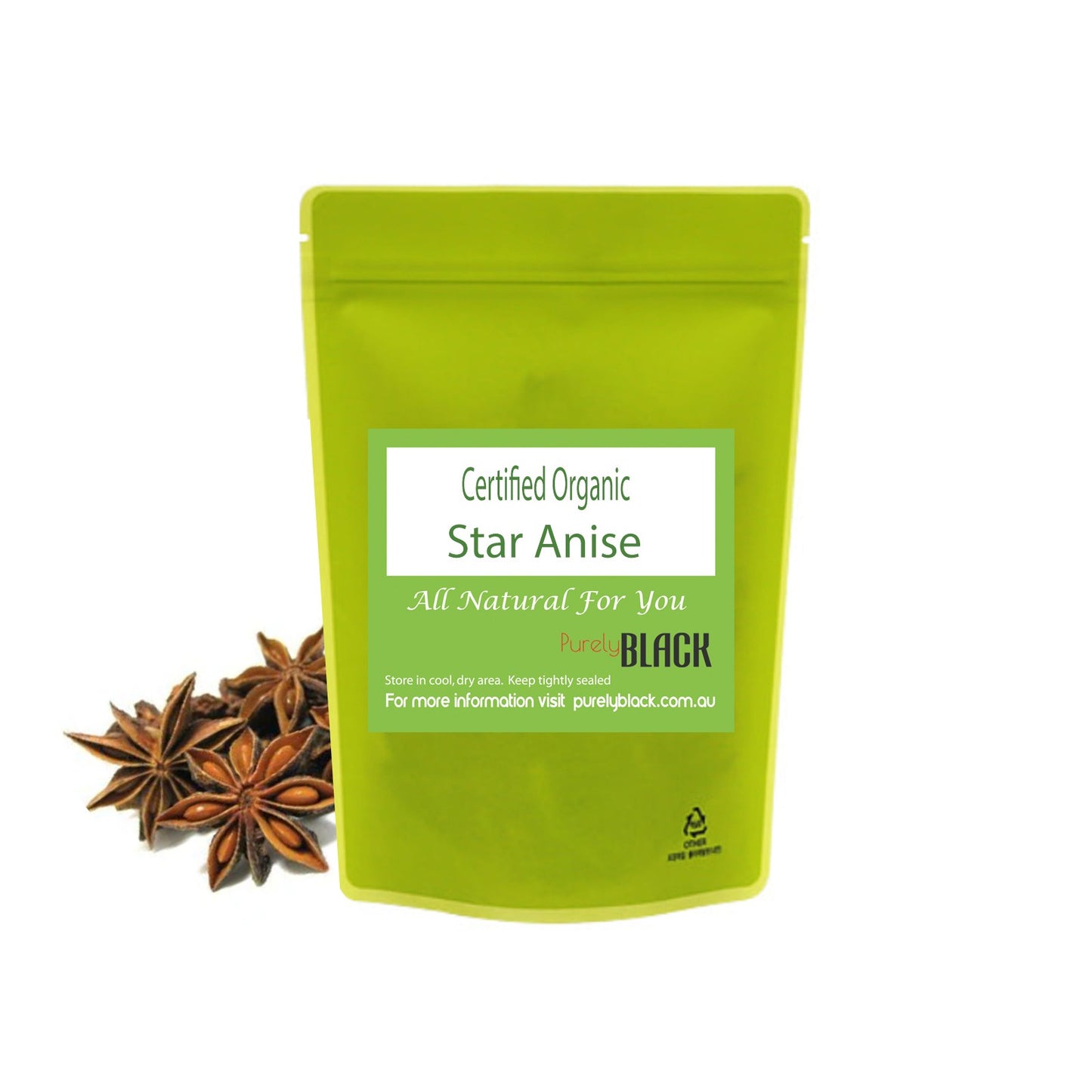
Certified Organic Whole Star Anise for Digestive and Respiratory Support

Regular price $12.95 AUD
Regular price Sale price $12.95 AUD
Sale Sold out
Size
Quantity

What is Whole Star Anise good for?

Whole Star Anise supports digestive comfort and respiratory wellness with its naturally warming, aromatic profile.

Harvested from Illicium verum and prized for its distinctive star-shaped pods, this Certified Organic spice delivers a sweet, licorice-like warmth that has anchored traditional wellness practices for centuries. Each whole pod is vegan, cruelty-free, and free from additives, making it a pure choice for herbal teas, broths, and culinary creations. Explore the tabs below for detailed botanical profiles, step-by-step recipes, and safety guidelines.

PRODUCT DETAILS & PROFILE

Core Product Details

  • Botanical Name: Illicium verum (italics)
  • Plant Family: Schisandraceae
  • Plant Part Used: Fruit (dried star-shaped pods)
  • Processing Method: Whole Spice
  • Country of Origin: India
  • Texture & Colour: Hard, rust-brown to dark amber star-shaped pods, typically 6–8 pointed segments, each containing a single glossy seed. Aromatic, with a smooth, woody exterior and a brittle texture when dry.

Quality & Purity

  • Certified Organic: Grown without synthetic pesticides, herbicides, GMO inputs, or chemical fertilisers. Certified by recognised organic certification bodies to guarantee purity and sustainable farming practices.
  • 100% Pure & Natural: No fillers, synthetics, additives, flow agents, or preservatives. Just pure, whole star anise pods as nature intended.
  • Vegan & Cruelty-Free: No animal-derived ingredients. Never tested on animals.
  • Australian Brand: Proudly Australian-owned and operated.
  • Quality Assured: Batch-tested for purity and botanical integrity. Only verified Illicium verum (Chinese star anise) is sourced to ensure safety and eliminate risk of toxic adulteration.

Botanical Profile & Key Constituents

What does Whole Star Anise smell and taste like?

The dry aroma of whole star anise is intensely fragrant, sweet, and warming, with a pronounced licorice-like character softened by subtle notes of clove and eucalyptus. When cracked or simmered, the pods release a bold, aromatic sweetness with a gentle peppery warmth and a slightly resinous depth that lingers pleasantly. Star anise has been prized for over 3,000 years in traditional Chinese medicine and cuisine, where it is used to "warm the interior and expel cold," reflecting its affinity for the stomach, liver, and respiratory system. The spice is a cornerstone of Chinese five-spice powder and Vietnamese pho, showcasing its cultural significance and enduring aromatic appeal across culinary and medicinal traditions.

  • Key Constituents: The essential oil of star anise contains 85–90% trans-anethole, the primary aromatic compound responsible for its sweet, licorice-like flavour and therapeutic properties. Additional constituents include shikimic acid (5–7%), limonene, estragole, pinene, β-phellandrene, anisaldehyde, linalool, quercetin, and other polyphenolic compounds. Together, these constituents contribute to star anise's carminative, expectorant, antimicrobial, antioxidant, and anti-inflammatory properties.
  • Traditional Heritage: Star anise (Illicium verum) has been central to traditional Chinese medicine (TCM) for over 3,000 years, classified as a warming herb used to support digestion, relieve cold-related discomfort, and ease respiratory congestion. Historical texts note its use in Ayurvedic practices for "vata-pacifying" teas, and by the 18th century, European traders introduced it to Western herbal traditions. The spice's botanical name Illicium derives from the Latin illicere, meaning "to allure," referencing the inviting aroma of its leaves and branches. Today, star anise remains a staple in global cuisine and wellness practices, valued for its distinctive flavour, aromatic complexity, and broad therapeutic potential.

MAIN BENEFITS & PROPERTIES

How do you use Whole Star Anise powder?

Add whole pods to teas, broths, and slow-cooked dishes for warming digestive and respiratory support.

Traditional Wellness Uses

  • Digestive Comfort & Carminative Support: Star anise has been traditionally used in Chinese and Ayurvedic medicine to support healthy digestion and relieve bloating, gas, and mild indigestion. Its natural carminative properties are attributed to compounds such as anethole and shikimic acid, which help soothe the digestive tract. A 2018 study published in the Journal of Ethnopharmacology reported relief of IBS-like symptoms after daily star anise decoction for two weeks. For more ways to incorporate this warming spice into your routine, explore these star anise recipes for digestion and respiratory comfort.
  • Respiratory Wellness & Expectorant Properties: In traditional medicine practices across Asia, star anise has been steeped in water to make teas used to ease coughs, loosen phlegm, and support respiratory function during seasonal challenges. Traditional cough syrups often include 1–2 pods boiled with honey, and a 2020 pilot study reported reduced coughing frequency in mild upper respiratory infections. Star anise combines well with elderberry and echinacea for their additional immune-supporting actions.
  • Antioxidant & Antimicrobial Properties: Star anise is rich in flavonoids and polyphenols such as anethole, linalool, and quercetin, which function as antioxidants to help neutralise free radicals and reduce oxidative stress. In vitro research highlights efficacy against Candida albicans and Staphylococcus aureus, thanks to the synergy of anethole and related compounds. These bioactive constituents may support overall wellness when used as part of a balanced lifestyle.

Skin & Hair Benefits

  • Topical Antimicrobial & Aromatic Applications: The essential oil of star anise, rich in anethole, has been traditionally used in soaps, skin creams, and perfumery for its antibacterial and aromatic properties. When diluted properly in carrier oils, star anise oil may be used in topical preparations to cleanse and invigorate the skin. Always dilute essential oils and perform a patch test before use.

Nutritional & Botanical Properties

  • Trans-Anethole (85–90% of essential oil): The dominant aromatic compound responsible for star anise's characteristic sweet, licorice-like flavour and its carminative, antimicrobial, and antioxidant properties. Trans-anethole also contributes to the spice's traditional use in digestive wellness.
  • Shikimic Acid (5–7%): One of the highest natural concentrations of shikimic acid among plant sources. This compound is a precursor in the pharmaceutical synthesis of antiviral medications and has been studied for antithrombotic and antiviral potential. Star anise remains a primary botanical source of shikimic acid for medicinal and industrial use.
  • Flavonoids & Polyphenols: Including quercetin, linalool, and related compounds that provide antioxidant, anti-inflammatory, and antimicrobial activity. These constituents support the spice's broad traditional applications in wellness and culinary use.

Is Whole Star Anise safe to use every day?

Whole star anise is generally safe when used in culinary amounts, but daily therapeutic use should be discussed with a healthcare practitioner. While star anise has a long history of safe use as a culinary spice in foods and teas, concentrated or prolonged therapeutic use may not be appropriate for everyone, particularly those on medication, pregnant, or with hormone-sensitive conditions. Always consult a qualified health professional before incorporating star anise into your daily wellness routine.

What does Whole Star Anise taste like?

Whole star anise offers a sweet, warm, licorice-like flavour with subtle notes of clove, cinnamon, and a gentle peppery finish. Its aroma is intensely fragrant and multi-layered, evoking a sense of calm and inner warmth. Both the star-shaped pod and the glossy seeds within are aromatic, with the flavour intensifying when the pods are cracked or simmered in liquid. Star anise pairs beautifully with warming spices such as cinnamon, ginger, cardamom, and cloves, and its bold, slightly resinous character makes it ideal for slow-cooked broths, braises, and spiced syrups. If you prefer a subtle hint, use sparingly or remove the pods before serving.

Where to Buy

Where can I buy Certified Organic Whole Star Anise in Australia?

purelyBlack offers Certified Organic Whole Star Anise with free shipping Australia-wide, available directly at purelyblack.com. Proudly Australian-owned, purelyBlack sources only pure, verified Illicium verum (Chinese star anise) to ensure safety and quality in every pod. Each batch is carefully selected for unbroken points and peak aromatic potency, with no fillers, additives, or synthetic ingredients—just nature's warming spice delivered to your door.

HOW TO USE

Whole Star Anise Suggested Serving

  • For tea or infusion: 1–2 whole pods per 250 ml (1 cup) of water. For larger batches or broths: 2–3 whole pods per 4–6 servings. Star anise is potent—start with less and add more to taste.

Master Class: How to Make Star Anise Tea

  1. Bring 2 cups of water to a rolling boil in a kettle or saucepan.
  2. Lightly crack 2 whole star anise pods using the back of a spoon or a mortar to release their essential oils.
  3. Add the cracked pods to the boiling water, reduce heat to low, and simmer gently for 10 minutes until the water turns golden amber.
  4. Remove from heat, cover with a lid, and let steep for 3–5 minutes to intensify the licorice-like warmth.
  5. Strain into cups and serve hot. Sweeten with honey or add a squeeze of lemon if desired, and enjoy as a soothing digestive tonic.

Whole Star Anise Smoothie & Food Uses

  • Spiced Golden Milk: Add 1 lightly cracked star anise pod to 1 cup warm coconut or almond milk with 1/4 teaspoon turmeric, a pinch of cinnamon, and honey. Heat gently for 5 minutes, strain, and sip before bed.
  • Chai Spice Smoothie: Blend 1 frozen banana, 1 cup brewed and cooled star anise tea, 1/2 cup yoghurt, 1 tablespoon almond butter, 1/4 teaspoon cinnamon, and a handful of ice for a warming breakfast.
  • Savoury Broth Base: Simmer 2–3 whole star anise pods with ginger, garlic, and cinnamon in vegetable or bone broth for 30 minutes. Remove pods before serving. Use as a base for soups, stews, or rice dishes.

DIY Topical Application

  • Aromatic Steam Inhalation: Add 2 whole star anise pods to a bowl of just-boiled water. Cover your head with a towel, lean over the bowl, and inhale the steam for 5–10 minutes to support respiratory comfort. For external use only.
  • Warming Compress: Simmer 3 star anise pods in 2 cups water for 10 minutes. Soak a clean cloth in the warm (not hot) liquid, wring out excess, and place on the lower abdomen for gentle warmth and digestive ease. For external use only.

Pairs Well With

SAFETY & PRECAUTIONS

General Safety Guidelines

  • Consult a Healthcare Professional: Always consult a qualified health practitioner before using Whole Star Anise, especially if you are taking medication, pregnant, breastfeeding, or have pre-existing medical conditions.
  • Medication Interactions: Star anise may interact with anticoagulant medications (such as warfarin) due to mild antiplatelet effects. It may also affect medications metabolised by liver enzymes CYP2E1 and CYP3A4, including paracetamol (acetaminophen), calcium channel blockers, and certain antibiotics. Consult your healthcare provider if you take any prescription medications.
  • Safe Storage: Store whole star anise pods in an airtight glass container in a cool, dark location away from direct sunlight, heat, and humidity. Properly stored whole pods retain peak aromatic potency for 12–18 months.

Specific Precautions

  • Pregnancy & Nursing: Star anise is possibly unsafe during pregnancy due to potential uterine stimulant effects and oestrogenic properties that may affect foetal development. Safety during breastfeeding has not been established. Avoid use during pregnancy and lactation.
  • Children: Star anise is not recommended for internal use in children under 6 years due to risk of neurological side effects. Serious reactions including vomiting and seizures have been reported in infants given star anise tea. Always consult a paediatrician before use in children.
  • Sensitive Individuals: Individuals allergic to plants in the Apiaceae family (such as fennel, dill, celery, or anise seed) may experience cross-reactivity. Discontinue use immediately if allergic symptoms such as hives, itching, swelling, or difficulty breathing develop.
  • Hormone-Sensitive Conditions: Star anise contains compounds with oestrogenic activity and should be avoided by individuals with oestrogen-receptor-positive breast cancer, endometrial cancer, ovarian cancer, or a family history of hormone-sensitive malignancies.
  • Species Verification: Only Illicium verum (Chinese star anise) is safe for consumption. Japanese star anise (Illicium anisatum) is highly toxic and contains neurotoxins that cause seizures and serious neurological damage. Always purchase from reputable suppliers who verify botanical identity.
View full details