


Frankincense Oil: Benefits, Uses & Complete Guide in Australia
What is the frankincense oil good for?
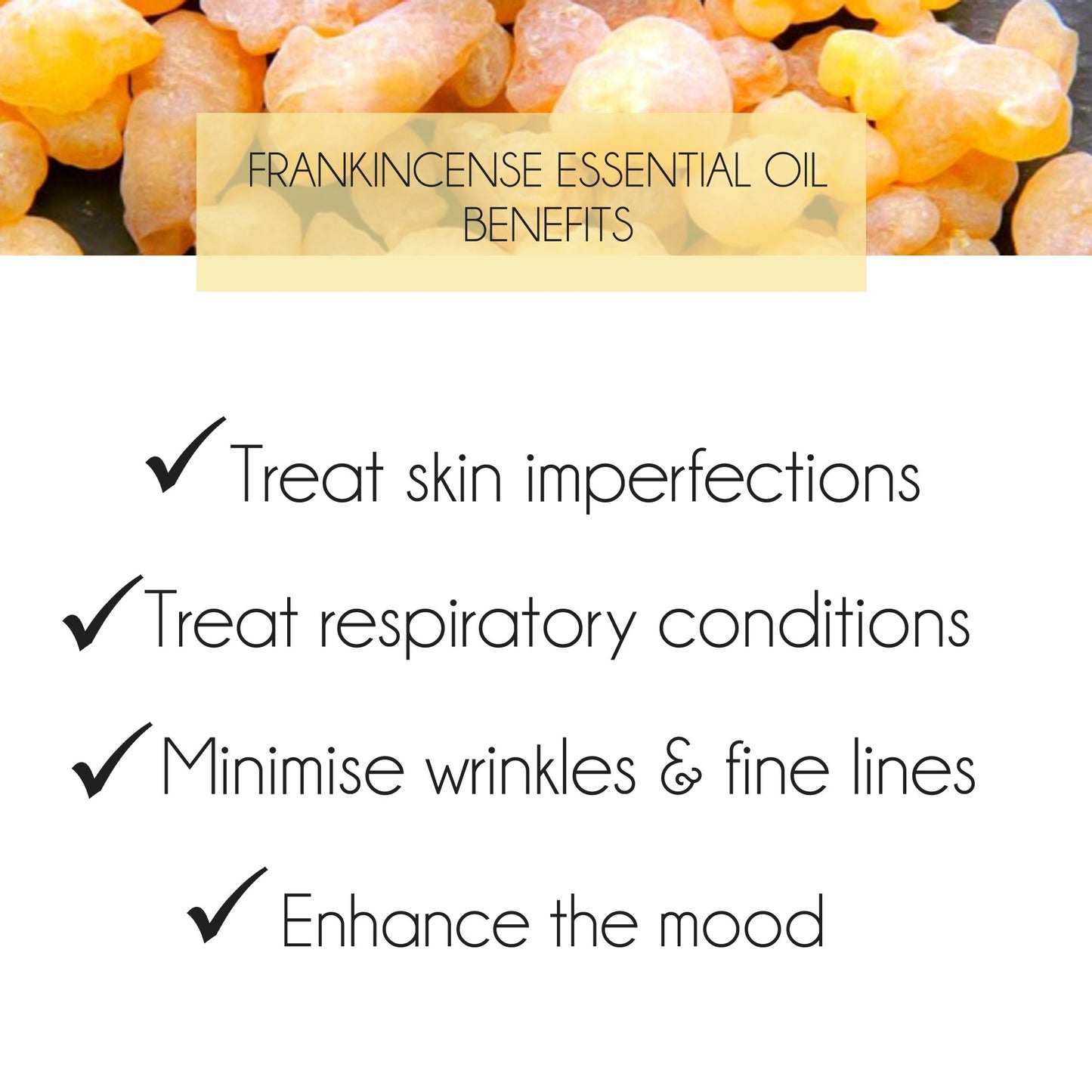
Frankincense oil provides aromatic comfort, supports a healthy complexion, and promotes a tranquil atmosphere during meditation or daily relaxation routines.
Aromatic Comfort & Mental Calm
- Stress relief: Diffusing the oil creates a grounding atmosphere that helps unwind after long days.
- Meditation Aid: Inhaling the woody scent promotes focused breathing and stillness during spiritual practice.
- Focus: Add a drop to your palms, rub them together, and take a slow breath to clear tension before a task requiring concentration.
Skincare Support
- Skincare Support: Adding diluted drops to moisturisers supports a healthy complexion and balanced skin tone.
- Blemish appearance: Applying a well-diluted blend to areas of minor skin irritation may support a clearer-looking complexion over time.
Physical Comfort
- Massage blends: Diluted frankincense is often added to massage oils to accompany a warming, grounding sensory experience.
- Warm compress: Add a few drops to a warm, damp cloth and place it on tight areas as part of a relaxation routine.


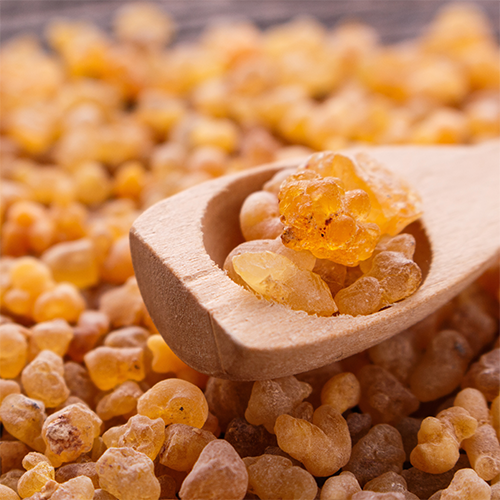
Extracted from the gummy resin of the Boswellia serrata tree, a member of the Burseraceae plant family, this precious extract has been treasured across India and the Middle East for millennia. Modern steam distillation methods harvest the volatile liquid directly from the harvested tree resin, capturing its complex botanical signature. The raw resin yields a rich aromatic profile packed with active organic compounds that interact gently with the senses.
When looking at its chemical profile, a published phytochemical analysis confirms that the oil contains high concentrations of alpha-pinene (often reaching 30% to 45%), alongside limonene and alpha-thujene. These natural monoterpenes give Frankincense essential oil its distinct woody, resinous scent profile while contributing to its soothing topical properties. When experiencing environmental skin stress or minor blemishes, many people turn to botanical oils to help comfort and nourish the skin barrier.
In everyday wellness routines, Frankincense serves as a versatile botanical cornerstone. Whether diffused to clear an aromatic space or added to skincare formulations, its chemical composition delivers steady, reliable comfort. purelyBlack's pure frankincense oil is available as a 100% pure essential oil, dispatched from Sydney.
What does putting frankincense in your belly button do?
Applying frankincense oil to the belly button is a traditional practice rooted in alternative wellness and the unproven "Pechoti method" theory — there is no clinical proof that the navel absorbs oils faster or treats internal conditions.
The Pechoti Myth vs. the Facts
- The Pechoti Claim: Proponents suggest a hidden "Pechoti gland" inside the navel connects to every vein and distributes oils throughout the body. Medical science does not recognise this gland as existing.
- Systemic Claims: Beliefs that navel-oiling addresses digestive issues, joint discomfort, or other internal conditions are not supported by clinical evidence.
What Diluted Application May Offer
- Local Skin Comfort: When properly diluted, frankincense's natural properties may help calm localised skin irritation, the same way it does elsewhere on the body.
- Relaxation: Inhaling the woodsy scent during application can support a sense of calm, independent of where on the body it is applied.
As with any area of the body, always dilute frankincense oil in a suitable carrier oil before applying it near the abdomen, and patch test on your inner forearm first.


What happens when you smell frankincense?
Inhaling frankincense stimulates olfactory receptors, promoting a peaceful atmosphere, encouraging deep breathing, and easing feelings of daily stress.
When you inhale Frankincense oil, volatile terpene molecules travel directly through the nasal cavity to interact with olfactory sensory neurons. These neurons send immediate signals to the limbic system, the brain region responsible for processing emotions, memories, and instinctual stress responses. The rich, balsamic aroma triggers neural pathways that encourage slower, deeper breathing patterns.
Scent Profile
The olfactory profile of Frankincense is characterised by warm, spicy top notes balanced by a deep, coniferous undertone. Diffusing this oil in a home or workspace alters the ambient mood without overpowering the room. When feeling overstimulated or mentally fatigued, breathing in this ancient resin helps anchor the mind and promotes a tranquil atmosphere.
Blending Partners
Aromatherapists frequently blend Frankincense with citrus or floral oils to enhance its uplifting qualities. Combining it with bright notes like Tangerine Oil or floral extracts like Neroli Oil produces a complex aroma that elevates any living space. Earthy scents like Patchouli or Lemongrass also complement its resinous depth perfectly.
Where is the best place to put frankincense oil?
The best places to apply frankincense oil are pulse points, the chest, along the spine, and across facial skin when diluted.
Recommended Application Areas
- Pulse Points: Apply diluted oil to wrists and neck for continuous calming botanical aroma throughout the day.
- Facial Complexion: Mix with non-comedogenic carrier oils to support the appearance of smooth, even skin texture.
- Bottom of Feet: Massage diluted extracts into soles for grounding sensory comfort before bed or relaxation.
Why Dilution Matters
Topical application allows the beneficial botanical compounds of Frankincense essential oil to absorb directly into the skin. However, applying pure essential oils directly without dilution can cause localised irritation. Blending the resin extract with Fractionated Coconut Oil ensures smooth distribution across larger skin areas while enhancing skin barrier absorption.
Skincare Routine Integration
For skincare routines, targeting areas prone to fine lines or dryness yields excellent visual results. You can incorporate a few drops into daily serums or pair it with botanical toners like Organic Rosewater or Organic Witch Hazel Extract. This combination supports a healthy complexion while delivering an enjoyable sensory experience.
Best Zones for Aromatic Relaxation
When applying for aromatic relaxation, target body zones with higher surface temperatures. The wrists, inner elbows, base of the neck, and temples radiate subtle heat, slowly diffusing the aromatic monoterpenes into your personal space throughout the day. Always perform a patch test on your forearm before widespread application.
How long does it take for frankincense oil to start working?
How long frankincense takes to work depends on the method of use, ranging from around 30 seconds for aromatherapy to several weeks of consistent use for skin-appearance benefits.
Aromatherapy and Mood
- Immediate effects: Inhaling frankincense via a diffuser or directly from the bottle can influence mood within about 30 seconds.
- Stress relief: Calming or grounding sensations are typically noticed within a few minutes of breathing in the scent.
Topical Skincare Use
- Short-term texture changes: Some people report that skin may feel smoother after around two weeks of consistent, properly diluted topical application, though individual experience varies.
- Longer-term appearance: Any changes to overall skin tone and texture are generally only noticed, if at all, after around four weeks of regular, consistent use.
Results vary between individuals, and consistency in dilution and application matters more than any single application. As always, discontinue use and consult a healthcare professional if irritation occurs.
How often should you use frankincense oil?
You can use frankincense oil daily for topical skincare or aromatherapy, provided you properly dilute it and monitor skin tolerance.
Daily integration of Frankincense oil into your routine is both safe and effective when standard dilution safety rules are observed. For facial application, a mild 1% dilution—equivalent to approximately one drop of essential oil per teaspoon of carrier oil—is ideal for sensitive skin. Body applications can safely utilise a 2% dilution for general massage and moisturising practices.
Aromatherapy Frequency
Aromatherapy diffusion can also be enjoyed every day. Running an ultrasonic diffuser containing four to six drops of oil for 30 to 60 minute intervals provides optimal aromatic benefit without saturating indoor air quality. Rotating your blending partners with complementing oils such as Grapefruit or Yarrow keeps your sensory environment fresh and inviting.
| Application Method | Recommended Dilution | Frequency & Best Practice |
|---|---|---|
| Facial Skincare | 1% (1 drop per 5mL carrier) | Daily (Morning or Evening) |
| Body Massage | 2% (2 drops per 5mL carrier) | 2–3 times weekly as needed |
| Aromatherapy Diffusion | 4–6 drops in water basin | Daily (30–60 minute sessions) |
| Foot Massage | 2%–3% (2–3 drops per 5mL carrier) | Nightly before sleep |
Consistency yields the best results when using Frankincense for skin appearance and ambient mood regulation. Listening to your skin and taking brief pauses if mild redness occurs ensures a safe, sustainable long-term practice.
How can you tell if frankincense is good quality?
Quality frankincense features a 100% pure botanical source, detailed botanical naming, dark amber glass packaging, and batch GC-MS chemical analysis.
Identifying pure Frankincense oil requires evaluating clear labelling standards and botanical transparency. Reputable suppliers explicitly list the Latin botanical name, such as Boswellia serrata, rather than generic terms like "frankincense fragrance." Genuine extracts are steam-distilled directly from natural tree resins without synthetic extenders, phthalates, or chemical solvents.
Key Indicators of Purity
Packaging plays a critical role in preserving essential oil integrity. Pure volatile oils react to light and UV degradation; therefore, authentic Frankincense is always packaged in dark amber or cobalt glass bottles equipped with dropper tops. Clear glass or plastic containers signal poor quality, as plastic compounds leach into concentrated botanical terpenes over time.
Furthermore, high-grade oils display clear batch origin information. Authentic Indian Frankincense offers a warm, balsamic, slightly citrusy aroma that evolves cleanly as it evaporates. If an oil smells overly harsh, chemical, or synthetic, it likely contains unlisted synthetic aroma chemicals or petroleum diluents.
Checking the GC/MS Report
A GC/MS (gas chromatography–mass spectrometry) report breaks down an oil's exact chemical constituents batch by batch. Reputable Australian suppliers, including purelyBlack, make these producer testing reports available so you can verify what you're actually applying to your skin or diffusing into your home.
Why put frankincense oil on the bottom of your feet?
Applying frankincense oil to the feet offers rapid skin absorption through large pores while delivering grounding botanical comfort before sleep.
The soles of the feet possess some of the largest skin pores on the human body, allowing topical oil preparations to absorb efficiently. Additionally, the skin on the bottom of the feet is thicker and less prone to localised irritation, making it an ideal entry point for adults trying essential oils for the first time. Combined with gentle massage, applying diluted Frankincense oil promotes deep physical relaxation.
In traditional reflexology and bodywork, massaging the feet helps draw physical awareness downward, releasing tension accumulated in the head and shoulders throughout the day. Integrating Frankincense into a nightly foot massage ritual provides aromatic comfort that signals to the brain it is time to rest. Gently warming diluted oil between your palms before applying enhances both sensory pleasure and skin absorption.
Frequently Asked Questions
Can you put frankincense essential oil directly on your skin?
No — frankincense essential oil should always be diluted in a suitable carrier oil before skin contact..
Who should not use frankincense oil?
Those who are pregnant or breastfeeding, individuals with a diagnosed bleeding disorder or taking blood-thinning medication, and anyone with a known sensitivity to Boswellia or other resins in the Burseraceae family should avoid use or consult a healthcare professional first.
What is the best frankincense oil in Australia?
Look for a 100% pure oil with a clearly stated botanical name (such as Boswellia serrata), dark amber glass packaging, and an available GC/MS producer testing report — these are the clearest indicators of genuine quality regardless of brand.
Does frankincense oil help with joint discomfort?
Many people use diluted frankincense in massage blends around joints as part of a broader comfort routine.
To explore similar profiles, discover these pure purelyBlack creations: Cassia Oil, Pine Oil, and Wintergreen Oil — each dispatched from Sydney.
Related Reading
- Does Frankincense Oil Help with Joint Pain?
- Frankincense and Castor Oil: Benefits, How to Use & Skin Guide
- Frankincense Oil Benefits for Stress, Sleep, Meditation & Respiratory Wellness
- Frankincense Oil for Face & Skin: Complete Guide In Australia
About the Author
Written by H.R. Kim
Founder at purelyBlack — an Australian-owned perfumery and botanical studio based in Sydney. H.R. specialises in scent profiling and natural ingredient sourcing, meticulously balancing premium fragrance oils and 100% pure essential oils to create elevated aromatic experiences.
Last updated: August 2026
Disclaimer: purelyBlack essential oils are for external use and aromatherapy purposes only. They are not intended to diagnose, treat, cure, or prevent any disease. Always dilute with a carrier oil before topical application and consult a healthcare professional if pregnant or under medical supervision.
