







What Are the Side Effects of Cajeput Oil? Safety Guide
What are the side effects of cajeput oil?
When experiencing skin sensitivity or respiratory irritation, improper use of cajeput oil without adequate carrier dilution is the most common underlying cause.
- Skin Sensitisation: Undiluted application may cause topical redness, contact dermatitis, or localized burning sensations on sensitive skin.
- Respiratory Distress: Inhaling strong vapours directly can provoke coughing or airway spasms, particularly in young children and infants.
- Mucous Membrane Irritation: Applying the oil near sensitive areas such as eyes or nostrils triggers intense stinging and discomfort.


Botanically sourced from Melaleuca cajuputi, a prominent member of the Myrtaceae family, this steam-distilled essence from fresh leaves and twigs contains high concentrations of 1,8-cineole. Phytochemical evaluations indicate that 1,8-cineole accounts for 40% to 65% of the total distillation profile, as documented in published phytochemical research. This robust natural composition provides distinct botanical characteristics, yet it also means Cajeput oil demands careful handling.
Topical sensitivity represents the most frequently reported adverse response when essential oils are applied directly to the skin without proper preparation. Undiluted essential oils rapidly penetrate the epidermis, which can overwhelm delicate skin barriers and lead to persistent contact redness or itching. Performing a patch test on a small area of the inner forearm allows you to observe individual tolerance before broader topical use.
Inhalation side effects typically stem from overexposure in enclosed or poorly ventilated living environments. Cajeput vapour carries a potent aromatic presence that can cause lightheadedness, throat tickling, or temporary respiratory irritation if diffused continuously for prolonged periods. Individuals with sensitive airways or reactive breathing patterns should diffuse in short intervals of twenty to thirty minutes.
Accidental contact with eyes, inner ears, or open scratches produces immediate stinging and surface inflammation. If contact occurs, flush the affected area immediately with a gentle carrier oil rather than water, as lipids effectively dilute and disperse hydrophobic essential oil molecules. Seeking professional medical advice is recommended if discomfort or redness continues after accidental exposure.
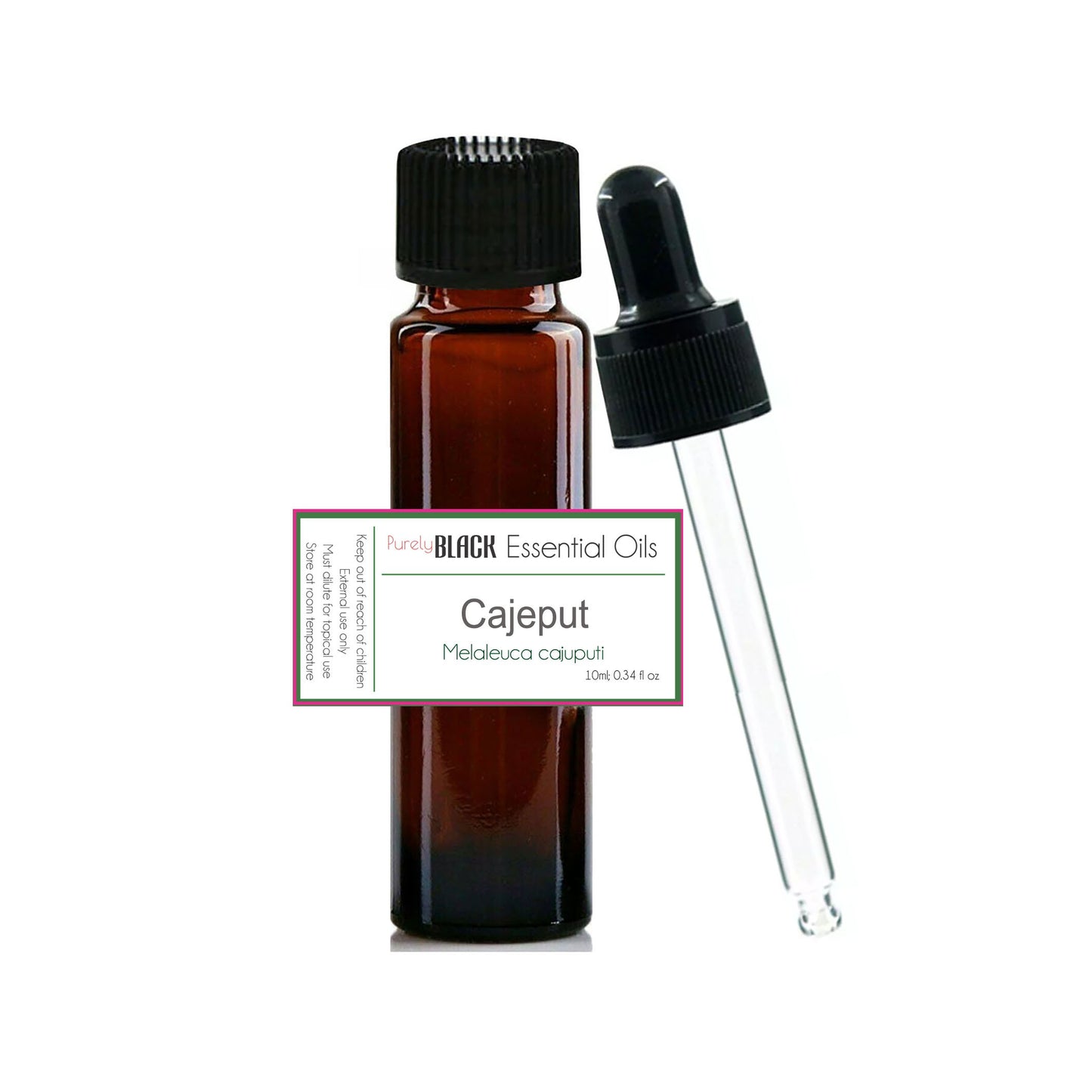
purelyBlack's pure cajeput oil is available as a 100% pure essential oil, dispatched from Sydney.
What is cajeput oil called in English?
In English, this aromatic botanical is commonly called cajeput oil, white tea tree oil, or swamp tea tree oil.
The English name cajeput originates directly from the Indonesian terms "kayu putih," which translate literally to "white wood." This moniker honours the distinctive thick, spongy, whitish-grey bark that envelops the tree trunk in its native Southeast Asian and northern Australian wetland habitats. Throughout international botanical commerce, distributors often list it under regional common names such as weeping paperbark or white paperbark essential oil.
Because Cajeput shares the Melaleuca genus with Australian standard tea tree (Melaleuca alternifolia), consumers sometimes confuse the two distinct oils. While both species possess crisp botanical aromas, Cajeput contains higher amounts of 1,8-cineole and alpha-terpineol, lending it a sweeter, fresher note reminiscent of eucalyptus. Understanding these botanical designations ensures you select the exact aroma profile suited to your domestic aromatherapy routines.
Historically, historical apothecaries in Europe referred to the imported distillate as "cajuput" or "oil of cajeputi." Today, standard English labelling recognizes cajeput oil as the official industry term across natural cosmetic, perfumery, and botanical wellness sectors. Always verify the botanical Latin name on product packaging to confirm authenticity and botanical purity before purchasing.


What is cajeput oil good for skin?
When seeking clear skin, many people turn to cajeput oil to support a healthy complexion and clarify oily areas.
- Blemish Clarification: Diluted topical applications help balance excess surface sebum and cleanse congested pores on problem skin.
- Complexion Tone: Botanical compounds support a refreshed skin appearance when blended into nightly facial moisturising routines.
- Soothing Care: Properly diluted formulas provide comforting nourishment to rough, weathered skin exposed to harsh outdoor elements.
Cajeput essential oil contains natural monoterpenes that make it a valuable botanical component for clarifying greasy or blemish-prone skin. When blended into skincare preparations, Cajeput aids in removing surface impurities without stripping away the essential natural moisture barrier. Its refreshing properties deliver an invigorating sensation that leaves tired skin feeling clean and revived.
To safely incorporate this botanical into daily personal care, always blend a single drop into a carrier such as Fractionated Coconut Oil to maintain a 1% dilution ratio. This measured approach ensures the skin receives balanced topical care while minimising any possibility of epidermal irritation. Never apply concentrated drops directly onto broken skin, active rashes, or sensitive facial zones.
Outdoor enthusiasts frequently incorporate diluted Cajeput into topical body rubs following physical exertion or outdoor exposure. The warming sensation generated across pulse points promotes skin comfort and environmental resilience throughout changing seasons. Storing your diluted skin formulations in amber glass bottles safeguards the sensitive monoterpenes from heat and light degradation.
Does cajeput oil blend well with other oils?
Yes, cajeput oil blends exceptionally well with woody, floral, citrus, and herbal essential oils for balanced aromatic diffusions.
| Essential Oil Partner | Aromatic Note | Synergy Profile |
|---|---|---|
| Eucalyptus Oil | Top / Middle | Crisp, clearing botanical aroma that revitalises indoor environments. |
| Geranium Oil | Middle | Sweet floral contrast that softens sharp camphoraceous overtones. |
| Black Spruce Oil | Top / Middle | Grounding evergreen synergy suited for invigorating morning diffusions. |
| Ylang Ylang Oil | Base / Middle | Rich floral depth that balances bright cineolic clarity in living spaces. |
The naturally fresh, medicinal, and slightly fruity top-to-middle aroma profile of Cajeput serves as an adaptable bridge in complex diffuser recipes. Pairing it with bright citrus oils like bergamot or sweet orange softens its sharp camphoraceous notes, producing an uplifting atmosphere in office spaces. When combined with herbaceous oils such as rosemary or thyme, it creates a crisp, outdoors-inspired ambience.
For grounding and tranquil evening routines, pairing Cajeput oil with woody base notes such as cedarwood or frankincense helps anchor its swift evaporation rate. These balanced botanical combinations create complex room fragrances that offer comfort after long, demanding days. Experimenting with drop ratios allows you to craft customized home aromatics tailored to specific personal preferences.
Is cajeput oil safe to use at home?
Yes, cajeput essential oil is safe for home aromatherapy when properly diffused in ventilated rooms or safely diluted before handling.
Practising safe home diffusion involves adding three to four drops of Cajeput essential oil to an ultrasonic diffuser filled with fresh water. Ensure rooms remain adequately ventilated during operation by keeping interior doors open to allow continuous airflow. Diffuse in thirty-minute intervals rather than running units constantly throughout the day to prevent sensory fatigue.
Special precautions are necessary in households with companion animals or young children under six years of age. Felines and canines possess highly sensitive olfactory systems and metabolise essential oil compounds differently than humans. Never operate diffusers in small, enclosed rooms where pets cannot freely exit, and never apply essential oils topically to animal fur or skin.
Proper storage is essential to maintain the integrity of your botanical collection and prevent accidental ingestion by minors. Keep amber glass bottles tightly capped in a dark, temperature-controlled cupboard away from direct sunlight, open flames, and heat sources. Storing essential oils securely guarantees their aromatic freshness and ensures a safe domestic environment for the entire family.
To explore similar profiles, discover these pure purelyBlack creations: Clary Sage Oil and Melissa Oil — each dispatched from Sydney.
Related Reading
For more on cajeput oil, see our companion guide: What Is Cajeput Essential Oil Used For? — Complete Guide.
About the Author
Written by H.R. Kim
Founder at purelyBlack — an Australian-owned perfumery and botanical studio based in Sydney. H.R. specialises in scent profiling and natural ingredient sourcing, meticulously balancing premium fragrance oils and 100% pure essential oils to create elevated aromatic experiences.
Last updated: August 2026
Disclaimer: purelyBlack essential oils are for external use and aromatherapy purposes only. They are not intended to diagnose, treat, cure, or prevent any disease. Always dilute with a carrier oil before topical application and consult a healthcare professional if pregnant or under medical supervision.
