







What Is Cajeput Essential Oil Used For? — Complete Guide
What is cajeput essential oil used for?
Cajeput essential oil is commonly used in aromatherapy diffusers, topical soothing chest rubs, and refreshing botanical skincare formulations.
- Aromatic Diffusion: Diffusing cajeput oil creates a clear, invigorating atmosphere that supports refreshing indoor air quality during seasonal shifts.
- Topical Application: Dilute cajeput oil in Fractionated Coconut Oil to massage tired joints after strenuous physical activity.
- Skin Clarification: Adding cajeput to natural cosmetic rinses supports a healthy complexion by balancing excess surface oils effectively.


Extracted from the fresh leaves and twigs of Melaleuca cajuputi, a resilient tree in the Myrtaceae botanical family, Cajeput has a long history of traditional practical use. The plant material undergoes meticulous steam distillation to extract its aromatic botanical compounds. Native to Southeast Asia and parts of tropical Northern Australia, this oil is celebrated for its versatile clarifying properties.
When experiencing seasonal respiratory tension or muscular fatigue, many people turn to this invigorating botanical extract. Its brisk vapour helps refresh indoor spaces, providing aromatic comfort when seasonal challenges arise. In traditional wellness practices, topical liniments infused with cajeput oil are applied to bring a comforting sensation of warmth to weary muscles.
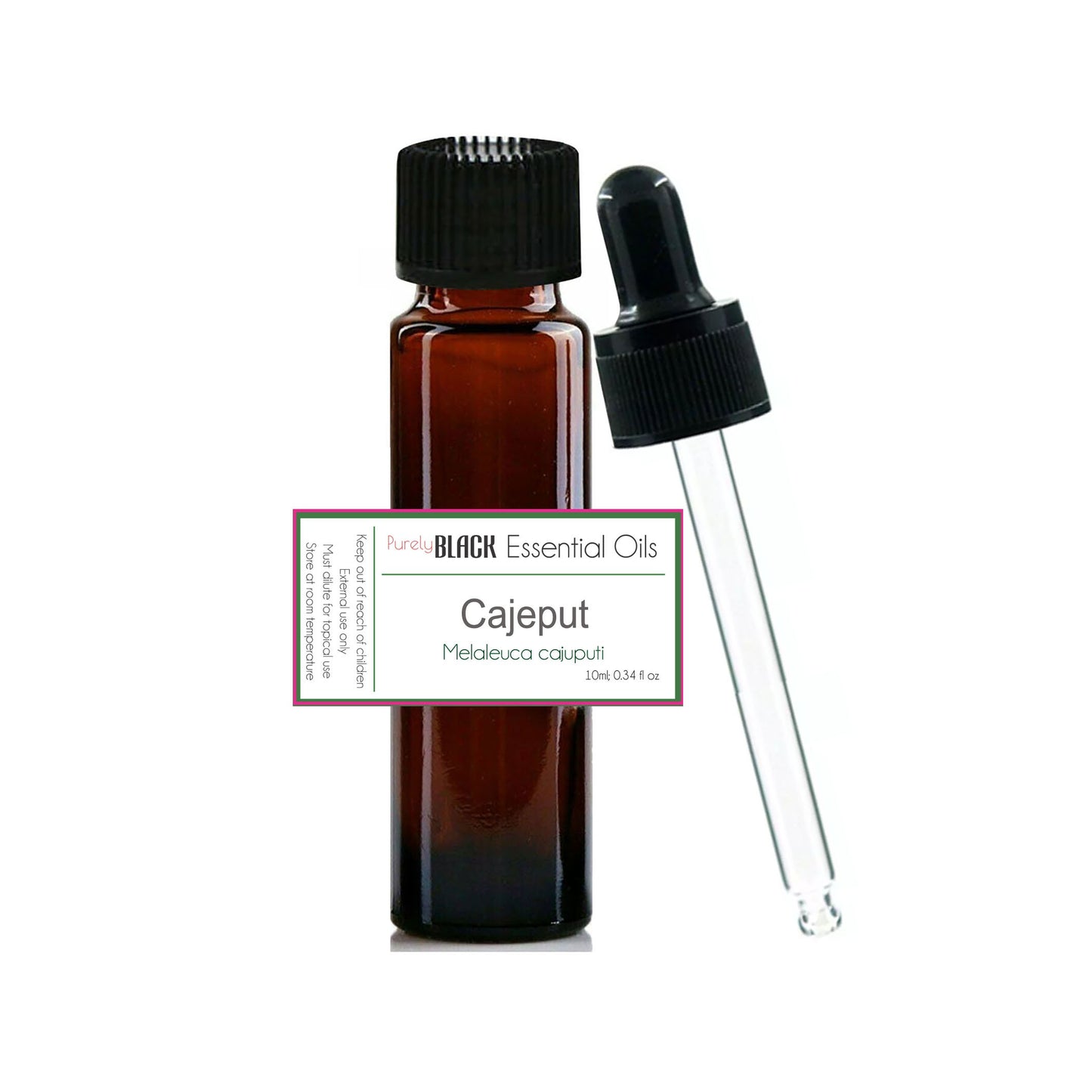
In modern personal care routines, Cajeput serves as an active botanical ingredient in balancing facial cleansers, clarifying scalp treatments, and comforting chest balms. Its clean fragrance neutralises unpleasant household odours while encouraging focused mental energy. purelyBlack's pure cajeput oil is available as a 100% pure essential oil, dispatched from Sydney.
What does cajeput essential oil smell like?
Cajeput essential oil smells fresh, medicinal, and camphoraceous, blending sharp herbal notes with a subtle, fruity-sweet undertone.
Aromatherapists often describe the fragrance of Cajeput as a softer, fruitier alternative to standard eucalyptus and tea tree. The initial top note delivers an immediate, crisp camphor burst that clears stuffiness and awakens the senses. As the fragrance diffuses, underlying herbaceous tones emerge with a warm, slightly sweet woody dry-down.
The distinctive aromatic profile stems from its naturally occurring monoterpenes and oxides, which produce an expansive, clean scent. Unlike overly sharp medicinal extracts, cajeput essential oil possesses a roundness that makes it approachable for daily diffusion. This balanced aroma promotes a tranquil atmosphere while maintaining an uplifting, crisp presence throughout the home.
Because of its bright top notes, Cajeput blends exceptionally well with woody, floral, and citrus oils. Pairing it with grounding Cedarwood Oil creates a calming forest ambience that helps settle evening restlessness. For daytime freshness, blending it with uplifting Lemon Myrtle Oil creates a revitalising, sweet-medicinal bouquet that cleanses stale indoor air.


Is cajeput essential oil the same as tea tree oil?
No, cajeput essential oil is not the same as tea tree oil, despite both belonging to the botanical Myrtaceae family.
- Botanical Distinction: Cajeput is extracted from Melaleuca cajuputi, whereas tea tree oil is distilled from Melaleuca alternifolia.
- Chemical Differences: Cajeput contains high concentrations of 1,8-cineole, while tea tree oil is dominated by terpinene-4-ol.
- Aromatic Profile: Cajeput delivers a sweeter, milder camphoraceous fragrance compared to the sharp, pungent scent of tea tree.
Although both trees belong to the genus Melaleuca, their distinct chemical profiles produce very different aromas and applications. Cajeput oil typically contains between 50% and 65% 1,8-cineole according to peer-reviewed constituent analysis. In contrast, standard Australian tea tree oil contains high levels of terpinene-4-ol with relatively low cineole levels.
The prominence of 1,8-cineole gives Cajeput its penetrative, eucalyptus-like qualities, making it ideal for chest rubs and soothing steam inhalations. Tea tree, on the other hand, is widely selected for targeted skin purification due to its unique terpene balance. Understanding these differences allows enthusiasts to choose the right botanical oil for their specific wellness goals.
Furthermore, cajeput oil is generally perceived as milder on sensitive airways due to its subtle fruity sweetness. While tea tree remains an indispensable staple for topical blemishes, cajeput essential oil provides greater aromatic comfort when seeking physical ease and seasonal clarity.
What is cajeput essential oil good for?
When experiencing physical fatigue or seasonal stuffiness, many people turn to cajeput oil for warming topical comfort and aromatic clarity.
Traditionally used in botanical practice to provide comfort for tight muscles, cajeput oil serves as an invigorating massage additive. When diluted into nourishing carrier oils, it generates a gentle warming sensation that assists recovery after demanding workouts. This comforting action helps release tension in the neck, shoulders, and lower back.
In daily skincare, Cajeput supports a healthy complexion by balancing excess sebum production and clarifying congested pores. When combined with natural astringents such as Organic Witch Hazel Extract, it helps tone problem skin without stripping essential moisture. It is also frequently added to natural scalp serums to refresh roots and maintain healthy hair follicles.
| Application Method | Recommended Dilution | Aromatherapy Benefit |
|---|---|---|
| Ultrasonic Diffuser | 3–5 drops per 100ml water | Clears stuffy indoor air and promotes aromatic comfort |
| Targeted Muscle Massage | 2% dilution (4 drops per 10ml carrier) | Provides a warming sensation to ease body fatigue |
| Clarifying Skin Toner | 0.5% dilution in witch hazel base | Balances excess surface sebum and purifies pores |
| Warm Steam Inhalation | 1–2 drops in a steaming bowl | Encourages open, easy breathing during winter seasons |
Beyond personal care, cajeput essential oil serves as a fantastic natural freshener for laundry and household surfaces. Adding several drops to cleaning rinses removes musty smells from gym clothing and bathroom towels. Its versatile nature makes it an essential asset for a low-tox, botanical home.
What is the strongest antibacterial essential oil?
Oregano, thyme, and clove are scientifically recognised as among the strongest antibacterial essential oils due to potent phenolic compounds.
Scientific research indicates that botanical oils rich in phenols, particularly carvacrol, thymol, and eugenol, exhibit the highest levels of natural antibacterial activity. Thyme oil and clove oil are heavily utilised in commercial green cleaners and protective sanitising sprays. These dense phenolic compounds disrupt bacterial cell walls, offering remarkable broad-spectrum hygiene benefits.
While Cajeput is not classified as a phenol-heavy oil, its significant concentrations of 1,8-cineole and alpha-terpineol deliver robust natural cleansing capabilities. Cajeput oil offers an effective yet significantly gentler aromatic profile than aggressive extracts like oregano. This makes cajeput essential oil much easier to diffuse regularly without overwhelming household members or causing airway irritation.
For whole-home air purification, diffusing Cajeput alongside Thyme or White Camphor Oil establishes a fresh, protective atmosphere. Combining diverse botanical profiles delivers comprehensive environmental cleansing while maintaining a light, enjoyable fragrance throughout living areas.
To explore similar profiles, discover these pure purelyBlack creations: Helichrysum Oil, Carrot Seed Oil, and Labdanum Oil — each dispatched from Sydney.
Related Reading
For more on cajeput essential oil, see our companion guide: What Are the Side Effects of Cajeput Essential Oil? Safety Guide.
About the Author
Written by H.R. Kim
Founder at purelyBlack — an Australian-owned perfumery and botanical studio based in Sydney. H.R. specialises in scent profiling and natural ingredient sourcing, meticulously balancing premium fragrance oils and 100% pure essential oils to create elevated aromatic experiences.
Last updated: August 2026
Disclaimer: purelyBlack essential oils are for external use and aromatherapy purposes only. They are not intended to diagnose, treat, cure, or prevent any disease. Always dilute with a carrier oil before topical application and consult a healthcare professional if pregnant or under medical supervision.
