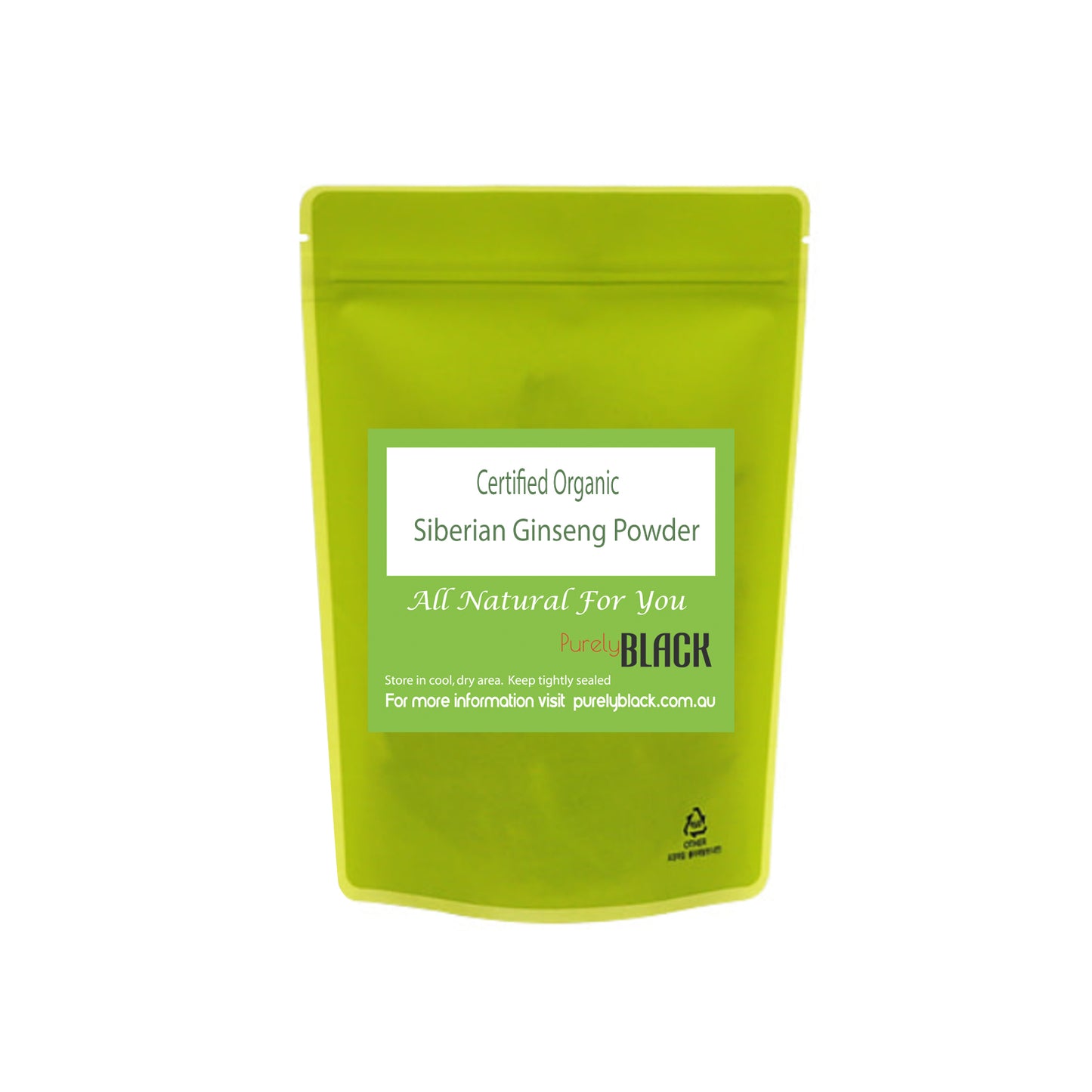
Certified Organic Ginseng Root Powder for Energy and Vitality
Couldn't load pickup availability
Share
What is Ginseng Root Powder good for?
Ginseng Root Powder supports energy, stamina, and mental clarity during periods of physical or emotional stress.
Sourced from Eleutherococcus senticosus, a renowned adaptogenic root native to the mountain forests of northeast China, this Certified Organic powder has been treasured for centuries in Traditional Chinese Medicine as Ci Wu Jia—a tonic to invigorate Qi and strengthen vitality. purelyBlack's Ginseng Root Powder is 100% pure, vegan, and cruelty-free, delivering nature's resilience in every micro-powdered serving. Explore the tabs below for detailed botanical profiles, step-by-step recipes, and safety guidelines.
PRODUCT DETAILS & PROFILE
Core Product Details
- Botanical Name: Eleutherococcus senticosus (also known as Acanthopanax senticosus)
- Plant Family: Araliaceae
- Plant Part Used: Root
- Processing Method: Micro-Powder
- Country of Origin: China
- Texture & Colour: Fine, light to medium brown powder with a slightly woody, earthy aroma and a dry, silky texture that blends smoothly into liquids.
Quality & Purity
- Certified Organic: Grown without synthetic pesticides, herbicides, GMO inputs, or chemical fertilisers, ensuring the root retains its full spectrum of natural eleutherosides and phytochemicals.
- 100% Pure & Natural: No fillers, synthetics, additives, flow agents, or preservatives. Just pure Siberian Ginseng root, ground to a fine micro-powder.
- Vegan & Cruelty-Free: No animal-derived ingredients. Never tested on animals.
- Australian Brand: Proudly Australian-owned and operated, committed to quality, transparency, and sustainable sourcing.
- Quality Assured: Batch-tested for purity and botanical integrity to ensure you receive a premium adaptogenic powder every time.
Botanical Profile & Key Constituents
What does Ginseng Root Powder smell and taste like?
Dry Ginseng Root Powder releases a subtle earthy aroma with faint woody and slightly sweet undertones; the taste is grounding, gently bitter, with a warming finish. Eleutherococcus senticosus is a species of small, woody shrub in the family Araliaceae, native to Northeastern Asia, and may be colloquially called devil's bush, Siberian ginseng, taiga root, eleuthero, ciwujia, Devil's shrub, shigoka, touch-me-not, wild pepper, or kan jang. Indigenous peoples in Siberia, like the Evenki and Yakut, used it for centuries to endure long, harsh winters; they brewed root decoctions to stave off fatigue and chill while hunting or traveling across frozen tundra. This rich heritage underscores its time-tested role in supporting resilience and vitality.
- Key Constituents: Eleutherosides B and E are marker compounds for E. senticosus and are considered to be responsible for its antifatigue and other effects; the European Pharmacopoeia monograph states that its dried whole or cut underground organs should contain a minimum of 0.08% for the sum of eleutheroside B and eleutheroside E. Additional bioactive compounds include triterpenoid saponins (acanthopanaxosides), coumarins (isofraxidin), chlorogenic acid, sesamin, and complex polysaccharides.
- Traditional Heritage: Eleuthero (Eleutherococcus senticosus/Acanthopanax senticosus), also known as Siberian ginseng, is an adaptogenic herb originating from North America with a history of use in folk and traditional Chinese medicine. It is popularly used as an "adaptogen" drug and could invigorate qi, strengthen the spleen, and nourish the kidneys according to the theory of traditional Chinese medicine (TCM). Written records appear in Russian pharmacopeias by the 19th century—tales of Cossack soldiers swearing by its stamina-boosting properties; during World War II, Soviet researchers studied Siberian ginseng extensively and documented improvements in endurance and mental focus among those given Eleutherococcus extracts.
MAIN BENEFITS & PROPERTIES
How do you use Ginseng Root Powder?
Add 1/4 to 1/2 teaspoon to teas, smoothies, or warm tonics daily.
Traditional Wellness Uses
- Adaptogenic Stamina Support: Traditional uses for Eleutherococcus are numerous, including fatigue, poor stamina, and stress intolerance and also nervous and mood disorders such as depression, mental fatigue, and poor concentration. Much of medicinal actions of Eleutherococcus are credited to the eleutherosides, a group of liposoluble phenylpropanoid and lignin glycosides found in the roots and stems, including syringin (eleutheroside B) and syringaresinol (eleutheroside E), schisandrin, and sesamin. Eleutherosides are largely credited with the antifatigue effects of Eleutherococcus; for example, syringin has an insulinotropic effect, enhances the secretion of β-endorphin from adrenal medulla, and stimulates peripheral opioid receptors. For those seeking natural ways to boost vitality and cognitive clarity, explore Ginseng Root Powder energy and cognitive support.
- Immune System Resilience: Eleutherococcus is considered a traditional remedy to treat chronic and acute infections and improve immune function and to protect against toxins including hepatotoxins, neurotoxins, and cerebral vascular toxins. Eleuthero (Siberian ginseng) has components that are believed to help boost immune response.
Skin & Hair Benefits
- Topical Circulation Support: Traditionally used in East Asian practices to support scalp health and hair follicle vitality when applied as a cooled infusion rinse.
- Antioxidant Skin Nourishment: Eleutherococcus also contains coumarins such as isofraxidin, and flavones; the coumarin isofraxidin, found in Eleutherococcus and other plants, is credited with antioxidant, anti-inflammatory, and immune-modulating activities.
Nutritional & Botanical Properties
- Eleutherosides A-G (0.6-0.9%): A chemically diverse group of constituents that are not unique to Eleutherococcus; Eleutherosides B (a phenylpropanoid) and E (a lignan) have been considered to be the most important active constituents.
- Triterpenoid saponins called acanthopanaxosides including sessiloside, tauroside, ciwujianosides, and chiisanoside, and a sesquiterpenoid saponin called oplopanone B; ciwujianosides are mast cell stabilizers, reducing histamine release provoked by immunoglobulins.
- There are seven primary eleutherosides in eleuthero, with eleutherosides B and E being the most frequently studied; Siberian ginseng also contains complex polysaccharides, which are a main reason for its ability to boost the immune system.
Is Ginseng Root Powder good for mental performance?
Yes, it has been traditionally used to support focus, alertness, and cognitive stamina during demanding periods. Eleutherococcus senticosus (ES) has demonstrated benefit to cognitive function as well as physical and mental endurance. A recent review on the archival literature from the USSR's studies showed that the effects of eleutherococcus had been studied on cognitive performance; the impact on cognitive performance appeared to be dose-dependent.
Is Ginseng Root Powder safe to take every day?
It may be used daily for short to moderate periods with guidance from a qualified practitioner. Mills and Bone recommend a 6 week period of treatment followed by a 2 week break in healthy individuals; the European Medicines Agency recommends that it is taken for a maximum of two months. For general adaptogenic support, start low (300 mg extract) and adjust based on tolerance and effect; high doses over 1200 mg daily could lead to irritability or insomnia in some folks.
What does Ginseng Root Powder taste like?
Ginseng Root Powder has an earthy, slightly woody flavour with a gentle bitterness and a subtly sweet, warming aftertaste. The tincture has an earthy and sweet smell and taste, with a very gentle bitter and warming aftertaste. When steeped, it releases a mild, earthy aroma with subtle sweet notes; the flavor is deep and grounding, often described as neutral to mildly bitter, making it an excellent base or balancing element in herbal blends. Honey, lemon, ginger, or cinnamon can beautifully balance the natural bitterness and enhance the overall drinking experience.
Where to Buy
Where can I buy Certified Organic Ginseng Root Powder in Australia?
purelyBlack offers Certified Organic Ginseng Root Powder with free shipping Australia-wide, available directly at purelyblack.com.
Every batch is carefully sourced, micro-powdered to preserve bioactive compounds, and packaged without fillers or additives. As a proudly Australian-owned brand, purelyBlack is committed to delivering transparency, quality, and convenience—so you can shop with confidence from the comfort of home.
HOW TO USE
HOW TO USE
Ginseng Root Powder Suggested Serving
- Traditional suggested serving: 2 to 3 grams of dried powder per day. For tea, use 1/4 to 1/2 teaspoon per cup. Always begin with the lower amount and adjust to your individual needs. Not a therapeutic dose—consult a health practitioner for personalised guidance.
Master Class: How to Make Ginseng Root Tea
- Measure 1/4 to 1/2 teaspoon of Ginseng Root Powder into your favourite mug or teapot.
- Pour 200-250 mL of freshly boiled water (around 95-100°C) over the powder.
- Stir gently and cover, allowing the tea to steep for 5 to 10 minutes to release the earthy, slightly woody notes.
- Strain if desired, then sweeten with honey or a squeeze of lemon to balance the natural bitterness and add brightness.
- Sip slowly, ideally in the morning or early afternoon to support sustained energy and mental clarity throughout the day.
Ginseng Root Smoothie & Food Uses
- Adaptogen Energy Smoothie: Blend 1/4 teaspoon Ginseng Root Powder with 1 frozen banana, 1 tablespoon almond butter, 1 cup plant milk, 1/2 teaspoon cinnamon, and a handful of spinach for a grounding pre-workout boost.
- Golden Tonic Latte: Whisk 1/4 teaspoon Ginseng Root Powder with 1/2 teaspoon turmeric, a pinch of black pepper, 1 cup warm oat milk, and a drizzle of maple syrup for a warming adaptogenic ritual.
- Qi-Tonifying Soup Base: Add 1/2 teaspoon Ginseng Root Powder to broths, bone stocks, or vegetable soups during the final 10 minutes of simmering to infuse subtle earthy depth and traditional wellness support.
DIY Topical Application
- Revitalising Root Hair Rinse: Steep 1 teaspoon Ginseng Root Powder in 2 cups hot water for 15 minutes, strain, cool, and use as a final rinse after shampooing to support scalp circulation and hair vitality. For external use only.
- Energising Face Mask: Combine 1/2 teaspoon Ginseng Root Powder with 1 tablespoon plain yogurt and 1/2 teaspoon honey; apply to cleansed skin, leave for 10 minutes, rinse with cool water. For external use only.
Pairs Well With
SAFETY & PRECAUTIONS
General Safety Guidelines
- Consult a Healthcare Professional: Always consult a qualified health practitioner before use, especially if you are taking medication, have a pre-existing medical condition, or are managing cardiovascular health.
- Medication Interactions: Siberian ginseng can increase the risk of side effects from digoxin, a medication used to treat heart conditions. Interactions with hexobarbital have also been described. Taking Siberian ginseng along with medications that are broken down by the liver can increase the effects and side effects of some medications, including amitriptyline, diazepam, celecoxib, diclofenac, ibuprofen, warfarin, and others. Siberian ginseng might increase the activity of the immune system and may decrease the effectiveness of immunosuppressant medications such as azathioprine, cyclosporine, tacrolimus, prednisone, and corticosteroids.
- Safe Storage: Store in a cool, dark place in an airtight container away from direct sunlight and moisture. A period of treatment following a break is generally recommended; Mills and Bone recommend a 6 week period of treatment followed by a 2 week break in healthy individuals, while the European Medicines Agency recommends that it is taken for a maximum of two months.
Specific Precautions
- Pregnancy & Nursing: Information regarding safety and efficacy during pregnancy and lactation is lacking; because of a potential effect on developing fetal myocytes, use of Siberian (and other) ginseng is contraindicated during pregnancy. Avoid taking Siberian ginseng if you're breastfeeding, as we do not know if this herb is safe to take while breastfeeding.
- Children: Vulnerable groups—pregnant or nursing moms, children under 12, those with uncontrolled hypertension—should avoid or use under medical supervision.
- Sensitive Individuals: Traditional Russian literature suggests to avoid using Siberian Ginseng in cases of perimenopause, nervous tension or mania, or high blood pressure. High doses of eleutherococcus are associated with irritability, insomnia, and anxiety. Some individuals may find it overstimulating.
- Blood Pressure Caution: Traditionally there is caution when using in people with high blood pressure.

Something else you'll love
-
Food Grade Australian Bentonite Clay Powder
9 reviewsRegular price From $12.95 AUDRegular priceSale price From $12.95 AUD -
Organic Dandelion Root Dried
Regular price From $10.95 AUDRegular price$15.95 AUDSale price From $10.95 AUDSale -
Food Grade Activated Charcoal Powder | Natural Detox & Whitening
14 reviewsRegular price From $13.95 AUDRegular priceSale price From $13.95 AUD -
Certified Organic Ceylon Cinnamon Powder Blood Sugar Warming Support
Regular price From $10.95 AUDRegular priceSale price From $10.95 AUD