Skip to product information
1 of 1

Certified Organic Amla Berry Powder for Immunity and Digestion

Regular price $14.95 AUD
Regular price Sale price $14.95 AUD
Sale Sold out
Size
Quantity

What is Amla Powder good for?

Amla Powder supports immunity, digestion, and radiant skin with one of nature's highest concentrations of vitamin C.

Sourced from the Certified Organic berries of Emblica officinalis, also called Indian gooseberry, this micro-powdered superfood delivers powerful antioxidants, tannins, and polyphenols in every serving. Revered for over 5,000 years in Ayurveda as a rejuvenating Rasayana, purelyBlack's Amla Berry Powder is 100% pure, vegan, and cruelty-free, crafted for those who prefer clean, plant-based wellness. Explore the tabs below for detailed botanical profiles, step-by-step recipes, and safety guidelines.

PRODUCT DETAILS & PROFILE

Core Product Details

  • Botanical Name: Emblica officinalis (italics)
  • Plant Family: Phyllanthaceae (formerly Euphorbiaceae)
  • Plant Part Used: Whole berry (fruit)
  • Processing Method: Micro-Powder (freeze-dried and finely milled)
  • Country of Origin: India
  • Texture & Colour: Fine, pale greenish-tan to light beige powder with a slightly fibrous, dry texture and tart, astringent aroma

Quality & Purity

  • Certified Organic: Grown without synthetic pesticides, herbicides, or genetically modified organisms (GMO), certified to Australian and international organic standards for transparency and integrity.
  • 100% Pure & Natural: No fillers, synthetic additives, flow agents, or preservatives. Just whole-food Amla berry, carefully dried and milled to preserve its natural vitamin C and polyphenol content.
  • Vegan & Cruelty-Free: Free from all animal-derived ingredients. Never tested on animals.
  • Australian Brand: Proudly Australian-owned and operated with a commitment to quality, transparency, and ethical sourcing.
  • Quality Assured: Batch-tested for purity, botanical identity, and freedom from contaminants to ensure every jar meets purelyBlack's premium standards.

Botanical Profile & Key Constituents

What does Amla Berry Powder smell and taste like?

Dried Amla Powder has a sharp, tart aroma and a distinctly sour, astringent taste with subtle bitter and earthy notes. The flavour is intense and mouth-puckering, reminiscent of unripe green fruit with a tangy edge similar to lemon zest or underripe pineapple. This complex sensory profile reflects Amla's exceptional phytochemical richness and its traditional role in Ayurvedic formulations such as Triphala and Chyawanprash, where it is valued for balancing all three doshas—Vata, Pitta, and Kapha—and supporting whole-body rejuvenation. The name "Amla" itself means "sour" in Hindi, honouring the berry's signature flavour.

  • Key Constituents: Amla is a powerhouse of bioactive compounds including ascorbic acid (vitamin C, 193–720 mg per 100g fresh fruit weight), stabilised by tannins such as β-glucogallin, emblicanin A, and emblicanin B. It is rich in polyphenolic acids including gallic acid, ellagic acid, and quercetin, as well as essential minerals (calcium, phosphorus, iron, potassium) and amino acids (proline, lysine, alanine). These constituents contribute to Amla's antioxidant activity, immune support, and traditional role in skin, hair, and digestive wellness.
  • Traditional Heritage: Amla (Emblica officinalis) is revered in Ayurveda as "Amalaki," one of the most important Rasayana (rejuvenating) herbs. First mentioned in the Charaka Samhita (circa 1st–2nd century CE), it has been used for millennia to promote longevity, balance the doshas, and support vitality. Known by Sanskrit names meaning "mother," "nurse," and "immortality," Amla is a cornerstone of classical Ayurvedic formulas including Triphala (three-fruit blend) and Chyawanprash (rejuvenative paste), reflecting its esteemed status as a whole-body tonic across generations of traditional wellness practice.

MAIN BENEFITS & PROPERTIES

How do you use Amla Powder?

Mix ½–1 teaspoon in warm water, tea, or smoothies daily.

Traditional Wellness Uses

  • Immune Support: Amla is one of nature's richest sources of vitamin C, containing 193–720 mg per 100 grams of fresh fruit—up to 20 times more than an orange. This exceptional concentration, stabilised by protective tannins, supports white blood cell production and helps the body resist seasonal infections. Used in Ayurveda for over 5,000 years as a Rasayana (rejuvenating tonic), Amla traditionally supports the body's natural defence mechanisms and vitality. Learn more about how to drink Amla powder for immune support.
  • Digestive Wellness: Amla's unique profile of five tastes (sour, sweet, bitter, astringent, pungent) traditionally stimulates Agni (digestive fire) in Ayurveda, supporting healthy digestion without aggravating acidity. Its high fibre content (7–16 grams per 100 grams dry weight) supports regular bowel movements, while its astringent tannins traditionally soothe the digestive tract lining.
  • Blood Purification & Detox: Revered in Ayurveda as a natural blood purifier, Amla traditionally supports liver detoxification and healthy circulation. Its polyphenolic compounds—including gallic acid, ellagic acid, and emblicanin A and B—contribute to antioxidant activity that supports the body's natural cleansing pathways.

Skin & Hair Benefits

  • Collagen Production for Skin Elasticity: Amla's natural vitamin C content traditionally supports collagen synthesis, which is essential for maintaining skin firmness and elasticity. Clinical studies have shown regular Amla supplementation may increase skin hydration, thickness, and density, contributing to a plumper, more youthful appearance. Its antioxidants help protect skin cells from free radical damage and environmental stressors. For detailed topical recipes, see how to use Amla powder for skin and hair.
  • Hair Follicle Nourishment: Traditionally used in Ayurvedic hair care for centuries, Amla supports scalp health and hair follicle strength. Its high vitamin C content enhances iron absorption, which supports healthy hair growth, while its natural pigmentation-retaining properties traditionally help delay premature greying. When applied topically as a hair mask or oil infusion, Amla nourishes the scalp and adds natural shine.

Nutritional & Botanical Properties

  • Vitamin C (193–720 mg per 100g fresh fruit): Bound to protective tannins including β-glucogallin, Amla's vitamin C remains stable even when dried or processed, offering superior antioxidant protection compared to isolated ascorbic acid.
  • Polyphenols & Tannins: Gallic acid, ellagic acid, emblicanin A and B, and other tannoid complexes contribute to Amla's powerful antioxidant activity, supporting cellular health and oxidative stress defence.
  • Minerals & Amino Acids: Rich in calcium, iron, phosphorus, potassium, and amino acids including proline, lysine, and alanine, supporting tissue nourishment and overall vitality.

Is Amla Powder good for heart health?

Yes, Amla has traditionally been used to support healthy cholesterol and blood pressure levels already within normal range. Human studies have shown that Amla supplementation may help maintain healthy lipid profiles by supporting balanced LDL (low-density lipoprotein), HDL (high-density lipoprotein), and triglyceride levels. Its potassium content and natural compounds traditionally support vascular health and normal blood flow.

Is Amla Powder safe to take every day?

Yes, Amla Powder is generally safe for daily use in suggested serving amounts of ½–1 teaspoon (2–4 grams) for adults. Traditionally consumed daily in Ayurveda for long-term vitality and rejuvenation, Amla is considered a tridoshic herb suitable for all constitutions. However, always consult a healthcare practitioner before daily use if you are pregnant, nursing, taking medications, or have pre-existing health conditions.

What does Amla Powder taste like?

Amla Powder has a distinctly sour, astringent, and slightly bitter taste with subtle sweet and pungent undertones. The intensity is tart and tangy, similar to a mix of green apple, pineapple, and lemon, with a naturally drying, mouth-puckering astringency. The flavour is bold and not sweet, which is why Amla is traditionally mixed with honey, blended into smoothies with banana or mango, or added to warm tea with lemon and ginger to balance its sharpness. Interestingly, after consuming Amla, many people experience a sweet aftertaste as the coating of tannins washes away from the taste buds.

Where to Buy

Where can I buy Certified Organic Amla Berry Powder in Australia?

purelyBlack offers Certified Organic Amla Berry Powder with free shipping Australia-wide, available directly at purelyblack.com.

As a proudly Australian-owned brand, purelyBlack sources only the finest micro-powdered Amla berries, grown organically in India and processed to preserve maximum vitamin C potency and tannin integrity. Every batch is 100% pure with no fillers, flow agents, or synthetics—just whole-food nutrition you can trust.

HOW TO USE

Amla Berry Suggested Serving

  • Traditional Ayurvedic serving: ½–1 teaspoon (approximately 2–4 grams) of Amla Powder daily, mixed with water, juice, or added to smoothies. Start with ¼ teaspoon if new to Amla, and increase gradually based on tolerance.

Master Class: How to Make Amla Berry Tea

  1. Measure ½ teaspoon of Amla Powder into a mug.
  2. Pour 200 mL (approximately ¾ cup) of warm filtered water (60–70°C) over the powder.
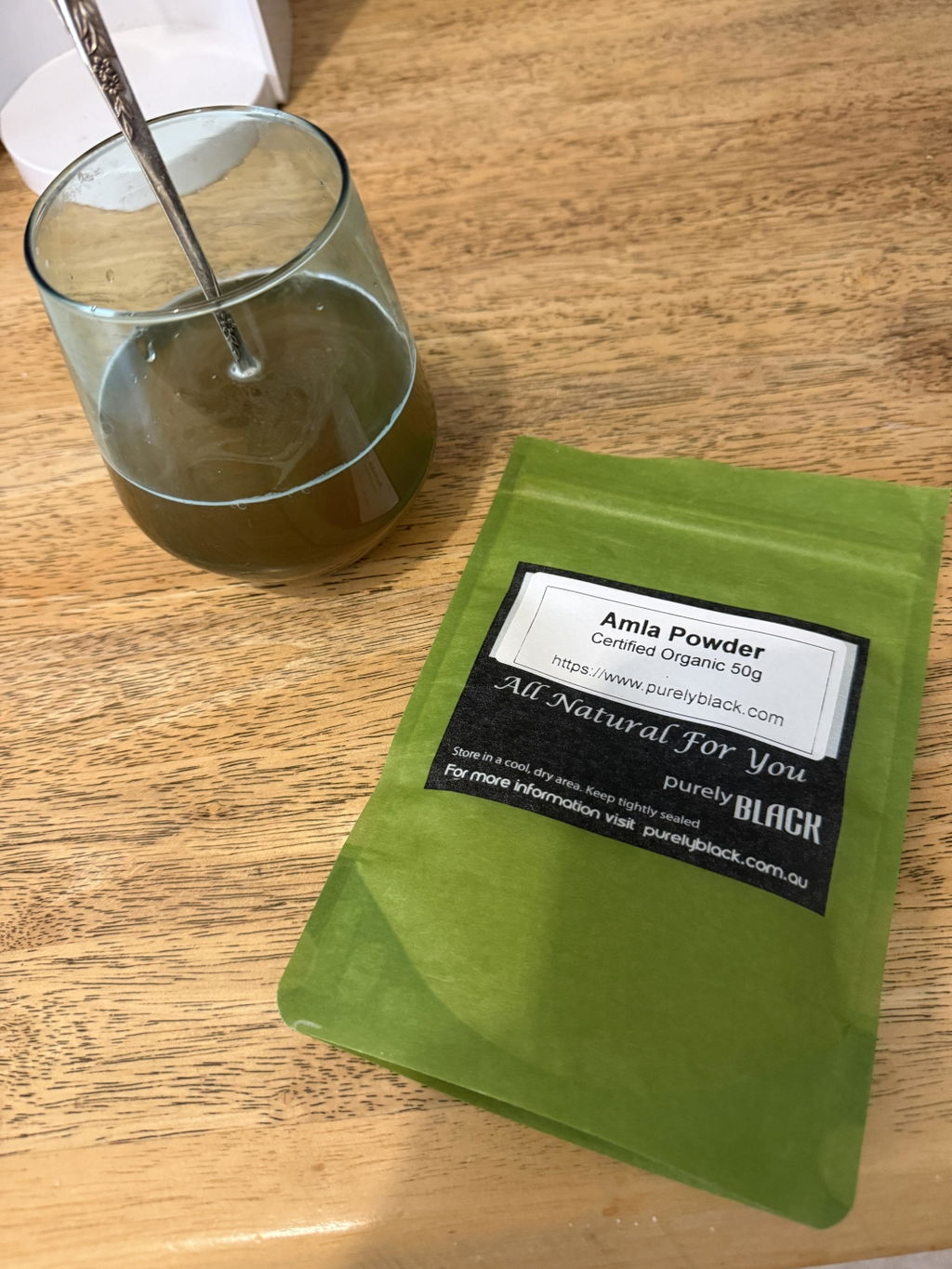
  3. Stir vigorously for 30 seconds until the powder is fully suspended and the liquid becomes cloudy golden-green.
  4. Add ½ teaspoon of raw honey, a squeeze of fresh lemon, or a pinch of ginger powder to balance the tart, astringent flavour.
  5. Sip slowly on an empty stomach in the morning for optimal absorption, or enjoy 30 minutes before meals to stimulate digestion.

Amla Smoothie & Food Uses

  • Immunity Boost Smoothie: Blend 1 teaspoon Amla Powder with 1 banana, ½ cup mango chunks, 1 cup coconut water, and a handful of spinach for a vitamin C–rich morning tonic.
  • Digestive Green Juice: Mix ½ teaspoon Amla Powder with 100 mL fresh cucumber juice, 50 mL aloe vera juice, a squeeze of lime, and a pinch of sea salt for a cooling digestive aid.
  • Ayurvedic Energy Balls: Combine 2 tablespoons Amla Powder with 1 cup pitted dates, ½ cup almonds, ½ cup desiccated coconut, and 1 tablespoon raw honey. Blend, roll into bite-sized balls, and refrigerate.

DIY Topical Application

  • Brightening Face Mask: Mix 1 tablespoon Amla Powder with 2 tablespoons plain yoghurt and ½ teaspoon raw honey. Apply evenly to cleansed skin, leave for 15–20 minutes, then rinse with lukewarm water. For external use only.
  • Hair Growth Scalp Treatment: Combine 2 tablespoons Amla Powder with 3 tablespoons coconut oil and 1 teaspoon castor oil. Massage into scalp and hair from roots to tips, leave for 30–45 minutes, then shampoo thoroughly. For external use only.

Pairs Well With

Ginger Root Powder | Spirulina Powder

SAFETY & PRECAUTIONS

General Safety Guidelines

  • Consult a Healthcare Professional: Always consult a qualified health practitioner before using Amla Powder, especially if you are pregnant, nursing, taking medications, or have pre-existing health conditions.
  • Medication Interactions: Amla may interact with blood-thinning medications such as warfarin or anticoagulants due to its high vitamin C content and potential effects on platelet function. It may also enhance the effects of blood glucose-lowering medications including insulin and metformin. If you are taking these medications, monitor your levels closely and discuss use with your healthcare provider.
  • Safe Storage: Store in a cool, dark, airtight container away from direct sunlight. When stored properly, Amla Powder maintains potency for 12–18 months.

Specific Precautions

  • Pregnancy & Nursing: Amla is generally considered safe during pregnancy and breastfeeding when consumed in moderate food amounts (1 fresh fruit or ½–1 teaspoon powder daily). Excessive intake may cause digestive upset. Always consult your healthcare provider for personalised guidance.
  • Children: Suitable for children over 5 years of age at half the adult serving size, mixed with honey or added to smoothies. Consult a paediatric healthcare professional before introducing to younger children.
  • Sensitive Individuals: Amla is naturally acidic and may aggravate acid reflux, heartburn, or gastritis in sensitive individuals. Start with a small amount (¼ teaspoon) and increase gradually. Rare allergic reactions including itching or swelling may occur in those sensitive to berries or stone fruits.
  • Blood Sugar & Bleeding Disorders: Amla may lower blood glucose and blood pressure naturally. Those with diabetes, hypoglycemia, or bleeding disorders should use with caution and under professional guidance. Discontinue use 1–2 weeks before elective surgery.
  • Staining Warning: Amla Powder can temporarily stain teeth, skin, and fabric. Rinse mouth with water after consuming. Avoid contact with light-colored fabrics during topical use.
View full details