Skip to product information
1 of 1

Certified Organic Mullein Leaf Tea for Respiratory Health and Lung Support

Regular price $12.95 AUD
Regular price Sale price $12.95 AUD
Sale Sold out
Size
Quantity

What is Mullein Leaf Tea good for?

Mullein Leaf Tea supports respiratory wellness and helps maintain clear, comfortable breathing.

Sourced from Verbascum thapsus and gently processed to preserve its natural mucilage and saponins, this Certified Organic loose leaf tea delivers traditional lung and throat support with every soothing cup. Grown in the pristine mountain meadows of Bulgaria, purelyBlack's Mullein Leaf Tea is 100% vegan and cruelty-free, crafted for those who value clean, plant-based wellness rituals. Explore the tabs below for detailed botanical profiles, step-by-step recipes, and safety guidelines.

PRODUCT DETAILS & PROFILE

Core Product Details

  • Botanical Name: Verbascum thapsus (italics)
  • Plant Family: Scrophulariaceae (figwort family)
  • Plant Part Used: Leaf
  • Processing Method: Loose Leaf
  • Country of Origin: Bulgaria
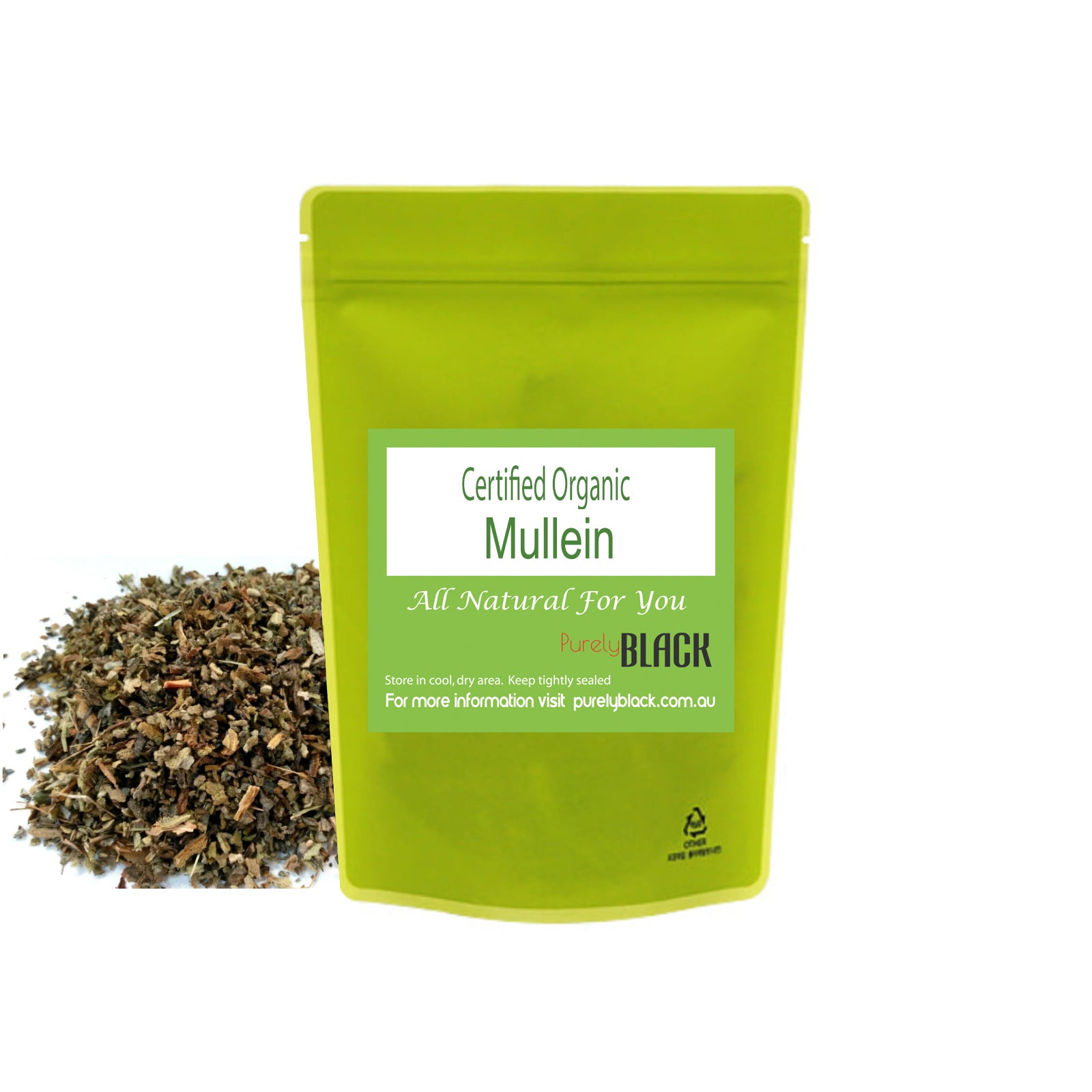
  • Texture & Colour: Soft, velvety dried leaves with fine hairs; silvery-grey to pale green colour. Loose-cut leaf form ideal for tea infusions.

Quality & Purity

  • Certified Organic: Grown without synthetic pesticides, herbicides, or GMO inputs, meeting strict organic certification standards. This guarantees the cleanest, most bioactive herb possible.
  • 100% Pure & Natural: No fillers, synthetics, additives, flow agents, or preservatives. Just pure mullein leaf as nature intended.
  • Vegan & Cruelty-Free: Contains no animal-derived ingredients and is never tested on animals.
  • Australian Brand: Proudly Australian-owned and operated, supporting local business and ethical sourcing.
  • Quality Assured: Each batch is assessed for purity, botanical integrity, and proper drying methods to ensure optimal therapeutic potency.

Botanical Profile & Key Constituents

What does Mullein Leaf smell and taste like?

Dried mullein leaf has a mild, faintly sweet, grassy aroma with subtle honey-like undertones, and brews into a gentle, earthy tea that soothes the throat with a smooth, mucilaginous texture.

Mullein (Verbascum thapsus) is a biennial plant recognizable by its tall flowering spike and soft, velvety leaves covered in fine hairs, and has been treasured for centuries in traditional European and Native American herbalism as a classic lung herb for soothing dry, irritated airways. Its leaves are harvested before the plant sends up its characteristic six-foot flowering stalk topped with bright yellow blooms. The gentle character of the tea makes it suitable for daily respiratory wellness rituals, with a taste profile that pairs beautifully with honey, lemon, or complementary herbs like licorice and marshmallow root.

  • Key Constituents: Mullein leaf contains approximately 3% mucilage (complex polysaccharides that create a soothing gel when hydrated), triterpene saponins (2-5%, contributing expectorant and mild antimicrobial effects), flavonoids including quercetin, kaempferol, rutin, and luteolin (providing antioxidant and anti-inflammatory activity), verbascoside (a phenylpropanoid glycoside with anti-inflammatory properties), iridoid glycosides such as catalposide and specioside, tannins (providing gentle astringent action), and naturally occurring vitamins and minerals including potassium, chloride, magnesium, and zinc.
  • Traditional Heritage: Mullein has been used by herbalists for hundreds of years as a remedy for the respiratory tract, particularly for irritating coughs with bronchial congestion, and was valued by Native Americans and colonists for various medicinal purposes from helping with coughs and breathing to healing wounds. In European folk traditions, mullein was called "lungwort" and used extensively in infusions, macerations, and syrups for respiratory ailments. Traditional Chinese Medicine and Ayurvedic systems have also recognized plants in the Verbascum genus for their demulcent and expectorant properties. This rich cross-cultural heritage validates mullein's standing as one of herbalism's most trusted respiratory allies.

MAIN BENEFITS & PROPERTIES

How do you use Mullein Leaf Tea?

Steep 1-2 teaspoons of dried mullein leaf in boiling water for 10-15 minutes, strain thoroughly, and sip warm.

Traditional Wellness Uses

  • Respiratory Comfort & Throat Support: Mullein has been traditionally used for centuries across European and Native American herbal medicine to support comfortable breathing and soothe irritated airways. The leaves contain mucilage, a gel-like substance that provides a soothing coating to mucous membranes, and saponins, which act as natural expectorants to help loosen and clear mucus from the respiratory tract. Mullein contains approximately 3% mucilage and small amounts of saponins and tannins, with the mucilaginous constituents thought to be responsible for the soothing actions on mucous membranes. Learn more about Mullein Leaf Tea for Respiratory Health.
  • Seasonal Immune Wellness: Mullein's traditional uses rely on the anti-inflammatory action of phytochemicals such as quercetin, which may explain its historical use for a wide range of conditions mediated by inflammatory processes including respiratory ailments. Traditional herbalists have valued mullein as a gentle ally during cold and flu season to support the body's natural defenses.

Skin & Hair Benefits

  • Topical Skin Soothing: Due to its mucilage content, mullein has been used topically by herbalists as a soothing emollient for inflammatory skin conditions and burns. The anti-inflammatory and antimicrobial properties make mullein-infused oils and compresses a traditional choice for minor wounds, eczema, and irritated skin.
  • Scalp Health & Hair Vitality: Mucilage-rich herbs like mullein are traditionally used for inflamed, itchy, dry, or irritated scalp conditions including eczema and dermatitis. Mullein hair rinses have been used to calm scalp irritation and support a healthy environment for hair growth.

Nutritional & Botanical Properties

  • Mucilage (approximately 3%): This gel-like polysaccharide becomes slippery when mixed with water, creating a protective coating that soothes irritated tissues throughout the respiratory tract and on the skin.
  • Saponins (triterpene compounds): These naturally occurring compounds help reduce surface tension in bronchial secretions, making mucus less viscous and easier to expel. They also contribute mild antimicrobial effects.
  • Flavonoids (including quercetin, kaempferol, rutin): These bioactive compounds include flavonoids such as quercetin, apigenin, luteolin, and kaempferol, which contribute anti-inflammatory and antioxidant properties.
  • Verbascoside (phenylpropanoid glycoside): A key phytochemical with documented anti-inflammatory and antioxidant activity.

Is Mullein Leaf Tea safe to take every day?

Mullein leaf tea is generally considered safe for most adults when consumed daily at traditional serving sizes (1-3 cups per day).

Mullein appears to be safe for most healthy adults when used as directed, with its gentle nature making it generally appropriate for long-term use without adverse effects. However, always consult a healthcare professional before beginning any daily herbal regimen, especially if you are taking medications, have pre-existing health conditions, are pregnant, or are nursing.

Is Mullein Leaf Tea good for lung health?

Mullein leaf tea has been traditionally used to support respiratory comfort and lung wellness.

Mullein is an expectorant that helps thin mucus and makes it easier to cough up, and its flowers and leaves contain mucilage which coats mucous membranes with a protective film, reducing inflammation. While traditional use and emerging research support mullein's role in respiratory wellness, it should complement, not replace, medical care for serious lung conditions.

What does Mullein Leaf Tea taste like?

Mullein leaf tea has a mild, slightly earthy, and gently sweet flavor with subtle honey-like undertones.

The taste is generally pleasant and soothing, with a smooth, slightly mucilaginous texture that coats the throat. Some describe it as reminiscent of green tea or chamomile, but less bitter. The dried leaves produce a pale golden infusion. Mullein blends beautifully with honey, lemon, ginger, licorice root, or peppermint to create more complex flavor profiles while enhancing respiratory support.

Where to Buy

Where can I buy Certified Organic Mullein Leaf in Australia?

purelyBlack offers Certified Organic Mullein Leaf Tea with free shipping Australia-wide, available directly at purelyblack.com.

Sourced from the pristine mountain regions of Bulgaria and carefully processed to preserve therapeutic mucilage and saponins, purelyBlack's mullein is rigorously quality-assured for purity and botanical integrity. As a proudly Australian-owned brand, purelyBlack makes it convenient to access premium, certified organic herbs without compromise—delivered straight to your door.

HOW TO USE

Mullein Leaf Tea Suggested Serving

  • Traditional use: 1 to 2 teaspoons (approximately 2-3 grams) of dried mullein leaf per 250ml cup of boiling water, steeped for 10-15 minutes. Drink 1-3 cups daily as desired.

Master Class: How to Make Mullein Leaf Tea

  1. Measure 1 to 2 teaspoons of dried mullein leaf into a teapot or tea infuser.
  2. Pour freshly boiled water over the leaves and cover the vessel to retain beneficial volatile compounds.
  3. Allow to steep for 10 to 15 minutes, during which the water extracts mucilage and saponins that give mullein its soothing character.
  4. Strain the tea thoroughly through a fine-mesh strainer, coffee filter, or multiple layers of cheesecloth to remove all fine leaf hairs that can irritate the throat.
  5. Enjoy warm as a soothing respiratory tonic, sweetened with honey or brightened with lemon if desired. Traditionally consumed up to 3 times daily.

Mullein Leaf Smoothie & Food Uses

  • Wellness Latte: Brew a strong mullein infusion using 2 teaspoons of leaf in 1 cup water, steep 15 minutes, strain thoroughly. Add to warm almond or oat milk with a teaspoon of honey and a pinch of cinnamon for a comforting respiratory-support latte.
  • Herbal Honey Syrup: Combine 1/4 cup dried mullein leaf with 1 cup water, simmer gently for 20 minutes, strain thoroughly, then stir in 1/2 cup raw honey while still warm. Store in the fridge and take 1 teaspoon as needed for throat comfort.
  • Respiratory Wellness Broth: Add 2 tablespoons of dried mullein leaf (in a muslin bag) to vegetable broth along with ginger, garlic, and thyme. Simmer for 30 minutes, remove the mullein bag, and sip the warming, immune-supporting broth.

DIY Topical Application

  • Soothing Skin Compress: Brew a strong mullein infusion (3 tablespoons dried leaf per cup boiling water, steeped 20 minutes and strained thoroughly). Soak a clean cloth in the cooled infusion and apply to irritated skin, minor burns, or inflamed areas for 10-15 minutes. For external use only.
  • Scalp-Soothing Hair Rinse: Prepare a strong mullein infusion (2 tablespoons dried leaf per 2 cups water, steeped 15 minutes and strained thoroughly). Allow to cool completely. After shampooing, pour the infusion over your scalp and through your hair as a final rinse to soothe irritation and add shine. For external use only.

Pairs Well With

SAFETY & PRECAUTIONS

General Safety Guidelines

  • Consult a Healthcare Professional: Always consult a qualified health practitioner before use, especially if you are pregnant, nursing, taking medication, or have pre-existing respiratory or other health conditions.
  • Medication Interactions: If you are taking medications for respiratory conditions such as asthma or bronchitis, or medications with sedative effects, consult your healthcare provider before using mullein. Components such as coumarins may potentiate the effects of anticoagulant medications including aspirin.
  • Safe Storage: Store dried mullein leaf in an airtight container in a cool, dark, dry place away from direct sunlight. Properly stored mullein retains optimal potency for up to 2 years.

Specific Precautions

  • Pregnancy & Nursing: There is insufficient research on the safety of mullein during pregnancy and breastfeeding. It is recommended to avoid use during these stages unless under the guidance of a qualified healthcare professional.
  • Children: While mullein has been traditionally used for children, safety for infants under 6 months has not been established. For children over 6 months who are able to sit independently, adjust serving sizes according to body weight. Always consult a pediatric healthcare provider before giving herbs to children.
  • Sensitive Individuals: Some individuals may experience allergic reactions to plants in the Scrophulariaceae family, including mullein. Rare cases of contact dermatitis have been reported. If you experience skin irritation, itching, or respiratory symptoms, discontinue use immediately.
  • Critical Tea Straining Warning: Mullein leaves are covered with fine, fuzzy hairs (trichomes) that can irritate the throat and mucous membranes if consumed. Always strain mullein tea thoroughly through a fine-mesh strainer, coffee filter, or several layers of cheesecloth before drinking. This step is mandatory, not optional.
View full details