





What Is Palmarosa Oil Used For? Benefits Guide
What is palmarosa oil used for?
Palmarosa essential oil is used in skincare routine formulations, natural home fragrancing, and soothing aromatic rituals to promote balanced, radiant complexions.
- Skincare Support: Supports a healthy complexion by balancing natural surface oils when properly diluted in carrier oils.
- Aromatic Diffusion: Promotes a tranquil atmosphere when added to modern ultrasonic mist diffusers during relaxation routines.
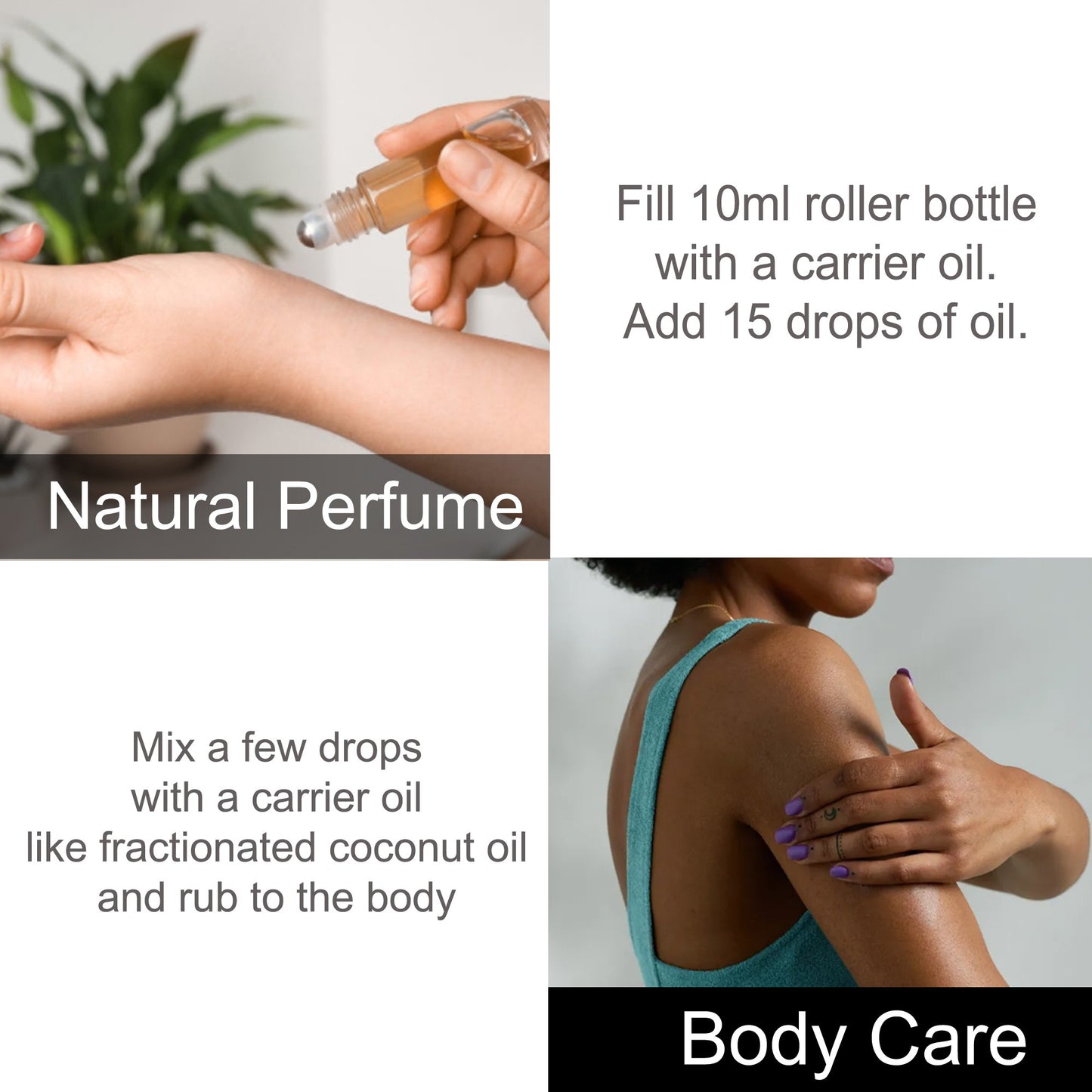
- Body Care: Enriches DIY moisturizing body oils and natural cleansing washes with a fresh botanical scent.


In routine cosmetic applications, Palmarosa oil functions as an exceptional natural toner and balancing agent. When experiencing dullness or excess surface oil, many people turn to this botanical extract to restore a refreshed appearance. Combining a few drops with a gentle base oil creates a lightweight serum suitable for daily facial use.
Aromatherapists frequently incorporate Palmarosa essential oil into evening wellness practices to quiet a busy mind. Diffusing the oil throughout living areas fills the space with a uplifting floral aroma that helps ease daily tensions. It is also added to warm bath water or body gels to provide aromatic comfort after long days.
Home crafters regularly select this oil to scent handmade soaps, natural lotions, and room sprays. Its high geraniol content delivers a long-lasting floral fragrance that mimics expensive rose extracts without overwhelming the senses. Diluting it into Fractionated Coconut Oil provides an easy foundation for custom rollerball perfumes.
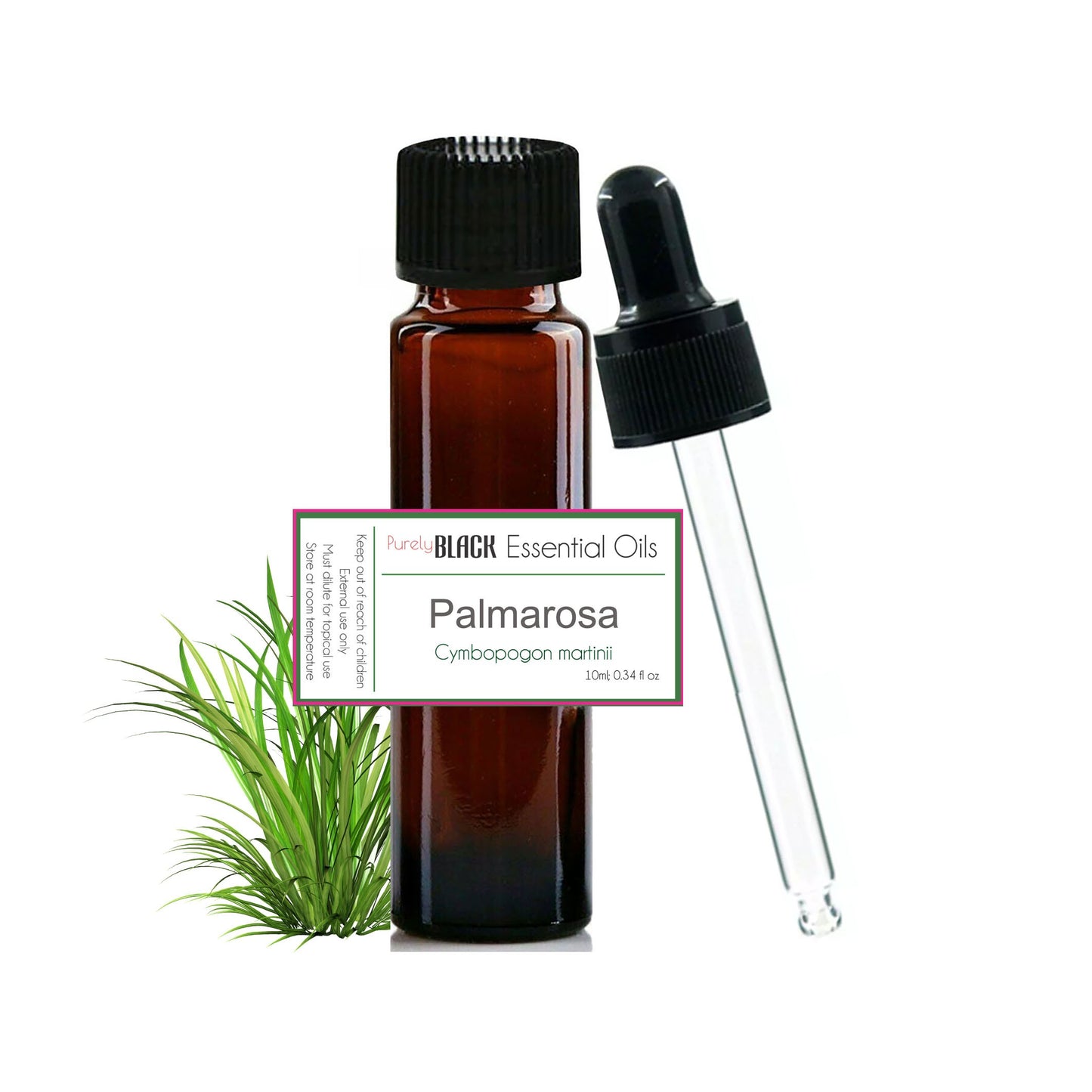
purelyBlack's pure palmarosa oil is available as a 100% pure essential oil, dispatched from Sydney.
What is the importance of palmarosa?
Palmarosa holds agricultural and aromatic importance as a sustainable source of natural geraniol for perfumery and plant-based cosmetics.
Botanically identified as Cymbopogon martinii, this aromatic perennial grass belongs to the Poaceae grass family. Native to India and tropical Asia, the plant thrives in warm, humid climates where wild grass shoots are harvested before flowering. The leaves and flowering tops undergo steam distillation to yield an essential oil rich in natural aromatic compounds.
Historically, the crop played a vital role in natural perfumery as a fragrant alternative to scarce rose petals. Because the distilled grass yields a exceptionally high concentration of geraniol, it became an essential raw ingredient across global cosmetic manufacturing. Chemical evaluation reveals that premium harvests contain published phytochemical study data showing geraniol levels between 70% and 85%, along with geranyl acetate and linalool.
Beyond commercial perfumery, Palmarosa holds immense value in holistic botanical practices. Cultivated across tropical regions of India and Nepal, the fast-growing grass supports sustainable agricultural communities while preventing soil erosion. Its natural resistance to pests makes it an environmentally friendly crop requiring minimal chemical interventions.
In modern personal care, the importance of this plant rests on its dual ability to balance skin moisture and elevate mood. Its gentle action makes it suitable for sensitive skin types that cannot tolerate heavier floral extracts. This balance of sustainability, pleasant aroma, and skin compatibility secures its lasting position in natural wellness.


What does palmarosa oil do?
Palmarosa essential oil hydrates dehydrated skin, provides aromatic comfort during times of stress, and freshens ambient air naturally.
- Hydration Maintenance: Helps retain moisture within epidermal layers when combined with nourishing botanical base oils.
- Atmospheric Freshening: Neutralizes stale indoor odours while imparting a clean, floral aroma throughout living spaces.
- Soothes Senses: Delivers calming notes that quiet busy minds and prepare the atmosphere for peaceful sleep.
When applied topically in safe dilutions, Palmarosa oil works to regulate sebum production while locking in vital moisture. It supports a healthy complexion by encouraging skin surface cell harmony without clogging delicate pores. People with dry, combination, or mature skin types frequently notice smoother texture and enhanced radiance with consistent application.
In atmospheric applications, the vaporized oil works to cleanse ambient air while lingering gently across indoor spaces. Diffusing Palmarosa essential oil during afternoon study or work sessions creates an environment conducive to clear concentration. Its clean botanical scent masks persistent household odours without relying on harsh synthetic chemicals.
The oil also interacts positively with sensory pathways when inhaled directly or diffused. Traditionally used in botanical practice to provide comfort for emotional fatigue, it encourages feelings of grounded calm. Incorporating it into massage oils allows for deeper relaxation of tense muscles while nourishing skin surfaces.
What does palmarosa smell like?
Palmarosa smells soft, sweet, and floral with distinctive rosy undertones accompanied by subtle fresh green grass notes.
The initial aroma of Palmarosa essential oil is bright, sweet, and immediately reminiscent of fresh rose blossoms. As the scent unfolds, crisp herbaceous undertones emerge, revealing its true botanical grass lineage. This unique combination balances rich floral warmth with a clean, dewy freshness that prevents the scent from becoming cloying.
In olfactory classification, Palmarosa occupies a middle note position with light top note characteristics. Its aromatic structure bridges bright citrus notes and heavy woody base scents, making it a master harmonizer in complex perfume blends. Many fragrance enthusiasts describe it as a brighter, drier version of rose geranium.
| Aroma Aspect | Olfactory Description | Perfume Note Category |
|---|---|---|
| Primary Scent | Sweet, fresh floral with rose-like nuances | Middle Note |
| Secondary Undertone | Crisp green grass and subtle citrus rustle | Top-Middle Transition |
| Aroma Intensity | Medium strength, fresh and diffusive | Harmonizing Modifier |
| Dry-Down Quality | Soft, clean botanical warmth | Heart Note Anchor |
The subtle green grass notes give the oil a natural, outdoor clarity that appeals to non-traditional floral lovers. It lacks the heavy powdery note found in some rose oils, maintaining a light and energetic profile throughout its dry-down. This versatile scent profile makes it popular for year-round home fragrancing across Australia.
What scent goes well with palmarosa?
Palmarosa pairs exceptionally well with floral, citrus, woody, and herbaceous essential oils like lavender, bergamot, cedarwood, and geranium.
Because Palmarosa oil shares dominant chemical components with rose and geranium, it merges effortlessly into floral compositions. Blending it with lavender softeness creates a soothing night-time diffuser mix, while neroli accentuates its sweet floral facets. Adding petitgrain brings an earthy, leafy complexity that grounds the bright floral top notes.
Citrus essential oils like bergamot, sweet orange, and grapefruit elevate Palmarosa's fresh green undertones. For an energizing morning blend, combine three drops of Palmarosa with Spearmint Oil and bergamot in an ultrasonic mist unit. The resulting fragrance freshens home environments while inspiring a positive mindset.
For grounding, herbaceous blends, pair it with Rosemary Oil, calamus, or deep woody notes like Vetiver Oil. In facial mist preparations, blending Palmarosa diluted with Organic Rosewater delivers an exquisite hydrating facial spray. Experimenting with these complementary botanicals allows you to craft signature personal care scents.
What is Palmarosa oil also known as?
Palmarosa oil is commonly known as Indian geranium, Turkish geranium, gingergrass, or by its botanical classification Cymbopogon martinii.
Historically, merchants traded Palmarosa oil under the names "Indian geranium" or "Turkish geranium" because it frequently arrived in Europe through Turkish shipping ports. The nickname arose due to its high geraniol content and scent similarity to true pelargonium geranium oils. Distillers recognized it as an economical ingredient to blend into luxury rose formulations.
Within the botanical world, the plant exists in two distinct chemotypes or varieties: motia and sofia. The motia variation yields authentic pure Palmarosa oil rich in geraniol, whereas the sofia variation produces gingergrass oil, which exhibits a harsher, more pungent ginger-like aroma. Understanding these chemotype distinctions ensures you purchase authentic, skin-friendly botanical extracts.
To learn more about personal care applications, read our companion guide: Is Palmarosa Oil Good for Face, Skin and Hair?
To explore similar profiles, discover these pure purelyBlack creations: Helichrysum Oil, Vetiver Oil, and Spearmint Oil — each dispatched from Sydney.
Related Reading
For more on palmarosa oil, see our companion guides: Skincare & Aromatherapy Guide to Pure Palmarosa Essential Oil in Australia. Is Palmarosa Oil Good for Face, Skin and Hair?.
About the Author
Written by H.R. Kim
Founder at purelyBlack — an Australian-owned perfumery and botanical studio based in Sydney. H.R. specialises in scent profiling and natural ingredient sourcing, meticulously balancing premium fragrance oils and 100% pure essential oils to create elevated aromatic experiences.
Last updated: August 2026
Disclaimer: purelyBlack essential oils are for external use and aromatherapy purposes only. They are not intended to diagnose, treat, cure, or prevent any disease. Always dilute with a carrier oil before topical application and consult a healthcare professional if pregnant or under medical supervision.
