






What Is Cinnamon Leaf Essential Oil Used For? — Complete Guide
What is cinnamon leaf essential oil used for?
Cinnamon leaf oil is primarily used for natural home freshening, comforting aromatherapy diffusion, and properly diluted topical skin applications.- Aromatic Diffusion: Diffusing creates a warm, spicy environment that provides aromatic comfort and revitalises indoor spaces naturally.
- Surface Cleansing: Adding drops to natural cleaning sprays helps neutralise household odours across hard surfaces and kitchens.
- Topical Care: Diluting with Fractionated Coconut Oil allows safe application for warming, soothing botanical body massages.


Derived from the steam-distilled leaves of Cinnamomum verum (Lauraceae family), Cinnamon Leaf essential oil offers an earthy, spicy bouquet with rich clove undertones. Indigenous to Sri Lanka and parts of South Asia, the evergreen foliage yields a robust botanical extract valued worldwide. Unlike heavier wood extracts, Cinnamon Leaf delivers an invigorating profile suited for frequent domestic and wellness rituals.
In household care, many people incorporate Cinnamon Leaf oil into DIY surface sprays, room mists, and wardrobe sachets to dispel musty odours. It blends seamlessly with citrus oils and herbal extracts, creating a balanced, uplifting aroma throughout the home. Its high eugenol content provides powerful purifying properties without the overwhelming harshness of bark distillations.
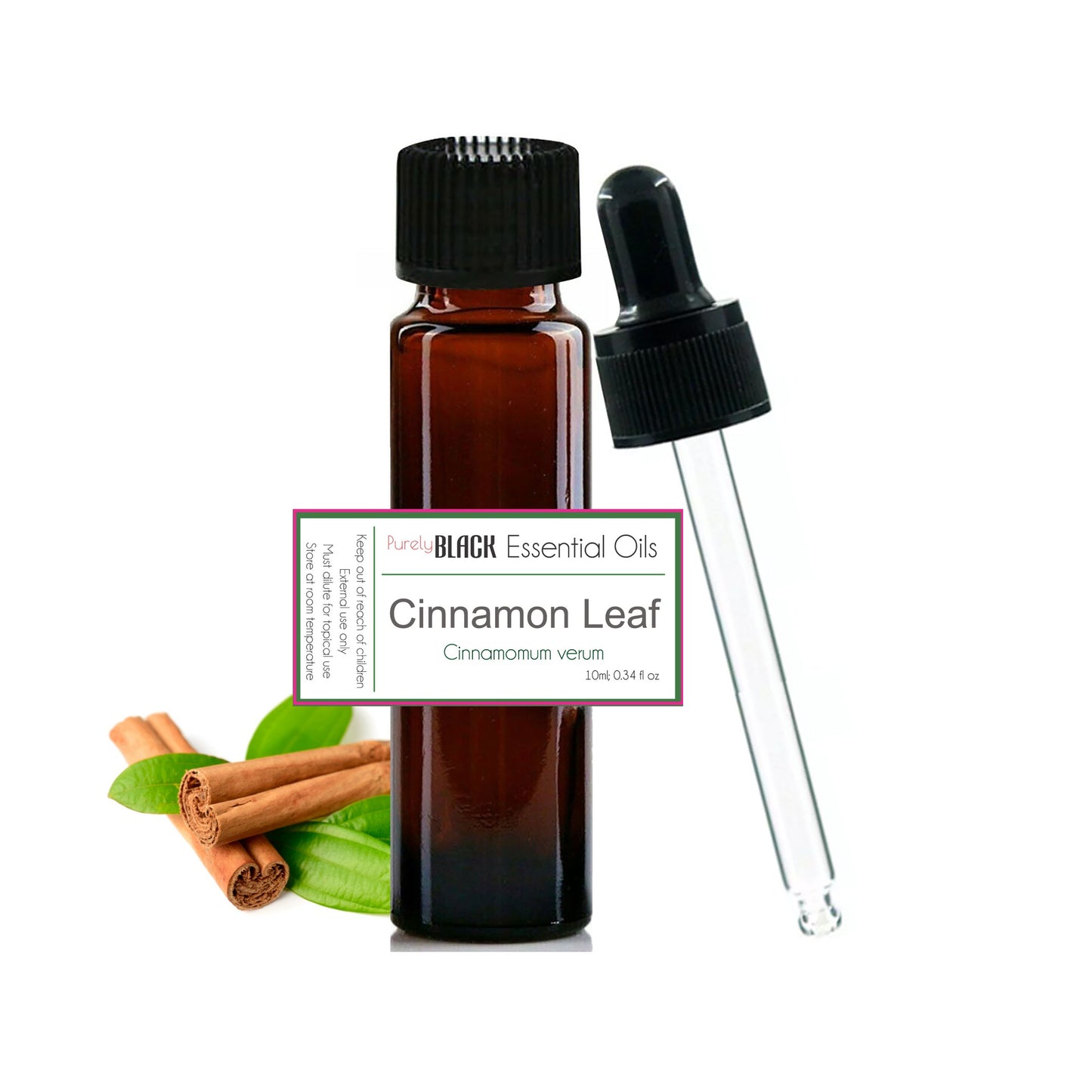
purelyBlack's pure cinnamon leaf oil is available as a 100% pure essential oil, dispatched from Sydney.
What is the difference between cinnamon leaf and cinnamon bark essential oil?
Cinnamon leaf oil is distilled from leaves and dominated by eugenol, whereas bark oil contains high cinnamaldehyde from distilled bark.While both oils originate from the same botanical tree, their distinct source materials yield fundamentally different chemical compositions and aromatherapeutic profiles. Cinnamon Leaf is steam distilled from freshly harvested leaves and twigs, generating an oil rich in eugenol with a warm, spicy, clove-like scent. In contrast, bark oil is extracted exclusively from the dried inner bark, producing an intensely pungent, sweet essence driven by cinnamaldehyde.
| Botanical Metric | Cinnamon Leaf Oil | Cinnamon Bark Oil |
|---|---|---|
| Plant Part Distilled | Leaves and twigs | Inner tree bark |
| Major Chemical Marker | Eugenol (70% to 85%) | Cinnamaldehyde (65% to 75%) |
| Aroma Characteristics | Spicy, woody, clove-like, warm | Intensely sweet, dry, fiery, gourmand |
| Dermal Sensitisation Risk | Mild to moderate (manageable) | Severe dermocaustic risk |
According to a published phytochemical study, the eugenol content in authentic leaf distillates consistently reaches 70% to 85%. This distinct chemical distribution makes Cinnamon Leaf oil substantially gentler on mucous membranes and skin than bark oil. Consequently, aromatherapy practitioners routinely choose Cinnamon Leaf essential oil for diffusing and topical crafting.


Which is better, cinnamon leaf or cinnamon bark essential oil?
Cinnamon leaf oil is better for daily topical and diffusing uses, while cinnamon bark is preferred solely for potent perfumery.- Safety Margin: Cinnamon Leaf offers a significantly lower risk of skin irritation compared to harsh bark distillations.
- Everyday Aromatherapy: Leaf oil delivers a balanced, uplifting aroma that does not easily overwhelm enclosed living environments.
- Cost Accessibility: Sustainable foliage harvesting makes Cinnamon Leaf oil more economical for routine home and body applications.
Determining which extract is better depends entirely on your intended application and safety requirements. For everyday home fragrance, personal care, and massage blends, Cinnamon Leaf is the practical and versatile choice. Its moderate potency allows you to enjoy warm botanical aromas without the extreme dermal sensitivity risks linked to bark.
Cinnamon bark oil remains celebrated in luxury perfumery for its deep, authentic confectionery notes. However, because cinnamaldehyde is a potent skin sensitiser, bark oil requires extreme dilution and caution. For safe domestic diffusions, seasonal blends, and cosmetic crafting, Cinnamon Leaf essential oil remains the superior, dependable option.
What are the benefits of smelling cinnamon leaf essential oil?
When experiencing mental fatigue or seasonal blues, inhaling cinnamon leaf oil provides aromatic comfort and promotes a revitalised, tranquil atmosphere.Inhaling the spicy, grounding scent of Cinnamon Leaf oil stimulates the olfactory senses and helps clear feelings of mental sluggishness. The natural presence of eugenol imparts an earthy warmth that transforms stagnant interior air into an inviting sanctuary. Many individuals find that diffusing this botanical essence during cold afternoons restores a sense of vitality and comfort.
Diffusing Cinnamon Leaf essential oil also supports focused concentration during work or study sessions. When paired with complementary botanicals such as frankincense, calamus, or sweet citrus oils, it creates an inspiring ambient backdrop. This aromatic synergy enlivens shared living spaces while promoting a tranquil atmosphere conducive to relaxation.
For a balanced seasonal blend, combine Cinnamon Leaf with herbal notes like thyme or coriander in an ultrasonic diffuser. This combination neutralises unwanted ambient odours while filling the room with a clean, crisp, and comforting aroma. The radiant profile of Cinnamon Leaf ensures your home feels welcoming throughout the year.
What are the benefits of cinnamon leaf essential oil for skin?
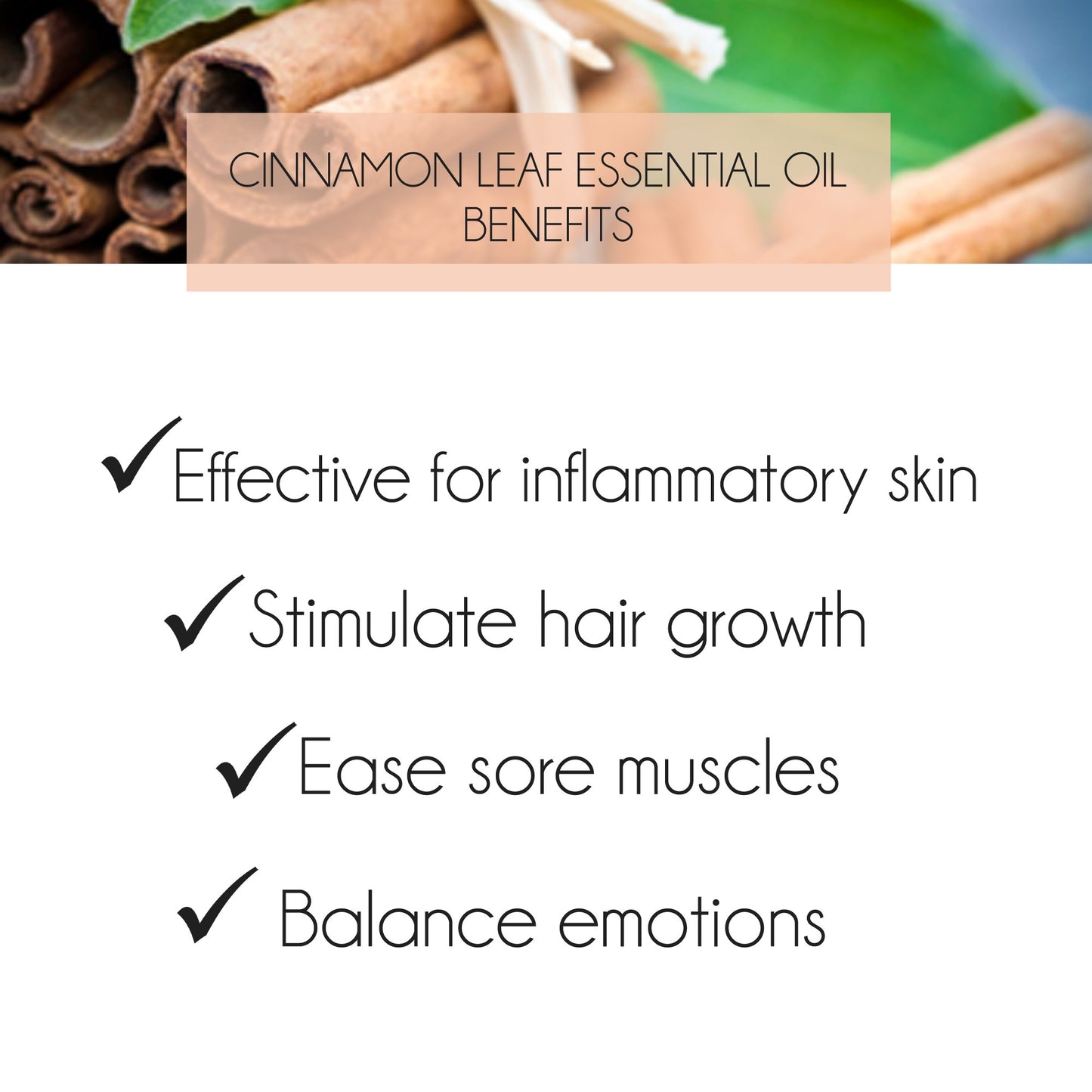
When properly diluted, cinnamon leaf oil supports a healthy complexion by offering deep botanical cleansing and a gently warming sensation.Cinnamon Leaf oil contains natural astringent and cleansing qualities that assist in clarifying congested, oily, or blemish-prone skin. When incorporated into massage oils, its inherent warming properties promote localized cutaneous circulation, providing soothing botanical comfort to tired muscles. These physical benefits make Cinnamon Leaf essential oil a valuable addition to natural body care routines.
Because of its potency, always practise proper dilution by blending Cinnamon Leaf into soothing carrier oils like Fractionated Coconut Oil. Maintain a low concentration of 0.5% to 1% for body formulations, and perform a patch test prior to broader application. For a balancing facial toner mist, combine a single drop of leaf oil with Organic Witch Hazel Extract or Organic Rosewater.
To explore similar profiles, discover these pure purelyBlack creations: Ylang Ylang Oil, Rose Geranium Oil, and Aniseed Oil — each dispatched from Sydney.
Related Reading
For more on cinnamon leaf oil, see our companion guide: Is Cinnamon Leaf Oil Safe? Side Effects and What Not to Mix.
About the Author
Written by H.R. Kim
Founder at purelyBlack — an Australian-owned perfumery and botanical studio based in Sydney. H.R. specialises in scent profiling and natural ingredient sourcing, meticulously balancing premium fragrance oils and 100% pure essential oils to create elevated aromatic experiences.
Last updated: August 2026
Disclaimer: purelyBlack essential oils are for external use and aromatherapy purposes only. They are not intended to diagnose, treat, cure, or prevent any disease. Always dilute with a carrier oil before topical application and consult a healthcare professional if pregnant or under medical supervision.
