






Cassia vs Cinnamon Oil — What Is the Difference and How Do You Use It?
Are cassia oil and cinnamon oil the same?
No, cassia oil and cinnamon oil are distinct aromatics derived from different botanical species despite sharing warm, spicy scent profiles.
- Botanical Origin: Cassia stems from Chinese cinnamon bark, whereas true cinnamon oil originates from Ceylon cinnamon bark.
- Aroma Profile: Cassia possesses an intensely sweet, heavy spice aroma, while cinnamon presents a lighter, more refined scent.
- Chemical Composition: Cassia oil contains higher concentrations of cinnamaldehyde alongside unique coumarin compounds compared to cinnamon.


Botanically classified as Cinnamomum cassia (synonym Cinnamomum aromaticum), Cassia belongs to the Lauraceae plant family. The oil is typically produced through the steam distillation of the tree's outer bark, leaves, and tender twigs. In contrast, true cinnamon originates from Cinnamomum verum (also known as Cinnamomum zeylanicum), indigenous to Sri Lanka.
While both botanical extracts share prominent spicy aromatic nuances, their chemical profiles diverge significantly. In a published phytochemical study, cassia oil frequently demonstrates a cinnamaldehyde content ranging between 70% and 90%, delivering a robust and deeply pervasive aromatic presence. Cinnamon bark oil contains modest amounts of eugenol alongside cinnamaldehyde, imparting a softer, multi-layered aromatic undertone.
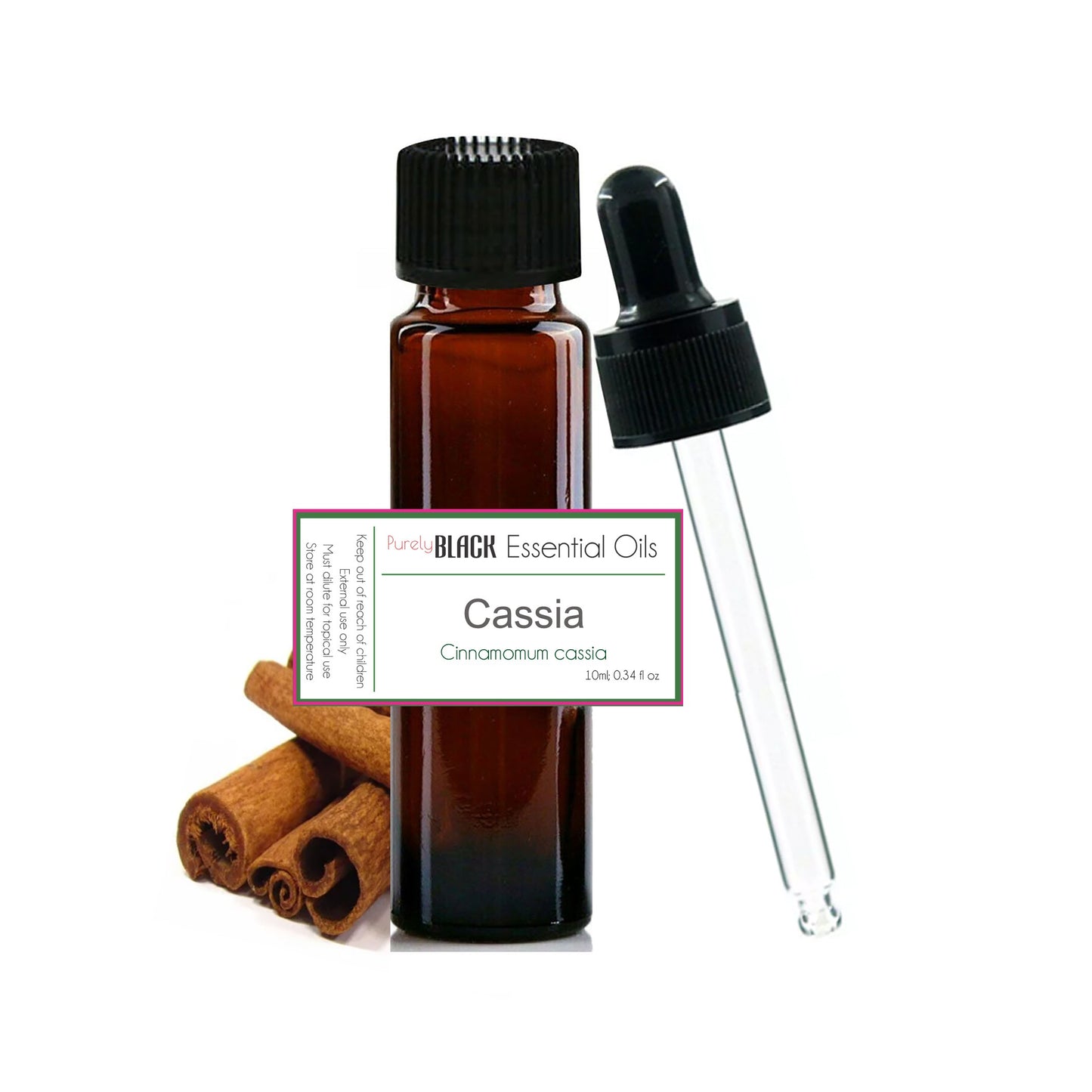
purelyBlack's pure cassia oil is available as a 100% pure essential oil, dispatched from Sydney.
Which is better, cassia or cinnamon oil?
Neither oil is inherently superior, as your choice depends on aromatic preferences, intended diffusion strength, and budget considerations for home aromatherapy.
| Feature | Cassia Oil | Cinnamon Bark Oil |
|---|---|---|
| Botanical Name | Cinnamomum cassia | Cinnamomum verum |
| Aroma Character | Intense, sweet, pungent spice | Warm, dry, refined, woody spice |
| Dominant Compound | Cinnamaldehyde (70%–90%) | Cinnamaldehyde & Eugenol blend |
| Diffusion Throw | Exceptionally strong; fills large spaces | Moderate to strong; subtle complexity |
| Typical Sourcing | China, Vietnam, East Asia | Sri Lanka, Madagascar, India |
Cassia oil provides an outstanding aromatic throw that quickly neutralises persistent household odours and enlivens spacious rooms. Because the raw botanical yields are generous, Cassia offers exceptional value for seasonal room diffusion, festive potpourri refresher sprays, and cold-weather scenting. Its bold presence cuts through stuffy indoor air effortlessly.
Cinnamon bark oil is often favoured by fine perfumers seeking delicate woody base notes and intricate scent development. However, for everyday aromatic diffusion where high potency and vibrant spice are desired, Cassia remains a favourite choice among aromatherapy enthusiasts. Choosing between them comes down to whether you prefer an intense, full-bodied warmth or a delicate, dry botanical sweetness.


What is another name for cassia oil?
Cassia oil is frequently called Chinese cinnamon oil, false cinnamon, or bastard cinnamon in traditional botanical trade and historical texts.
- Chinese Cinnamon: This common name reflects the geographical origin and botanical heritage of the native evergreen tree.
- Bastard Cinnamon: Historical merchants used this colloquial term to distinguish the heavier spice from delicate Ceylon varieties.
- Canton Cassia: Regional commerce records often identified high-grade distilled bark exports under this classic trade designation.
Historical spice merchants and apothecaries used distinct common names to separate regional tree harvests across maritime trading routes. The Latin binomial Cinnamomum aromaticum remains an officially recognised botanical synonym, commonly featured in classical European herbal compendiums. You may also observe it labelled simply as Cassia bark oil across global commerce listings.
In traditional Eastern trade, it is frequently recorded as Gui Pi, acknowledging the precious bark of the native Chinese evergreen. Despite these varied historical descriptors, genuine Cassia maintains an unmistakable botanical profile characterised by warm, vibrant spice.
How do you use cassia oil safely?
Cassia oil is a potent "hot" oil that requires substantial dilution — always blend into a carrier oil before topical use and diffuse in moderation.
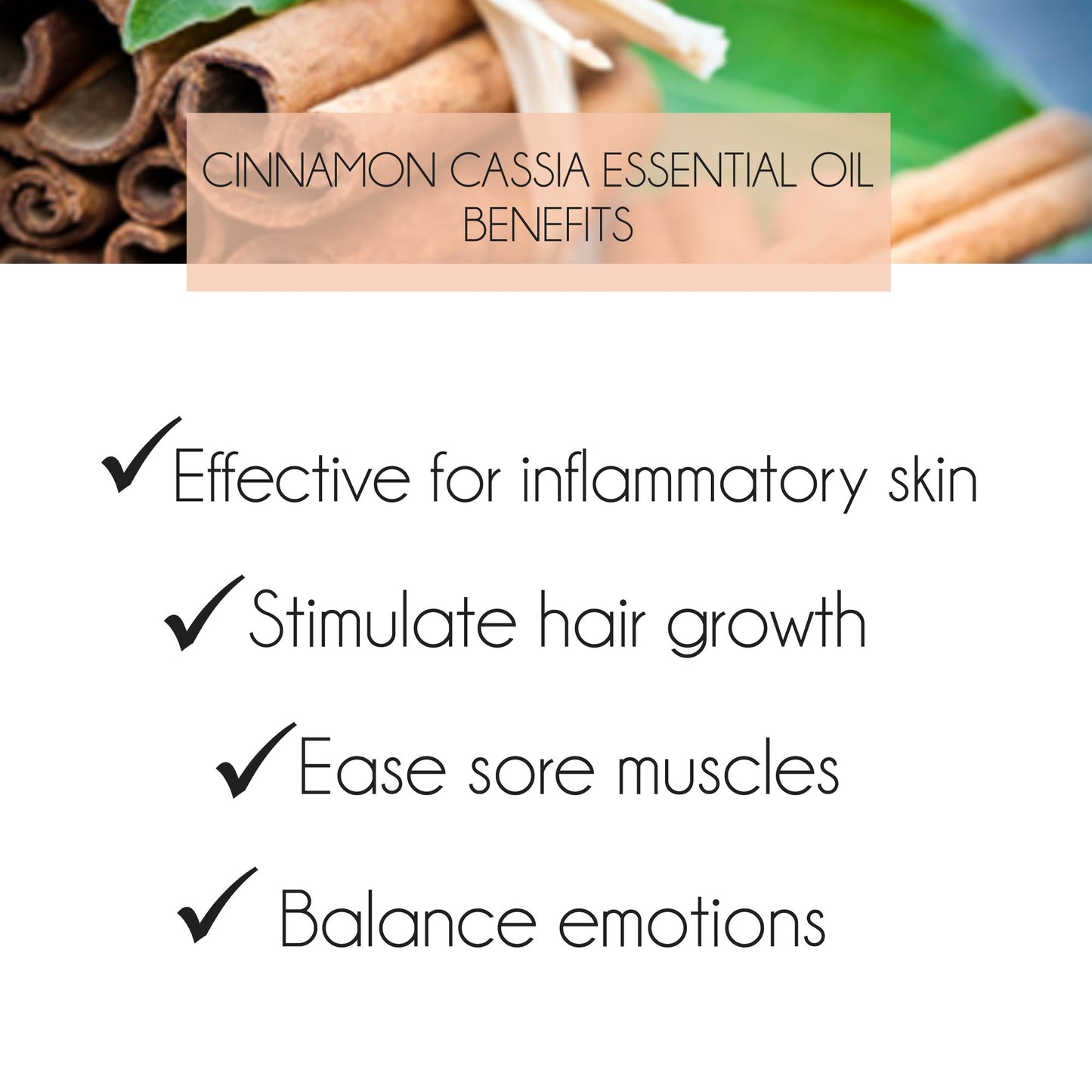
For topical applications, Cassia is categorised as a potent hot oil that requires substantial dilution. Always blend a single drop into at least 10 mL of Fractionated Coconut Oil prior to skin contact to maintain absolute comfort. Applied in an ultra-low dilution, it provides a gentle warming sensation that delivers aromatic comfort over tired muscles following physical exertion.
Due to its intense potency as a dermal sensitiser, users must adhere to conservative topical dilution limits. The table below outlines standard application methods, maximum concentrations, and complementary blending oils for optimal home usage.
| Application Method | Recommended Ratio | Recommended Blending Partner |
|---|---|---|
| Ultrasonic Diffusion | 1–2 drops per 100ml water | Lime or sweet orange |
| Warming Muscle Rub | 0.2% (1 drop per 30ml carrier oil) | Fractionated Coconut Oil |
| Aromatic Room Mist | 3–4 drops in 100ml distilled water | Vanilla or cedarwood |
| Soothing Joint Massage | 0.2% in botanical carrier base | Manuka Oil |
Cassia also serves as an effective botanical additive in DIY natural household cleansing sprays. Blended with distilled water and a splash of witch hazel, it delivers a fresh, invigorating scent to kitchen surfaces and entryway air mists.
For what cassia is used for, its history in the Bible, and how it affects the body, see our companion guide: What Is Cassia Essential Oil Used For? — Complete Guide
To explore similar profiles, discover these pure purelyBlack creations: Cinnamon Leaf Oil, Lime Oil, and Vanilla Oil — each dispatched from Sydney.
About the Author
Written by H.R. Kim
Founder at purelyBlack — an Australian-owned perfumery and botanical studio based in Sydney. H.R. specialises in scent profiling and natural ingredient sourcing, meticulously balancing premium fragrance oils and 100% pure essential oils to create elevated aromatic experiences.
Last updated: September 2026
Disclaimer: purelyBlack essential oils are for external use and aromatherapy purposes only. They are not intended to diagnose, treat, cure, or prevent any disease. Always dilute with a carrier oil before topical application and consult a healthcare professional if pregnant or under medical supervision.
