







Is Aniseed Oil Safe? Side Effects and Who Should Avoid It
What are the side effects of aniseed oil?
Topical application of undiluted aniseed oil may cause skin irritation, contact dermatitis, allergic sensitivity, or mild redness on delicate skin types.
- Cutaneous Sensitisation: Concentrated application can trigger redness, irritation, or contact dermatitis on sensitive or broken dermal barriers.
- Phototoxic Reactions: Direct sun exposure after applying certain unrefined seed extracts may increase dermal sensitivity in rare instances.
- Mucous Membrane Irritation: Inhaling concentrated aromatic vapours too closely may cause transient coughing, nasal dryness, or mild watery eyes.


Steam distilled from the dried seeds of Pimpinella anisum in the Apiaceae botanical family, this oil contains potent volatile constituents. A peer-reviewed constituent analysis confirms that trans-anethole accounts for 80% to 90% of the overall chemical composition. Because high concentrations of trans-anethole can irritate sensitive dermal barriers, proper dilution in Fractionated Coconut Oil is essential before applying topically.
When used in excessive amounts in an ultrasonic diffuser, the intense vapour can occasionally cause mild headaches, nausea, or lightheadedness in poorly ventilated spaces. Practising conservative diffusion intervals ensures a pleasant sensory experience while maintaining indoor air quality and comfort. pure Aniseed oil should always be handled with care, respecting recommended dilution ratios and personal scent tolerances.
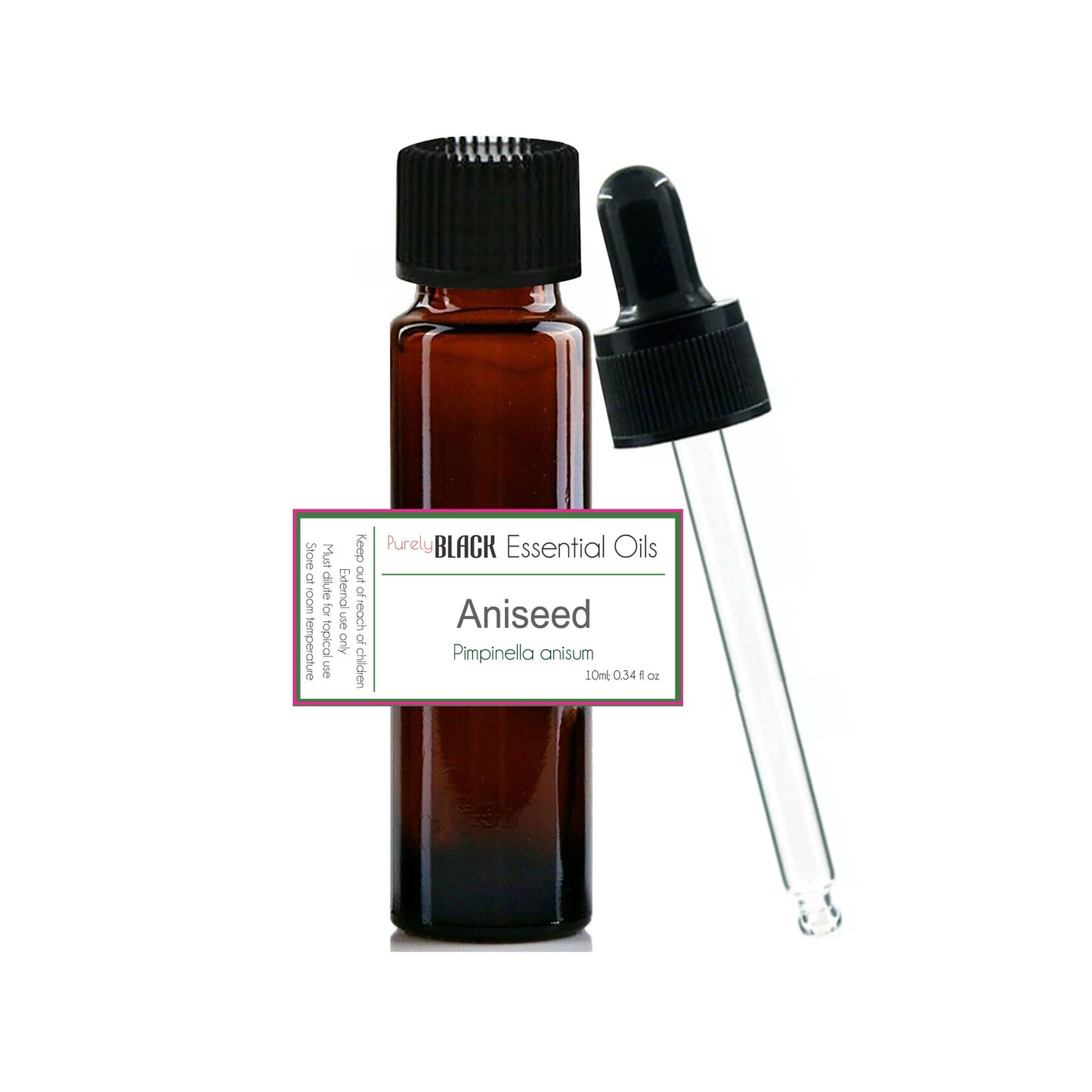
purelyBlack's pure aniseed oil is available as a 100% pure essential oil, dispatched from Sydney.
Who should not use aniseed oil?
Pregnant or nursing women, young children, and individuals with oestrogen-dependent health conditions or severe seed allergies should avoid using aniseed oil.
Due to its high concentration of trans-anethole, aniseed essential oil possesses mild oestrogen-mimicking properties that can influence hormone pathways. Individuals diagnosed with hormone-dependent conditions, such as endometriosis, uterine fibroids, or oestrogen-sensitive cancers, should refrain from diffusing or topically applying this botanical extract. People taking prescription anticoagulant medications should also exercise caution, as phenylpropanoid compounds may influence normal platelet behaviour.
Aromatherapists strongly advise against diffusing or applying Aniseed near infants, toddlers, and young children due to potential respiratory irritation. Those with known allergies to plants within the Apiaceae botanical family, including fennel, celery, and caraway, are at higher risk of contact allergies. Performing a standard patch test on the inner forearm over twenty-four hours remains the most dependable way to verify personal skin tolerance.


Does aniseed oil make you sleepy?
When seeking evening rest, many people turn to aniseed oil to promote a tranquil atmosphere and provide comforting aromatic support before bedtime.
- Evening Diffusion: Adding two drops to an ultrasonic diffuser creates a warming, tranquil ambiance that encourages natural relaxation.
- Aromatic Comfort: Inhaling the warm, sweet liquorice-like aroma helps settle mental tension after demanding or stressful daily activities.
- Bedtime Massage: Combining diluted oil with gentle temple massage provides soothing tactile comfort during winding-down evening routines.
The distinctive, warming scent profile of Aniseed integrates seamlessly into evening relaxation routines without causing unnatural grogginess. When experiencing everyday stress or mental restlessness, dispersing this warm aroma helps cultivate an inviting sanctuary for restful decompression. Pairing the oil with gentle citrus or calming herbal extracts creates a balanced sensory environment that encourages personal peace.
To practise safe nighttime diffusion, run your ultrasonic diffuser for thirty to forty-five minutes prior to sleeping in a well-ventilated bedroom. This method saturates the space with delicate aromatic molecules while avoiding over-saturation during sleep. Taking mindful, slow breaths in this fragrant environment provides aromatic comfort that helps smooth the transition from an active day to a restorative night.
Is anise oil the same as aniseed essential oil?
Yes, anise oil and aniseed essential oil are identical names for the same aromatic botanical extract steam distilled from traditional aniseed.
Both terms represent the pure volatile oil extracted exclusively from the dried ripe fruits of the Mediterranean herb Pimpinella anisum. Confusion often arises because the trade name is shortened colloquially to anise oil on international product labels and botanical listings. Regardless of whether the label reads anise oil or aniseed essential oil, the underlying botanical chemistry remains identical.
However, consumers must not confuse genuine Aniseed with star anise (Illicium verum), an unrelated evergreen tree native to Northeast Vietnam and Southwest China. Star anise belongs to the Schisandraceae family and contains different trace compounds despite sharing a dominant anethole scent profile. Checking the botanical Latin name on product packaging guarantees that you receive the precise botanical species intended for your aromatherapy practise.
What is a substitute for aniseed oil?
Sweet fennel, star anise, caraway, and spearmint serve as excellent botanical substitutes offering similar sweet, spicy, or refreshing aromatic qualities.
| Substitute Oil | Botanical Source | Aroma Profile & Best Application |
|---|---|---|
| Sweet Fennel | Foeniculum vulgare | Sweet, herbaceous, and liquorice-like; ideal for digestive comforting diffusions and evening blends. |
| Caraway | Carum carvi | Warm, spicy, and earthy; excellent for grounding diffusions and cosy seasonal home fragrances. |
| Spearmint | Mentha spicata | Fresh, sweet, and cooling; perfect for uplifting daytime diffusions and refreshing mental focus. |
| Nutmeg | Myristica fragrans | Rich, woody, and spicy; adds complex warm notes to autumn blends and soothing massage bases. |
When selecting a substitute, sweet fennel provides the closest aromatic and chemical match due to its shared trans-anethole profile and warm character. If you seek a brighter daytime alternative without the distinct liquorice sweetness, spearmint offers refreshing clarity while caraway imparts subtle, spicy undertones. Blending these alternatives with grounding wood oils or bright citrus extracts allows you to craft customized fragrances suited to any personal preference.
For a comprehensive exploration of practical aromatherapy applications, consult our guide on What Is Aniseed Essential Oil Used For? — Complete Aromatherapy Guide.
To explore similar profiles, discover these pure purelyBlack creations: Fennel Oil, Spearmint Oil, and Nutmeg Oil — each dispatched from Sydney.
About the Author
Written by H.R. Kim
Founder at purelyBlack — an Australian-owned perfumery and botanical studio based in Sydney. H.R. specialises in scent profiling and natural ingredient sourcing, meticulously balancing premium fragrance oils and 100% pure essential oils to create elevated aromatic experiences.
Last updated: August 2026
Disclaimer: purelyBlack essential oils are for external use and aromatherapy purposes only. They are not intended to diagnose, treat, cure, or prevent any disease. Always dilute with a carrier oil before topical application and consult a healthcare professional if pregnant or under medical supervision.
