


Dandelion Tea & Dandelion Root: Benefits, Side Effects & How to Make

What does Dandelion tea do for the body?
Dandelion tea is traditionally valued in Western herbalism for its bitter compounds, which are thought to stimulate digestive function, alongside its rich inulin content — a prebiotic fibre that supports beneficial gut bacteria. The root has a long folk history as a gentle liver and digestive tonic, and its naturally earthy, slightly bitter, roasted flavour has also made it a popular caffeine-free alternative to coffee.
Is it safe to drink Dandelion tea every day?
For most healthy adults, dandelion tea fits comfortably within a daily wellness routine when consumed in traditional amounts, generally 1 to 3 cups per day. As with introducing any new herbal tea into a daily routine, those who are pregnant, nursing, taking prescription medication, or managing an underlying medical condition should consult a healthcare practitioner first.
Who should avoid taking Dandelion root?
Those with known allergies to plants in the Asteraceae/Compositae family (which includes ragweed, daisies, and marigolds) should exercise caution, as cross-sensitivity has been noted. Individuals with gallbladder issues, bile duct obstruction, or those taking diuretic or blood-thinning medication should consult a healthcare practitioner before use, given dandelion's traditional diuretic and bile-stimulating associations.
What are the side effects of drinking Dandelion root tea?
Dandelion root tea is generally well tolerated by most healthy adults in traditional amounts. Some individuals may experience mild digestive upset when first introducing it, given its traditional bitter, digestion-stimulating properties. Because dandelion has a traditional association with mild diuretic effects, those on prescription diuretics or blood pressure medication should seek professional guidance before regular use.
How do you make Dandelion root tea?
To make a proper cup of Dandelion root tea, use the stovetop decoction method rather than simply pouring hot water over the root — this dense root needs sustained heat to release its compounds.
- Measure precisely. Place 1 heaped teaspoon of dried, cut dandelion root into a small saucepan.
- Add cold water. Pour 250ml of fresh, cold filtered water over the root. Starting cold rather than hot helps draw out the compounds more evenly as the temperature rises.
- Bring to a rolling boil. Place the saucepan over high heat and bring the water to a vigorous, rolling boil.
- Reduce and simmer. As soon as it boils, reduce the heat to low, cover with a lid, and let it simmer gently for 15 minutes. The lid traps volatile compounds and prevents excess evaporation.
- Rest off the heat. Turn off the heat and leave the covered saucepan to rest for an additional 5 minutes to deepen the extraction.
- Strain and serve. Strain through a fine mesh strainer into your mug. Enjoy hot — a splash of lemon or a touch of honey pairs well with the root's naturally earthy, bitter character.
For a quicker, milder cup using tea bags rather than loose root, simply steep for 5 to 10 minutes in freshly boiled water.
What's actually in the root?
| Constituent | What it contributes |
|---|---|
| Inulin | A prebiotic fibre, traditionally associated with digestive comfort |
| Bitter glycosides (taraxacin) | Responsible for the root's characteristic bitterness and traditional digestive associations |
| Flavonoids | Contribute antioxidant character and subtle earthy depth |
| Potassium | Naturally occurring mineral content within the root |
What pairs well with Dandelion root?
- Burdock Root is the classic traditional pairing, sharing a similar earthy profile and commonly blended together in herbal wellness traditions.
- Ginger Root adds warmth and a spicy lift that balances dandelion's bitterness.
- Licorice Root introduces natural sweetness, rounding out dandelion's characteristic bitter edge.
Is roasted or raw Dandelion root better for tea?
Roasted dandelion root develops a deeper, nuttier, more coffee-like flavour through the roasting process, making it the more popular choice for those using it as a coffee alternative. Raw or simply dried root retains a lighter, more grassy bitterness and is often preferred by those wanting the root's traditional character without the roasted depth. Both forms come from the same plant and retain the same traditional properties.
Sourcing it properly
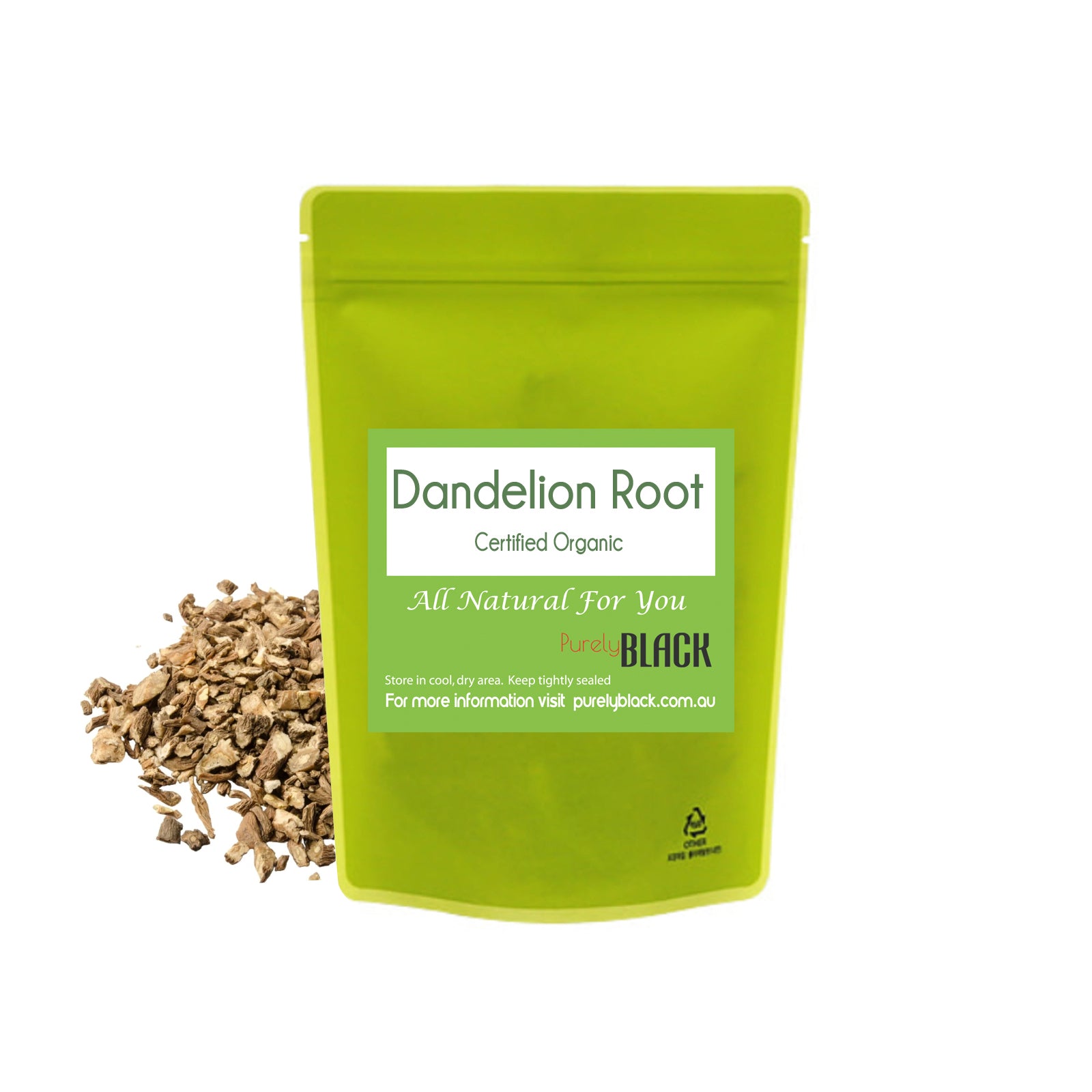
purelyBlack's organic dandelion tea is made from certified organic dandelion root sourced from Italy — no fillers, no synthetic additives, just the root as nature intended.
About the Author: Researched & Written by H.R. Kim
Founder at purelyBlack — an Australian-owned botanical perfumery and essential oil supplier based in Sydney. Blending a deep knowledge of molecular ingredient chemistry with holistic aromatherapy, H.R. specialises in creating harmonious, safe, and effective botanical blends for natural home fragrance, cosmetic balancing, and daily wellness.
Disclaimer: The information provided in this masterclass is for educational and informational purposes only and does not constitute medical advice. purelyBlack's botanical products are not intended to diagnose, treat, cure, or prevent any disease. Always consult with a qualified healthcare practitioner before incorporating new botanical powders, teas, or roots into your daily routine, especially if you are pregnant, nursing, taking prescription medications, or have an underlying medical condition.
