

What Does Drinking Ginseng Tea Do?
Organic Siberian ginseng powder can be brewed into a warming, earthy ginseng tea, traditionally valued for supporting endurance and resilience to everyday stress. Note: this guide is specifically about Siberian ginseng (Eleutherococcus senticosus), a different species from Korean or Panax ginseng — both are traditionally used but have distinct profiles, covered below. 
What does drinking ginseng tea do?
Ginseng tea has a long traditional history across multiple herbal systems, most commonly reached for to support physical endurance, mental alertness, and the body's resilience to everyday stress and fatigue. Siberian ginseng specifically, also known as Eleuthero, has a distinct traditional history within Russian and Eastern European herbal practice, where it was historically used to support stamina and adaptability during periods of physical or mental exertion. Unlike Korean or Panax ginseng, Siberian ginseng is botanically a different plant entirely (Eleutherococcus senticosus rather than Panax ginseng), though both share a loosely overlapping traditional reputation as supportive, fortifying herbs.
Is it okay to drink ginseng tea every day?
For most healthy adults, occasional to moderate use of Siberian ginseng tea, such as one cup daily, is generally well tolerated. As with many adaptogenic herbs, it's commonly recommended to use it in cycles, for example several weeks on followed by a short break, rather than continuous indefinite daily use, though individual practice varies. Those new to Siberian ginseng should start with a single cup and assess tolerance before increasing frequency.
Who should not take ginseng tea?
| Who should consult a healthcare practitioner first | Why |
|---|---|
| Pregnant or nursing individuals | Limited safety data available for regular use during pregnancy or breastfeeding |
| Those with high blood pressure | Some traditional and anecdotal reports associate ginseng with mild stimulant-like effects |
| Those on blood-thinning or blood-sugar medication | Potential interaction; professional guidance recommended before regular use |
| Those sensitive to caffeine or stimulants | Ginseng tea is naturally caffeine-free, but its traditional fortifying character may still feel stimulating to sensitive individuals, particularly later in the day |
How is Siberian ginseng different from Korean or Panax ginseng?
| Aspect | Siberian Ginseng (Eleuthero) | Korean / Panax Ginseng |
|---|---|---|
| Botanical name | Eleutherococcus senticosus | Panax ginseng |
| Plant family | Araliaceae (related, but a different genus) | Araliaceae |
| Traditional origin | Russia, Northeast Asia | Korea, China |
| Active compounds | Eleutherosides | Ginsenosides |
| Traditional reputation | Endurance, stamina, resilience to stress | Energy, vitality, cognitive support |
Both are traditionally referred to as "ginseng" in common usage despite being different genera, which is part of why the category can be confusing when shopping. purelyBlack's product is true Siberian ginseng (Eleuthero) root, not Korean or Panax ginseng.
How do you make ginseng tea?
Siberian ginseng powder can be steeped directly, producing an earthy, slightly bitter tea.
- Measure precisely. Use ½ teaspoon of Siberian ginseng powder per cup (250ml).
- Boil fresh water. Bring water to a full rolling boil, then pour directly over the powder.
- Steep covered. Cover and steep for 10 to 12 minutes, allowing the root's compounds to fully release into the water.
- Strain thoroughly. Strain well through a fine mesh strainer to remove fine root sediment.
- Serve. The tea is naturally earthy and somewhat bitter; a small amount of honey or a slice of ginger is a traditional pairing to soften the flavour.
What's actually in the root?
| Constituent | What it contributes |
|---|---|
| Eleutherosides | The primary compound group unique to Siberian ginseng, distinct from the ginsenosides found in Panax ginseng |
| Polysaccharides | Naturally occurring compounds contributing to the root's traditional reputation |
What pairs well with ginseng tea?
- Ginger Root Powder is a traditional pairing, with ginger's warmth complementing ginseng's earthy character.
- True Cinnamon Powder adds warmth and helps soften the tea's natural bitterness.
Sourcing it properly
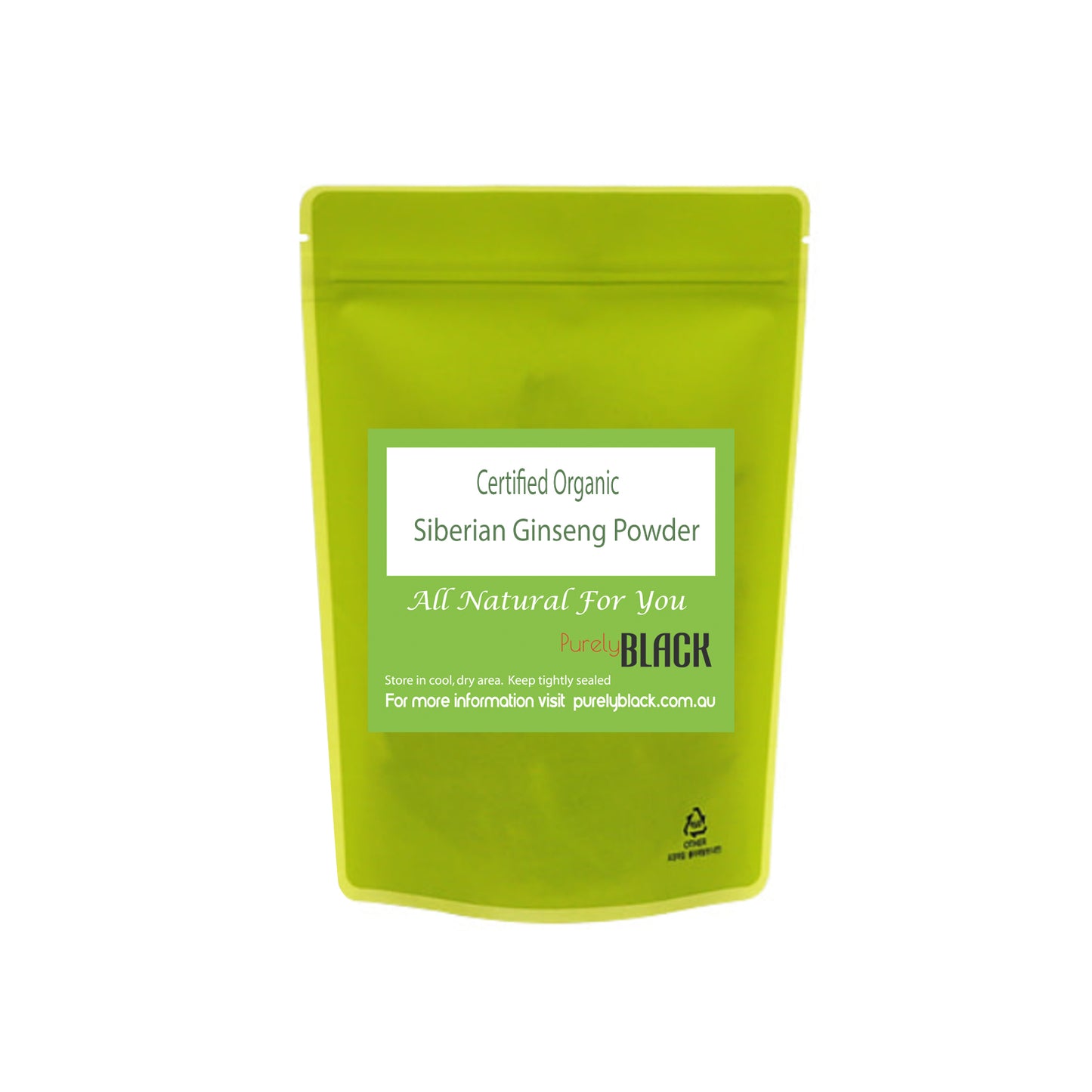
purelyBlack's organic Siberian ginseng powder is certified organic and made from true Eleutherococcus senticosus root, sourced from China — no fillers, no synthetic additives, just the root as nature intended.
About the Author: Researched & Written by H.R. Kim
Founder at purelyBlack — an Australian-owned botanical perfumery and essential oil supplier based in Sydney. Blending a deep knowledge of molecular ingredient chemistry with holistic aromatherapy, H.R. specialises in creating harmonious, safe, and effective botanical blends for natural home fragrance, cosmetic balancing, and daily wellness.
Disclaimer: The information provided in this masterclass is for educational and informational purposes only and does not constitute medical advice. purelyBlack's botanical products are not intended to diagnose, treat, cure, or prevent any disease. Always consult with a qualified healthcare practitioner before incorporating new botanical powders, teas, or roots into your daily routine, especially if you are pregnant, nursing, taking prescription medications, or have an underlying medical condition.
