







Who Should Avoid Mugwort Oil? Safety and Side Effects
Who should avoid mugwort oil?
Pregnant or nursing individuals, young children, individuals with seizure disorders, and anyone allergic to the Asteraceae family should avoid mugwort oil.
- Pregnancy and Nursing: Mugwort contains active ketones that may stimulate uterine contractions and disrupt delicate maternal hormone balances.
- Neurological Conditions: Individuals diagnosed with epilepsy or seizure disorders must avoid thujone-rich botanicals to prevent nervous system overstimulation.
- Asteraceae Allergies: People sensitive to ragweed, daisies, or chrysanthemums may experience severe contact dermatitis from botanical cross-reactivity.


Steam-distilled from the vibrant leaves and flowering aerial tops of Artemisia vulgaris, this traditional aromatic belongs to the Asteraceae botanical family. The plant naturally produces high concentrations of monoterpene ketones, specifically alpha-thujone and beta-thujone, which demand rigorous handling precautions. Because these active chemical compounds cross physiological barriers rapidly, vulnerable demographics should strictly avoid topical and airborne exposure.
Young children possess immature metabolic pathways that cannot process complex botanical ketones efficiently. Furthermore, households with feline or canine companions should exercise caution, as companion animals metabolise concentrated essential oils differently than humans. Ensuring household safety requires identifying which household members can safely enjoy botanical diffusing before opening a bottle.
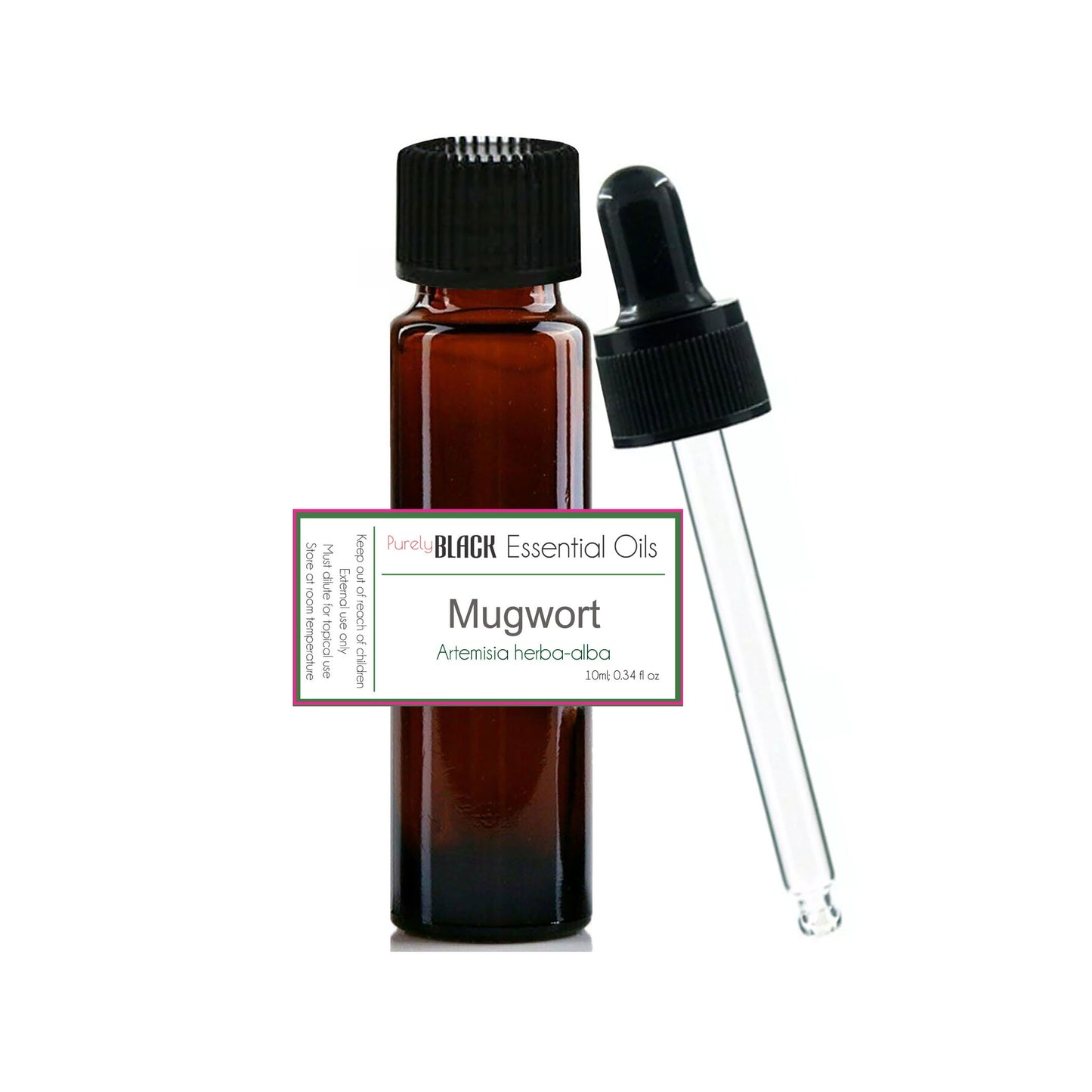
purelyBlack's pure mugwort oil is available as a 100% pure essential oil, dispatched from Sydney.
Can mugwort oil be psychedelic?
No, mugwort essential oil is not psychedelic, although its aromatic thujone content can promote vivid dreaming and altered sensory perception during sleep.
Mugwort oil has garnered an intriguing folklore reputation across centuries of European and Asian herbalism for stimulating lucid dreams and nocturnal introspection. Despite these mystical associations, the oil contains no hallucinogenic compounds such as psilocybin, DMT, or lysergic alkaloids. It cannot produce waking visual hallucinations, euphoria, or delirium when inhaled responsibly in domestic aromatherapy.
The distinctive dream-enhancing sensation reported by many enthusiasts stems from volatile monoterpenes interacting mildly with gamma-aminobutyric acid receptors in the central nervous system. When vaporised in subtle amounts near bedtime, Mugwort provides aromatic comfort that encourages prolonged rapid-eye-movement sleep cycles. This physiological shift often results in sharper dream recall, heightened narrative lucidity, and deeper personal reflection upon waking.
Experiencing vivid dreams through aromatic diffusion is vastly different from a psychedelic drug state. Responsible enthusiasts utilise this unique botanical quality during evening meditation rituals to foster creative thought and quiet contemplation. Maintaining low aromatic levels ensures you enjoy these reflective qualities without provoking nocturnal restlessness or waking fatigue.


Is mugwort oil toxic to touch?
No, mugwort essential oil is not inherently toxic to touch, but undiluted contact can trigger severe dermal irritation and contact dermatitis.
- Direct Undiluted Exposure: Applying neat oil directly to bare skin frequently causes redness, stinging sensations, and dermal inflammation.
- Carrier Dilution Ratios: Always blend mugwort oil with Fractionated Coconut Oil to maintain a safe topical concentration below 1%.
- Mandatory Patch Testing: Perform a small twenty-four-hour patch test on your inner forearm before proceeding with full topical use.
Accidentally touching concentrated Mugwort essential oil during routine blending does not cause acute systemic poisoning if handled promptly. However, unrefined essential oils contain concentrated terpene structures that rapidly strip the epidermal lipid barrier. If bare skin contacts undiluted oil, immediately wash the area with vegetable oil or warm soapy water rather than plain water alone.
Practising safe botanical formulation requires blending active concentrates into soothing carrier mediums. Lipid bases create a protective barrier across the epidermis while slowing the evaporation rate of volatile monoterpenes. When properly diluted, Mugwort supports a healthy complexion and absorbs smoothly into the skin without triggering cutaneous sensitivity.
What are the side effects of mugwort oil?
Side effects of mugwort essential oil may include dermal redness, skin irritation, headaches, nausea, or dizziness from overexposure to potent aromatic vapors.
Adverse reactions generally stem from thujone content, which can constitute between 10% and 40% of the overall chemical profile according to a published phytochemical study. Additional naturally occurring constituents include 1,8-cineole, camphor, and beta-caryophyllene, each contributing to the oil's sharp, herbal aroma. When exposed to overly concentrated airborne vapours, sensitive individuals may experience olfactory fatigue or sudden tension behind the temples.
Prolonged skin application without adequate carrier blending can result in sensitisation over time, causing heightened reactivity to other botanical oils. Anyone experiencing lightheadedness or respiratory discomfort should immediately step outside into fresh air and extinguish diffusers. Understanding these standard side effects ensures enthusiasts recognise boundary lines and adjust concentration levels accordingly.
| Potential Side Effect | Primary Mechanism | Preventative Strategy |
|---|---|---|
| Cutaneous Sensitivity | Direct undiluted ketone contact on epidermal layers | Dilute to 0.5%–1% in gentle carrier oils |
| Olfactory Fatigue & Headaches | Excessive airborne concentration in enclosed spaces | Diffuse intermittently for thirty minutes maximum |
| Mild Respiratory Tightness | Sensitisation to airborne aromatic pinene terpenes | Ensure adequate ventilation during passive diffusion |
Is mugwort oil safe to use at home?
Yes, mugwort essential oil is safe for home diffusion and diluted topical use when used with proper ventilation, low ratios, and care.
Practising responsible home aromatherapy involves running ultrasonic diffusers in well-ventilated living spaces for thirty-minute intervals. Adding just one to two drops into water reservoirs provides a clean, herbaceous scent that cleanses stale indoor air. When vaporised mindfully during quiet evening routines, Mugwort promotes a tranquil atmosphere that encourages natural evening unwinding.
For custom massage oils and topical formulations, always maintain a conservative 0.5% dilution ratio in your chosen carrier. Store your amber glass bottles in a dark, climate-controlled cupboard away from sunlight and out of reach of children. Complementing the herbaceous notes of Mugwort oil with rich grounding botanicals like Sandalwood Oil or warm spicy oils like Thyme Oil creates balanced aromatic synergy.
For detailed aromatherapy applications and wellness traditions, read our comprehensive guide: What Is Mugwort Essential Oil Good For? Benefits and Safety Guide.
To explore similar profiles, discover these pure purelyBlack creations: Sandalwood Oil and Thyme Oil — each dispatched from Sydney.
Related Reading
For more on mugwort oil, see our companion guides: Traditional Uses & Precautions of Pure Mugwort Essential Oil in Australia. What Is Mugwort Oil Good For? Benefits and Safety Guide.
About the Author
Written by H.R. Kim
Founder at purelyBlack — an Australian-owned perfumery and botanical studio based in Sydney. H.R. specialises in scent profiling and natural ingredient sourcing, meticulously balancing premium fragrance oils and 100% pure essential oils to create elevated aromatic experiences.
Last updated: August 2026
Disclaimer: purelyBlack essential oils are for external use and aromatherapy purposes only. They are not intended to diagnose, treat, cure, or prevent any disease. Always dilute with a carrier oil before topical application and consult a healthcare professional if pregnant or under medical supervision.
