







Are Essential Oils Safe for Dogs? A Complete Australian Guide
Are Essential Oils Safe for Dogs?
Some essential oils are considered safe to use around dogs when properly diluted and applied with care, while others are known to be toxic to dogs and should be kept away from them entirely — the difference between the two categories is significant and worth understanding before using any essential oil in a home with dogs.
Dogs have a sense of smell estimated to be 10,000 to 100,000 times more sensitive than humans. What registers as a pleasant, mild aroma to a person can be overwhelming or irritating to a dog at the same concentration. This is why dilution, ventilation, and the specific oil used all matter considerably when essential oils are used in a home with dogs.
Compared to cats, dogs have a relatively stronger liver capacity to metabolise certain aromatic compounds — which means some essential oils can be used around dogs more safely than around cats, provided they are heavily diluted and the right oils are selected. This guide covers which oils are considered lower-risk, which are known to be toxic, and the safety principles that apply regardless of which oil you use.
If you also share your home with a cat, see our separate guide: Are Essential Oils Safe for Cats? A Complete Australian Guide.
Important: This guide is for educational purposes only. Always consult your veterinarian before using essential oils around your dog. purelyBlack essential oils are for aromatic and topical human use only — they are not veterinary products and are not intended for use on animals.


Which Essential Oils Are Safe for Dogs?
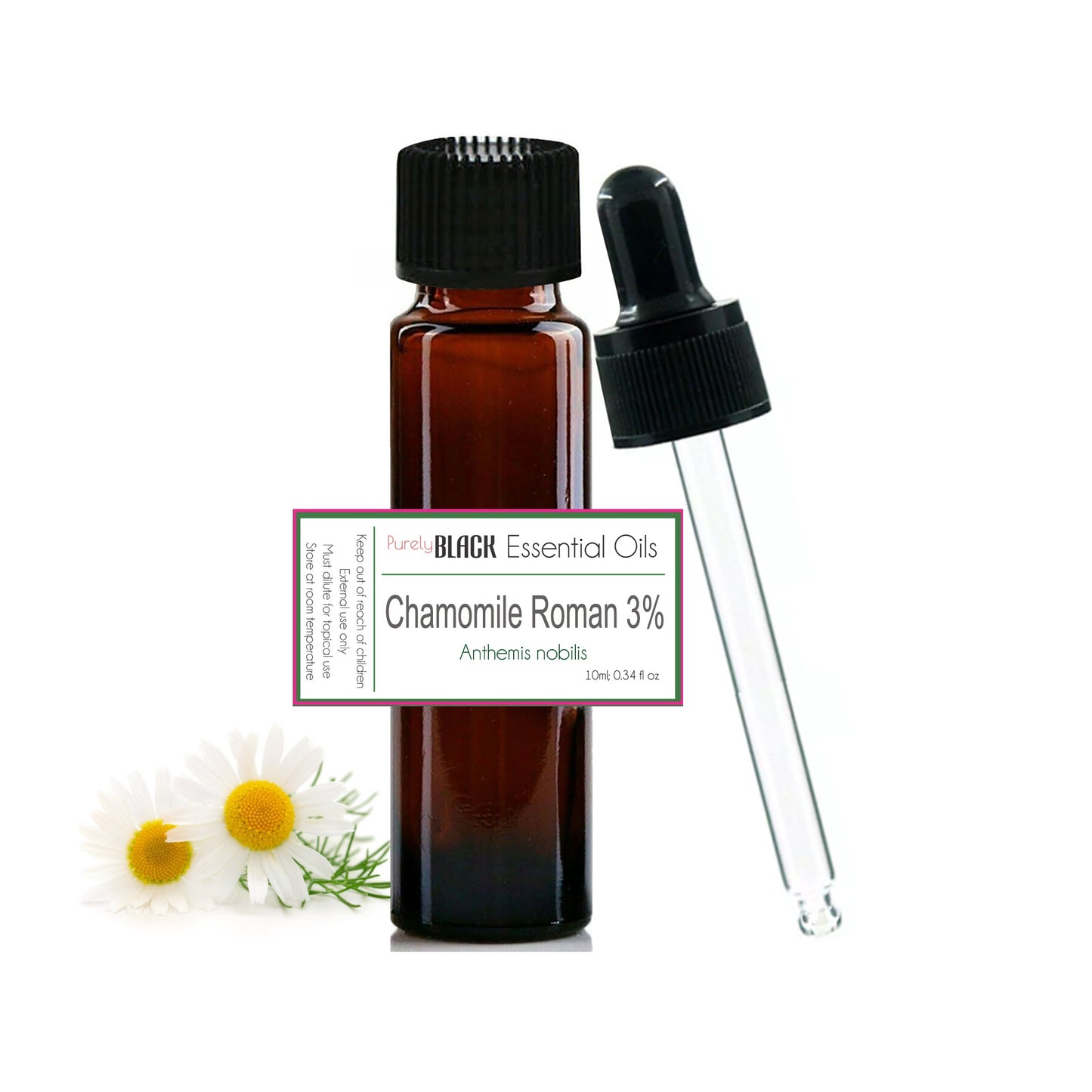
The essential oils most commonly considered safer to use around dogs — when heavily diluted to 0.25%–1% in a carrier oil and used with proper ventilation — include lavender, Roman chamomile, frankincense, cedarwood, ginger, and geranium, though "safer" does not mean risk-free and individual dogs may react differently.
The following oils are among those generally regarded as lower-risk around dogs by veterinary aromatherapy practitioners, when used aromatically in a well-ventilated space or applied topically at very low dilutions:
| Essential Oil | Notes |
|---|---|
| Lavender | Most widely referenced safe oil in veterinary aromatherapy; use True Lavender only; diffuse in well-ventilated room |
| Roman Chamomile | Calming and gentle; lower irritation profile; aromatic use only |
| Frankincense | Generally considered low-risk; referenced in pet aromatherapy for older dogs; avoid direct skin application |
| Cedarwood | Commonly regarded as one of the gentler options for diffusion around dogs |
| Ginger | Generally considered lower-risk; use in very small amounts with good ventilation |
| Geranium | Sometimes used in natural insect repellent blends for dogs when diluted in a carrier oil; always dilute to 0.5% or less |
Even with these lower-risk oils, the dog must always be able to leave the room freely. Never diffuse essential oils in a confined, unventilated space where a dog cannot escape the aroma. Always consult your veterinarian before use.
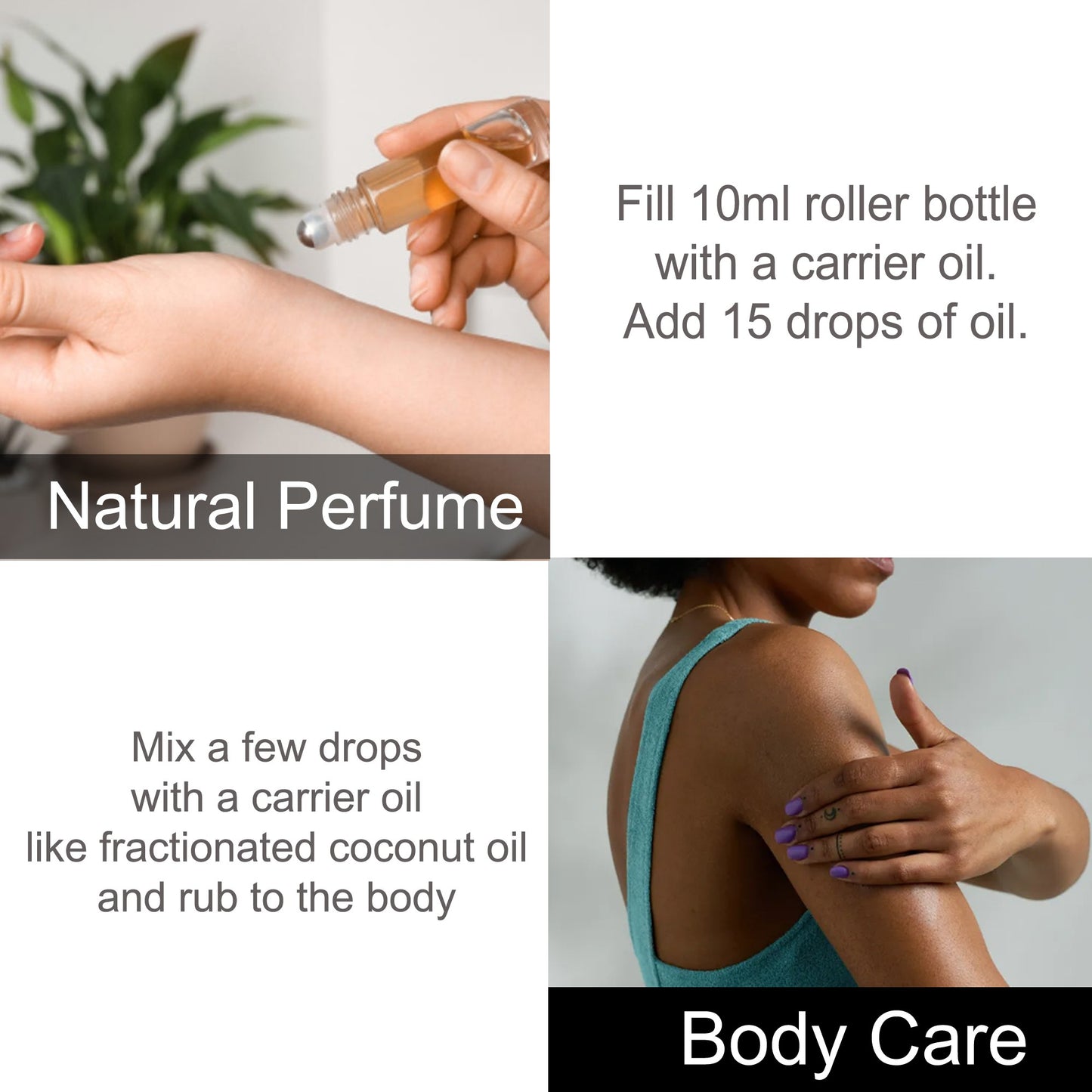
When using essential oils topically around dogs, always dilute in a carrier oil first. Fractionated Coconut Oil is one of the most commonly used carrier oils for diluting essential oils — it is lightweight, odourless, and well-tolerated by most dogs when used externally.
What Essential Oils Are Toxic to Dogs?
A number of essential oils are known to be toxic to dogs and should never be used in a home with dogs — either diffused, applied topically, or left in accessible locations — including tea tree, clove, cinnamon, oregano, ylang ylang, and citrus oils.
The following oils are among those most commonly identified as harmful to dogs by veterinary organisations and animal poison control centres:
| Essential Oil | Why It Is Harmful |
|---|---|
| Tea Tree (Melaleuca) | Even small amounts can cause serious toxicity — weakness, tremors, and nervous system effects |
| Clove | High eugenol content is toxic to dogs; can cause liver damage |
| Cinnamon | Can cause irritation of the mouth, skin, and digestive system |
| Oregano | High phenol content; known to cause digestive and skin irritation |
| Ylang Ylang | Can cause excessive sedation, breathing difficulties, and low blood pressure |
| Citrus Oils (Lemon, Orange, Lime) | Limonene content can cause skin irritation and digestive upset |
| Peppermint | High menthol content can be toxic to dogs, particularly in concentrated amounts |
| Wintergreen | Contains methyl salicylate — highly toxic to dogs even in small amounts |
If your dog has been exposed to any of these oils and shows signs of distress — drooling, vomiting, tremors, difficulty breathing, or lethargy — contact your veterinarian or the Animal Poisons Helpline Australia immediately on 1300 869 738.
Can I Use Citronella or Lemon Eucalyptus Around Dogs?
Citronella and lemon eucalyptus are two of the most commonly searched bug-repellent essential oils in Australia, but both require caution around dogs — neither is classified as clearly safe for dogs, and both can cause irritation or adverse reactions depending on concentration and exposure.
Citronella is widely used outdoors as a natural insect repellent and is found in many commercial products including candles and sprays. While it is not among the most acutely toxic oils for dogs, it can cause skin irritation, digestive upset, and respiratory discomfort if a dog is exposed to concentrated amounts — particularly through direct skin contact or ingestion. For outdoor use in open, well-ventilated spaces where the dog is free to move away, the risk is generally lower, but citronella products should never be applied directly to a dog's skin or coat.
Lemon eucalyptus contains citronellal and related terpenes that veterinary sources flag as potentially harmful to dogs. It is more commonly recommended to avoid lemon eucalyptus around dogs entirely rather than attempting to use it cautiously.
purelyBlack's Citronella Essential Oil and Lemon Eucalyptus Essential Oil are formulated for human use only. Always consult your veterinarian before using any essential oil product in a home with dogs.
Which Essential Oils Are Safe for Dogs to Smell?
For aromatic exposure specifically — where a dog may smell an oil diffused in the air rather than have contact with it directly — lavender, frankincense, and cedarwood are among the oils most commonly used in veterinary aromatherapy settings, always with the dog free to leave the space.
Smelling and direct contact are different exposure routes with different risk profiles. Aromatic diffusion in a well-ventilated room where the dog can freely enter and exit is generally considered lower-risk than topical application or ingestion. However, the concentration of the oil in the diffuser, the size of the room, and the duration of diffusion all affect the degree of exposure the dog receives.
The safest approach for aromatic use around dogs is to diffuse for short periods only — no more than 30 minutes at a time — in a large, well-ventilated room, with the dog able to leave freely. Before diffusing, you can offer the oil at a distance for the dog to smell first — if the dog moves away, sneezes, or shows signs of discomfort, remove the oil immediately.
How to Use Essential Oils Safely Around Dogs
The key safety principles for using essential oils around dogs are: choose lower-risk oils only, always dilute to 0.25%–1% in a carrier oil before any topical use, diffuse in short sessions in well-ventilated spaces, and always give the dog a free exit from any diffused space.
| Rule | Why It Matters |
|---|---|
| Always dilute before topical use | Dogs are far more sensitive than humans — dilute to 0.25%–1% in a carrier oil; never apply undiluted essential oil to a dog's skin or coat |
| Scent test first | Offer the oil at a distance before use — if the dog moves away, sneezes, or shows discomfort, do not proceed |
| Avoid licking areas | Do not apply oils near the mouth, front paws, or any area the dog can easily lick — ingestion is more harmful than skin contact |
| Always give the dog a free exit | Dogs self-regulate exposure when given the choice — a dog that moves away from the aroma is telling you it has had enough |
| Diffuse for 30 minutes maximum | Short sessions reduce cumulative exposure and allow the space to air out between uses |
| Use in large, ventilated rooms only | Concentration builds quickly in small or sealed spaces — never diffuse in a car, crate, or closed bedroom with a dog |
| Never apply directly to a dog without vet guidance | Dogs groom themselves — any oil applied to their coat may be ingested; always consult a vet before any topical use |
| Store all oils out of reach | Dogs may knock over or chew bottles — even lower-risk oils are harmful if ingested in quantity |
| Consult your vet first | Individual dogs vary — breed, size, age, and health status all affect sensitivity to essential oils |
What to Do If Your Dog Is Exposed to a Toxic Essential Oil
If your dog has been directly exposed to a toxic essential oil — through ingestion, skin contact, or heavy inhalation — remove the dog from the area immediately, do not induce vomiting unless directed by a vet, and contact a veterinarian or poison helpline without delay.
Signs of essential oil toxicity in dogs include excessive drooling, vomiting, tremors, difficulty walking or standing, breathing difficulties, lethargy, and skin redness or irritation at the point of contact. Symptoms can appear within minutes of exposure or may be delayed — do not wait for symptoms to worsen before seeking advice.
In Australia, the Animal Poisons Helpline can be reached on 1300 869 738 (available 24 hours). Your local veterinarian or emergency animal hospital is always the first point of contact for any suspected poisoning.
Disclaimer
This article is for general educational purposes only and does not constitute veterinary advice. Always consult a qualified veterinarian before using essential oils around your dog. purelyBlack essential oils are formulated for human aromatic and topical use only and are not intended for use on animals. These statements have not been evaluated by any regulatory authority.
About the Author
Written by H.R. Kim
Founder at purelyBlack — an Australian-owned perfumery and essential oil supplier based in Sydney. H.R. specialises in molecular ingredient chemistry and scent profiling, with a focus on pure, single-origin essential oils for aromatherapy, skin care, and natural wellness.
