
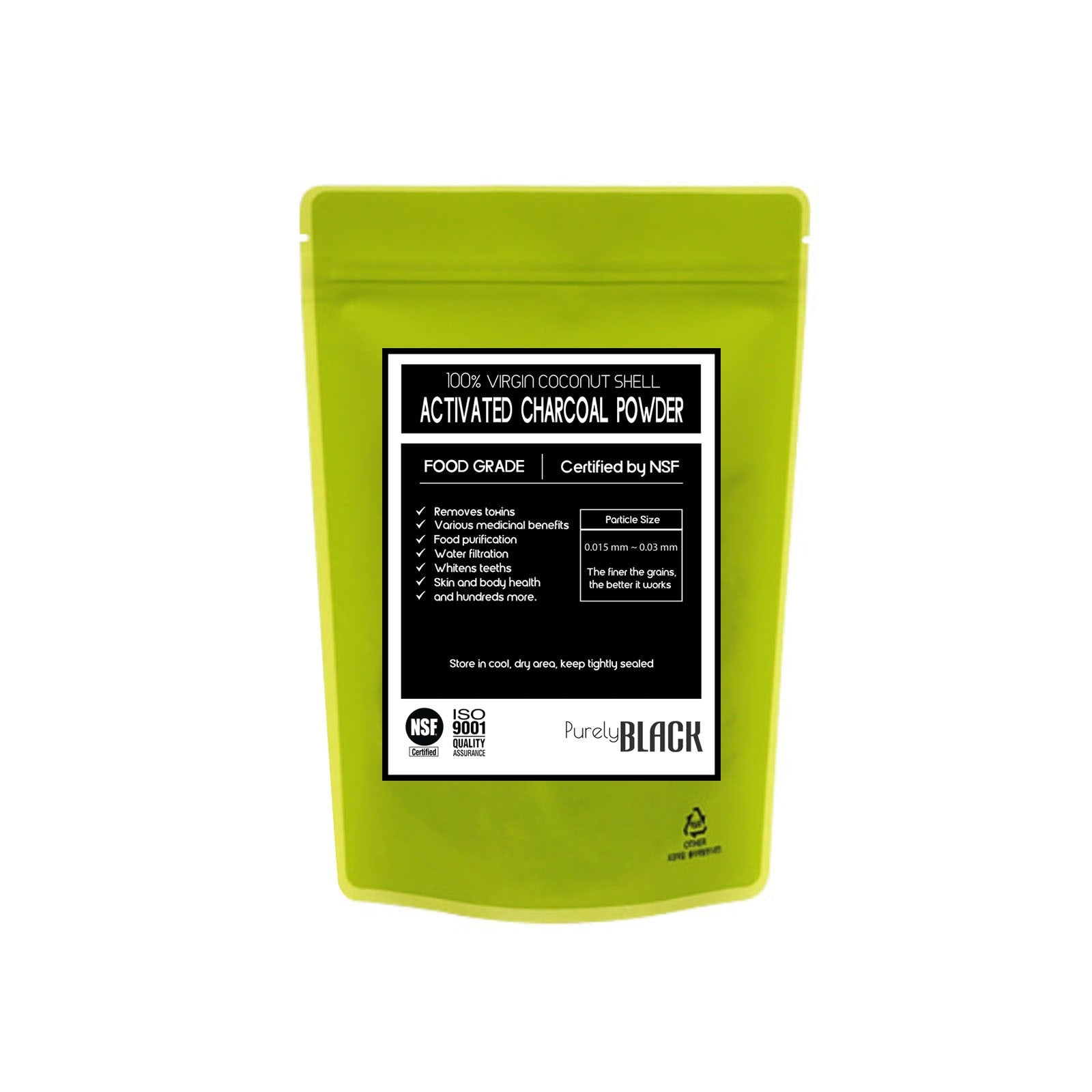
Charcoal Face Mask: Does Activated Charcoal Powder Really Work for Skin?
Are Charcoal Masks Good for Your Skin?
Yes — charcoal masks can be a genuinely effective addition to a skincare routine for oily, congested, or combination skin, though they are not suited to every skin type. The value comes down to a single mechanism: adsorption.
- How it helps: Activated charcoal's highly porous surface — typically 500 to 1,500 square metres per gram — binds to excess sebum, environmental residue, and surface debris sitting in the pores.
- Best suited to: Oily, combination, and congested skin types where pore-clogging build-up is most visible.
- Less suited to: Dry or sensitive skin, unless blended with a moisturising base such as honey or jojoba oil to soften the cleansing action.
This guide covers the topical and cosmetic use of activated charcoal powder for the face and scalp. For teeth whitening use, see our Teeth Whitening Powder guide. For internal wellness uses, see our Activated Charcoal Internal Wellness Guide.
Charcoal Powder vs. Peel-Off Charcoal Masks: What's the Difference?
Charcoal powder and pre-made peel-off charcoal masks both use activated charcoal, but a peel-off mask adds a film-forming ingredient — usually a PVA or glue-based polymer — to make the dried mask peel away in one piece. That peeling action is a cosmetic effect from the film, not from the charcoal itself.
| Feature | Activated Charcoal Powder | Pre-Made Peel-Off Mask |
|---|---|---|
| Ingredients | Single ingredient — you control what it's mixed with | Charcoal plus film-forming polymers, fragrance, and preservatives |
| How it comes off | Rinsed off with warm water | Peeled off as a dried film |
| Customisation | Fully adjustable ratio and add-ins (clay, honey, aloe vera) | Fixed formula, no adjustment |
| Sensation on removal | Gentle rinse, no pulling on skin or fine facial hair | Peeling can tug on fine facial hair and irritate sensitive skin |
If you've used a peel-off charcoal mask before and found the peeling sensation uncomfortable, a rinse-off powder mask gives you the same adsorption benefit from the charcoal without the film. It also lets you tailor the mask to your own skin type, using less liquid for a thicker clay-like consistency or more for a lighter application.
Does Charcoal Draw Out Blackheads?
Charcoal can help draw out the oil, dirt, and debris that contribute to blackheads, though results vary by skin type and how the mask is used. Blackheads form when a pore becomes clogged with oxidised sebum and dead skin cells — charcoal's binding action targets exactly this build-up.
- What it targets: Excess sebum and surface debris sitting in and around the pore opening.
- What influences results: Mask consistency, contact time, and how congested the pore already is.
- Realistic expectations: A visibly cleaner, more refined-looking pore area after rinsing — not a permanent fix for recurring blackheads, which usually need an ongoing routine.
Does a Charcoal Face Mask Actually Work?
Yes — a charcoal face mask works through adsorption, physically binding to oil and impurities on the skin's surface and drawing them away when rinsed off. This is a different mechanism to chemical exfoliants or cleansers, which dissolve or break down debris rather than binding to it.
- The process: Charcoal is produced by heating coconut shell, bamboo, or hardwood at extremely high temperatures with an activating gas, creating a vast porous surface area.
- On the skin: When applied as a mask, this porous structure draws excess sebum, pollutants, and surface debris from the pores.
- The result: Skin that feels clean, tightened, and refreshed once the mask is rinsed away.
Can Activated Charcoal Be Used as a Face Mask?
Yes — activated charcoal powder can be mixed into a simple face mask at home using a binding liquid such as water, aloe vera gel, or apple cider vinegar. The ratio and technique both affect how well the mask performs.
- Cleanse first: Remove makeup and cleanse with your usual cleanser. Charcoal works most effectively on a pre-cleansed surface.
- Mix your mask: Combine 1 teaspoon of activated charcoal powder with 1–2 teaspoons of your chosen liquid in a non-metal bowl, stirring to a smooth, thick paste — similar to a clay mask consistency.
- Apply evenly: Using a mask brush or clean fingertips, apply an even layer across the face, avoiding the delicate eye and lip areas.
- Leave on 10–15 minutes: Allow the mask to sit until it feels dry and slightly tight — do not exceed 20 minutes.
- Rinse thoroughly: Rinse with warm water using gentle circular motions, checking the hairline and nose for any remaining residue.
- Follow with moisturiser: Apply your regular moisturiser while the skin is still slightly damp, as charcoal masks can leave skin feeling tight.
| Mask Recipe | Ingredients | Best For |
|---|---|---|
| Classic Deep Cleanse | 1 tsp charcoal powder + 1–2 tsp water or aloe vera gel | Oily, congested skin |
| Charcoal & Clay | ½ tsp charcoal + ½ tsp bentonite clay + 1–2 tsp apple cider vinegar | Enlarged pores, oily T-zone |
| Gentle Brightening | 1 tsp charcoal + 1 tsp honey + a few drops jojoba oil | Combination or dry skin |
| Blemish-Focus Spot Mask | ½ tsp charcoal + ½ tsp aloe vera gel | Targeted blemish areas only |
What Should You Apply Before and After a Charcoal Mask?
Cleanse your face before applying a charcoal mask, and follow up with a hydrating moisturiser once it's rinsed off. What you do on either side of the mask matters as much as the mask itself.
Always start on freshly cleansed, dry skin — makeup, sunscreen, or leftover product residue sits between the charcoal and your pores, reducing how well it can adsorb oil and debris. Avoid applying active ingredients such as retinol or exfoliating acids immediately beforehand, as this can increase sensitivity. Once you've rinsed the mask off, skin often feels tight — this is normal, and a sign to follow with a hydrating moisturiser or serum straight away while the skin is still slightly damp. If you use a toner, apply it before the moisturiser to help rebalance the skin's surface after the deep cleanse.
Should You Use a Charcoal Face Mask Every Day?
No — a charcoal face mask should be used 1 to 2 times per week, not daily. Its adsorptive power is strong enough that overuse can strip natural oils alongside the impurities it's designed to target.
- Why frequency matters: Daily use risks disrupting the skin's natural oil balance, which can lead to dryness or a reactive increase in oil production.
- For dry or sensitive skin: Start with a shorter application time of 5–8 minutes and a moisturising base rather than water alone.
- Signal to scale back: Tightness that doesn't ease after moisturising, or new sensitivity, are signs to reduce frequency.
What Are the Downsides of Using a Charcoal Face Mask?
The main downsides are potential over-drying with frequent use, mess and staining from the fine black powder, and the risk of irritation on broken or sensitive skin. None of these are reasons to avoid charcoal masks altogether — they're reasons to use them correctly.
- Over-drying: Frequent use can strip natural oils, particularly on dry or sensitive skin types.
- Staining: Activated charcoal is intensely black and will stain fabric, grout, and porous surfaces — work over a dark towel and rinse the sink immediately after use.
- Irritation risk: Never apply to broken, irritated, or sunburned skin, and always patch test a new blend on the inner forearm 24 hours before full facial application.
- Not a spot treatment for active breakouts: Charcoal addresses surface build-up, not the underlying causes of acne, and should be treated as a complementary step rather than a primary treatment.
Is It Okay to Put Charcoal on Your Face?
Yes — food-grade activated charcoal powder is safe for topical facial use when patch tested and used at the recommended frequency, but a few precautions apply.
- Patch test first: Apply a small amount to the inner forearm and wait 24 hours to confirm no sensitivity before a full facial application.
- Avoid the eye area: Keep the mask well away from the eyes during application.
- Skip broken or sunburned skin: Do not apply to broken, irritated, or sunburned skin.
- External use only: This guidance applies to topical, external skin use only. Keep out of reach of children.
Activated Charcoal Powder for Hair and Scalp
Activated charcoal powder can also be added to shampoo as a weekly scalp reset to help clear product build-up, excess sebum, and environmental residue. This is particularly useful for oily scalp types that re-oil quickly between washes.
Add ½ teaspoon of activated charcoal powder to a palm-sized amount of your regular shampoo and work into the scalp with fingertip pressure before rinsing thoroughly. Use once per week as a scalp reset rather than a daily shampoo replacement, and follow with conditioner applied to the mid-lengths and ends only.
About the Author: Researched & Written by H.R. Kim | Last Updated: 10 September 2026
Founder at purelyBlack — an Australian-owned botanical perfumery and essential oil supplier based in Sydney. Blending a deep knowledge of molecular ingredient chemistry with holistic aromatherapy, H.R. specialises in creating harmonious, safe, and effective botanical blends for natural home fragrance, cosmetic balancing, and daily wellness.
Disclaimer: The information provided in this masterclass is for educational and informational purposes only and does not constitute medical advice. purelyBlack's botanical products are not intended to diagnose, treat, cure, or prevent any disease. Always patch test new topical blends and consult a qualified healthcare practitioner if you have a skin condition, are pregnant, or are nursing.
