
What Is Ashwagandha Root? Root vs Powder Explained
Ashwagandha root is the part of the Withania somnifera plant traditionally used in Ayurvedic medicine — distinct from products made using the leaf, and the part purelyBlack's organic ashwagandha powder is made from exclusively. Understanding this distinction matters, since not all "ashwagandha" products on the market are made the same way, and the part of the plant used can meaningfully affect what you're actually getting. 
What is Ashwagandha root?
Ashwagandha root is the underground portion of the Withania somnifera plant, a small, woody shrub native to India and parts of the Middle East and North Africa, where it has grown wild and been cultivated for traditional medicinal use for thousands of years. The plant itself is relatively unassuming, growing to around 60 to 150cm in height, with small green flowers and orange-red berries, but it's the root system beneath the soil that has held the central place in Ayurvedic tradition.
In traditional Ayurvedic medicine, the root is the part most consistently used across centuries of recorded practice, distinguishing it from some modern products that use leaf extracts instead, often as a way to reduce production costs since leaf material is generally faster and cheaper to grow and harvest than mature root. The dried root has a distinctive earthy aroma, often described as having a faint, musky, almost horse-like scent, which is directly referenced in the herb's Sanskrit name.
What is the difference between Ashwagandha powder and Ashwagandha root powder?
This is a genuinely common point of confusion in the ashwagandha market, and an important one to understand before purchasing.
| Label | What it usually means |
|---|---|
| "Ashwagandha powder" (no further detail) | Can be root only, a root/leaf blend, or occasionally leaf extract alone, depending on the manufacturer |
| "Ashwagandha root powder" | Specifically denotes root only — the part most aligned with classical Ayurvedic use |
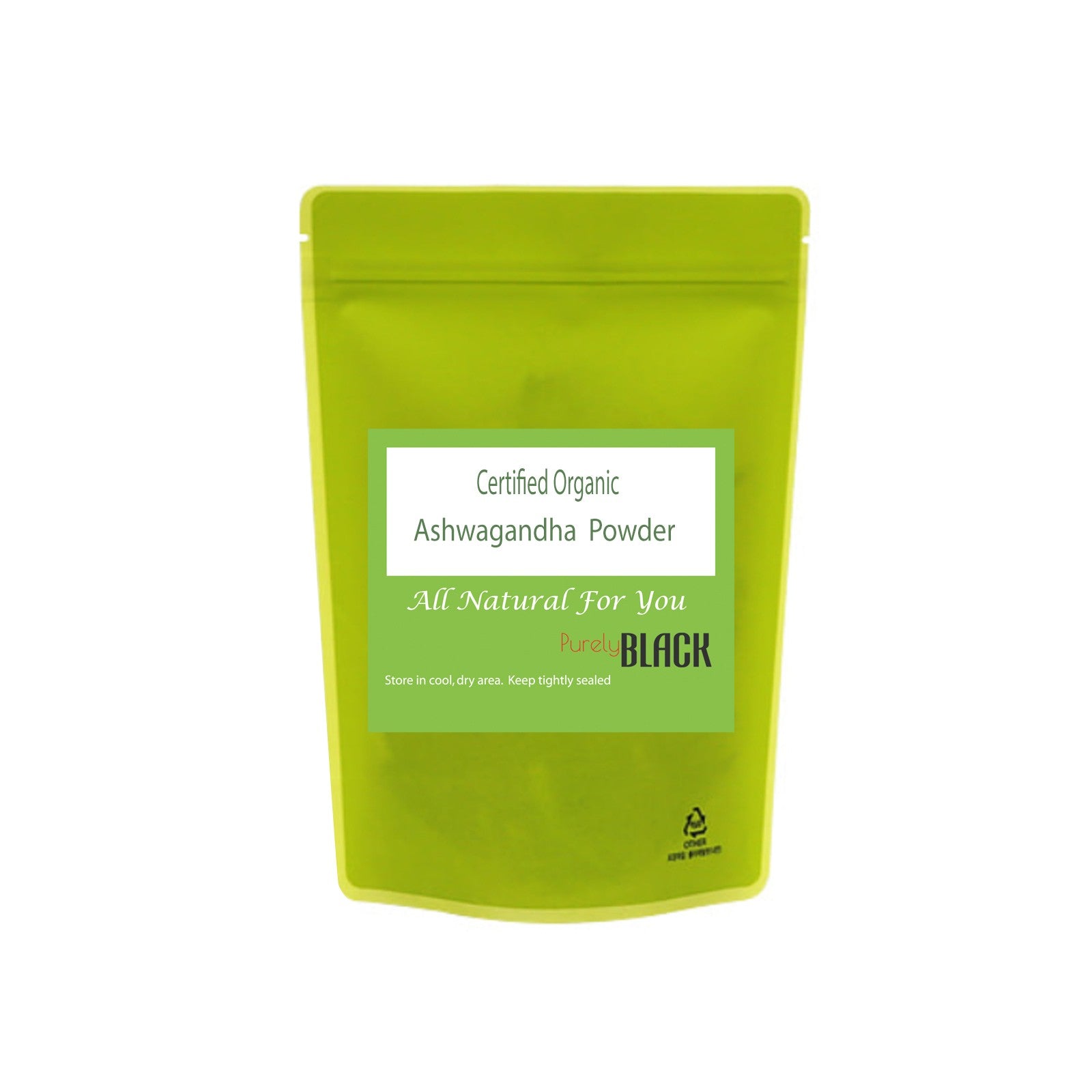
| purelyBlack's product | Root-only, milled directly from the dried root with nothing else added, blended, or substituted |
Because leaf material is generally less expensive to produce at scale than mature root, some commercial products lean more heavily on leaf content without always making this clear on the label. If you're specifically seeking the traditional form of ashwagandha as used historically in Ayurvedic practice, checking that a product is explicitly labelled as root powder, rather than simply "ashwagandha powder" with no further detail, is a reasonable way to confirm what you're actually purchasing.
Why does Ashwagandha root matter more than other parts of the plant?
Traditional Ayurvedic texts consistently centre the root as the primary part used in classical ashwagandha preparations, with the herb's very name offering a clue as to why. "Ashwagandha" loosely translates from Sanskrit to "smell of horse," a reference most commonly understood to describe the root's distinctive aroma once dried, though some traditional interpretations also connect the name to the historical belief that the root could impart the strength and vigour associated with a horse.
While modern supplement markets have introduced a wider range of formats, including leaf-based products and standardised root extracts concentrated for a specific percentage of withanolides, the whole dried root remains the most traditional, time-tested, and widely recognised form of the herb. Traditional Ayurvedic dosing guidance, including the amounts commonly referenced for daily use, is generally calibrated around the whole root rather than a concentrated extract, which is part of why understanding exactly which part of the plant you're using matters for getting the most traditionally accurate experience.
It's also worth noting that root and leaf material can differ somewhat in their natural compound profile, even though both come from the same overall plant. This is one of the reasons traditional practice has so consistently favoured the root specifically, rather than treating all parts of the ashwagandha plant as interchangeable.
How do you use Ashwagandha root?
Whole or cut ashwagandha root is traditionally prepared as a decoction, simmered to extract its compounds, though most people today use the milled powder form for convenience and ease of daily use.
- For powder (most common today). Mix ¼ to ½ teaspoon of ashwagandha root powder into warm milk or water and consume directly, traditionally in the evening as part of a calming routine.
- For whole or cut root (traditional decoction method). Simmer 1 to 2 teaspoons of cut ashwagandha root in 250ml of water for 15 to 20 minutes, covered, to properly extract the root's compounds. Strain thoroughly before drinking.
- Storage. Whether using powder or cut root, store in an airtight container away from direct light, heat, and moisture to preserve the root's natural aroma and character over time.
For most people incorporating ashwagandha into a modern daily routine, the powder form offers the most practical balance between traditional authenticity and everyday convenience, which is why it remains by far the most commonly used format, even among those who specifically seek out whole-root rather than leaf-based or extract products.
What's actually in the root?
| Constituent | What it contributes |
|---|---|
| Withanolides | The primary class of naturally occurring steroidal lactones, most concentrated in the root and central to ashwagandha's traditional reputation |
| Alkaloids | Naturally occurring compounds contributing to the root's distinctive, slightly bitter, earthy character |
| Saponins | Naturally occurring compounds present within the root tissue |
| Iron | A naturally occurring mineral present in the dried root |
How can you tell if an Ashwagandha product is genuinely root-only?
Checking the label carefully is the most reliable approach. Look specifically for the words "root" or "root powder" in the product name or description, rather than simply "ashwagandha powder" or "ashwagandha extract" without further clarification. Products that specify the plant part used (root, as opposed to leaf or whole plant) are generally more transparent about their sourcing, which tends to reflect a more traditional, Ayurveda-aligned approach to formulation. A product listing the botanical name Withania somnifera alongside an explicit reference to root is a good sign of a clearly labelled, traditionally sourced product.
Sourcing the root properly
purelyBlack's organic ashwagandha root powder is milled exclusively from the dried root of Withania somnifera, certified organic and sourced from India — no leaf, no extract, no fillers, just the root as nature intended. For daily use guidance and dosage, read our guide on Organic Ashwagandha Powder: Benefits & How to Use, or learn more about general benefits and safety considerations in our guide on Ashwagandha Benefits & Side Effects.
About the Author: Researched & Written by H.R. Kim
Founder at purelyBlack — an Australian-owned botanical perfumery and essential oil supplier based in Sydney. Blending a deep knowledge of molecular ingredient chemistry with holistic aromatherapy, H.R. specialises in creating harmonious, safe, and effective botanical blends for natural home fragrance, cosmetic balancing, and daily wellness.
Disclaimer: The information provided in this masterclass is for educational and informational purposes only and does not constitute medical advice. purelyBlack's botanical products are not intended to diagnose, treat, cure, or prevent any disease. Always consult with a qualified healthcare practitioner before incorporating new botanical powders, teas, or roots into your daily routine, especially if you are pregnant, nursing, taking prescription medications, or have an underlying medical condition.
